



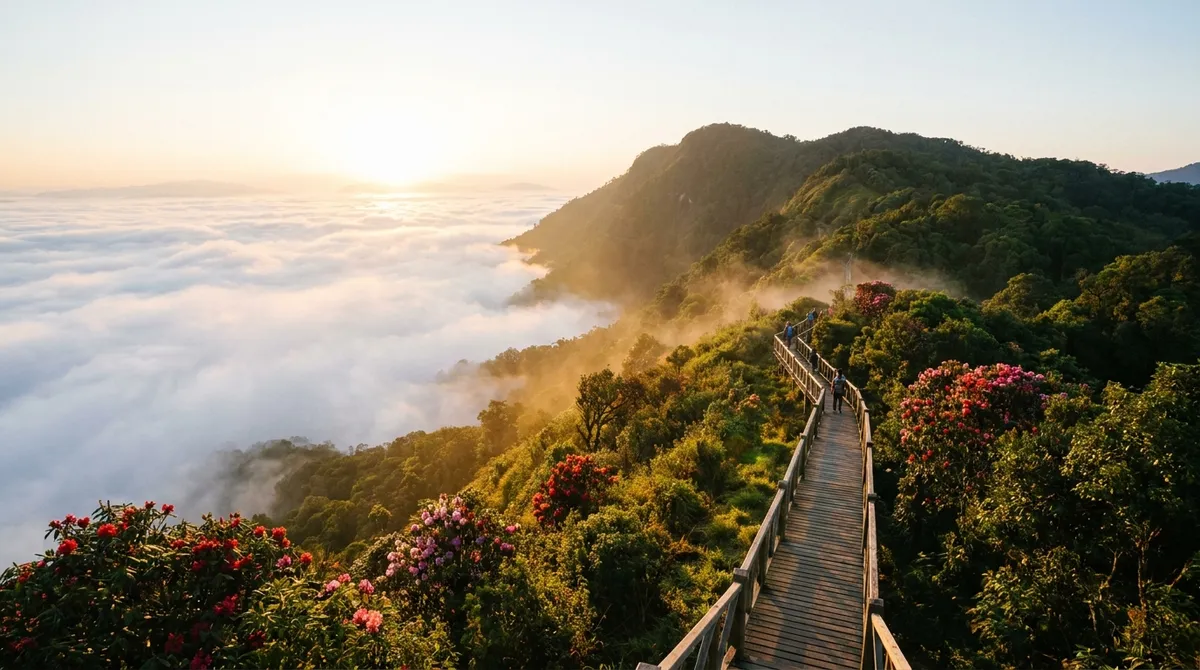
When the crisp winter monsoons sweep southward across the Shan Hills and blanket the rugged mountain ranges of Chiang Mai, the whispering canopy of high-altitude pine forests beckons outdoor enthusiasts from all over the world. From the pine-studded terraces of Doi Inthanon and the misty saddles of Doi Ang Khang to the dramatic ridges of San Pa Kia Mae Ta-man and Mon Ngo, highland winter camping offers an incomparable sensory reward: crystal-clear night skies glittering with millions of unpolluted stars, and vast, rolling seas of porcelain-white mist stretching into infinity at sunrise. Yet, Uncle Kham must offer a heartfelt word of local caution to all travelers: camping on Chiang Mai's high peaks in peak winter is an entirely different world from casual lowland glamping.

At elevations exceeding 1,500 to 2,500 meters above sea level, serene daytime sunshine can rapidly plummet into bone-chilling single digits (2°C to 8°C / 35°F to 46°F) within minutes of sunset, frequently accompanied by violent, unpredictable mountain valley squalls. Without proper mountain craft, technical layering, and safety vigilance, a long-anticipated wilderness getaway can rapidly degrade into a miserable shivering ordeal—or worse, a life-threatening emergency. To help you savor northern Thailand's peaks in safety, warmth, and peace of mind, Uncle Kham has assembled these 5 essential non-negotiable rules for winter mountain camping.
Rule 1: The Fatal Hazard — Never Bring Charcoal Burners or Gas Stoves Inside Closed Tents
This stands as Rule Number One of Highland Survival, and Uncle Kham cannot repeat it urgently enough: under zero circumstances should you ever bring a glowing charcoal brazier, tabletop mookata grill, or unvented gas burner inside a closed tent. When teeth are chattering and midnight cold bites through your sleeping bag, it is dangerously tempting to think that bringing hot barbecue coals into the vestibule for twenty minutes will create a cozy sauna. That simple mistake has proven tragic for too many campers across northern ridges over the decades.
Combustion within an unventilated canvas or polyester shelter quickly depletes vital oxygen while saturating the confined space with Carbon Monoxide (CO)—a silent, odorless, colorless, and completely imperceptible killer. Victims feel no burning sensation or urge to cough; instead, they experience mild headache, soothing lightheadedness, drift peacefully into deep sleep, and suffer fatal hypoxia without ever waking up. To stay safe and warm, rely entirely on technical gear: wear a proper three-layer apparel system, tuck into an insulated mummy sleeping bag rated for 0°C to 5°C, and use a thick rubber hot water bottle filled with boiling water and wrapped in fleece at your feet. It radiates deep, comforting warmth throughout your bedding for up to six hours with zero fire hazard or poison risk.
Rule 2: Master 45-Degree Guy-Line Anchoring Against Violent Valley Gusts
High-altitude campsites perched on mountain ridges—such as Mon Son on Doi Ang Khang or Dong Son on Doi Inthanon—sit squarely within natural atmospheric wind corridors. Between 2:00 AM and dawn, thermal inversion and cooling mountain air generate sudden, violent katabatic gusts (valley squalls) that can snap standard aluminum poles, rip rainfly seams, or send an unsecured tent cartwheeling across the hillside. To withstand these mountain gales, keep these pitching rules firmly in mind:
- Upgrade to Forged Heavy-Duty Steel Stakes: Lightweight aluminum wire pegs supplied with budget tents will bend like pretzels against compacted, rocky mountain clay. Carry 20-to-30 cm forged steel stakes that grip rock-hard subsoil firmly.
- Drive Stakes at a Strict 45-Degree Angle Away from the Tent: Never drive pegs vertically (90 degrees) or slanting inward. Driving stakes at 45 degrees pointing directly away from the tension line maximizes holding power. On loose or gravelly loam, stack heavy flat stones directly on top of the stakes.
- Tension Every Single Exterior Guy-Line: Guy-lines are not optional decorative strings; they transfer wind load from fragile tent poles directly down into the earth. Fully extend every line and use rope runners to keep the fly drum-tight, eliminating flapping that could shred fabric.
- Pitch Aerodynamically with Doors Facing Downwind: Before driving the first peg, read the prevailing breeze. Orient the lowest, most aerodynamic profile of your tent into the wind, keeping the main entrance turned away from incoming gusts.
Rule 3: Thermal Ground Insulation — Fighting the True Culprit of Hypothermia
Novice campers often assume that a thick duvet or down-filled sleeping bag alone will guarantee a warm night. However, fundamental thermodynamics dictate that cold mountain earth conducts body heat away 25 times faster than still air. When you lie down inside a sleeping bag, your body weight compresses the loft of the down or synthetic batting beneath your back into a paper-thin strip. With the insulation compressed flat, thermal bridging occurs: the freezing ground siphons warmth directly from your spine and kidneys, leaving you shivering in misery all night long.
To build an impenetrable thermal fortress, layer your tent floor methodically: start with a heavy-duty waterproof groundsheet beneath the tent floor to block dew and moisture. Inside the tent, spread an emergency reflective thermal blanket (shiny side facing upward), followed by an insulated closed-cell foam pad (egg-crate style, 1.5 to 2 cm thick) or an insulated inflatable mattress with an R-value rating of 3.0 or higher. Only then should you place your sleeping bag on top. Wearing a dry knit beanie and wool socks to bed ensures your extremities retain essential warmth through the coldest pre-dawn hours.
Rule 4: Wildlife Food Storage & Camp Hygiene
Northern Thailand's national parks are thriving sanctuaries for protected wildlife, including rare mountain serow, barking deer, civets, wild boars, and endemic highland birds. The mouth-watering aromas of grilled pork barbecue, opened potato chip bags, or discarded noodle broth left near your tent vestibule act as a magnetic beacon for hungry nocturnal foragers. Wild animals possess acute senses of smell and will not hesitate to claw or tear through thin nylon fabric to access food scraps. More critically, ingestible plastic wrappers and human seasoning cause severe intestinal damage to wild animals.
Uncle Kham's rule is simple and unyielding: 'Never store food inside your sleeping compartment, and never leave open trash outside at night.' Immediately after dinner, wash cooking cookware and thoroughly pack all food containers and leftovers inside heavy-duty airtight cooler boxes or lockable hard-plastic camping cargo containers. Better yet, lock all food supplies securely inside your vehicle trunk overnight. Keep your campsite pristine, and you will enjoy undisturbed sleep without unexpected four-legged midnight visitors.
Rule 5: Zero Waste Mountain Ethics & Leave No Trace (LNT)
Chiang Mai's breathtaking summit vistas possess an exceptionally delicate ecological balance. High-altitude ranger stations lack heavy municipal waste-management machinery; during peak December and January weekends, public campsite bins overflow within hours, scattering refuse into forest valleys and water catchment streams. Uncle Kham asks every visitor to honor the international Leave No Trace (LNT) code: pack out every single scrap of waste you generate—from plastic bottles and food peelings to cigarette butts and wet wipes. Load your sealed trash bags back into your vehicle and dispose of them responsibly at municipal waste hubs down in the valley. Moreover, respect the 10:00 PM quiet curfew: sound echoes remarkably across mountain canyons, so switch off loud Bluetooth speakers and allow the wilderness silence to envelop the night.
Comfort Alternatives: When the Mountain Chill Calls for Cozy Luxury
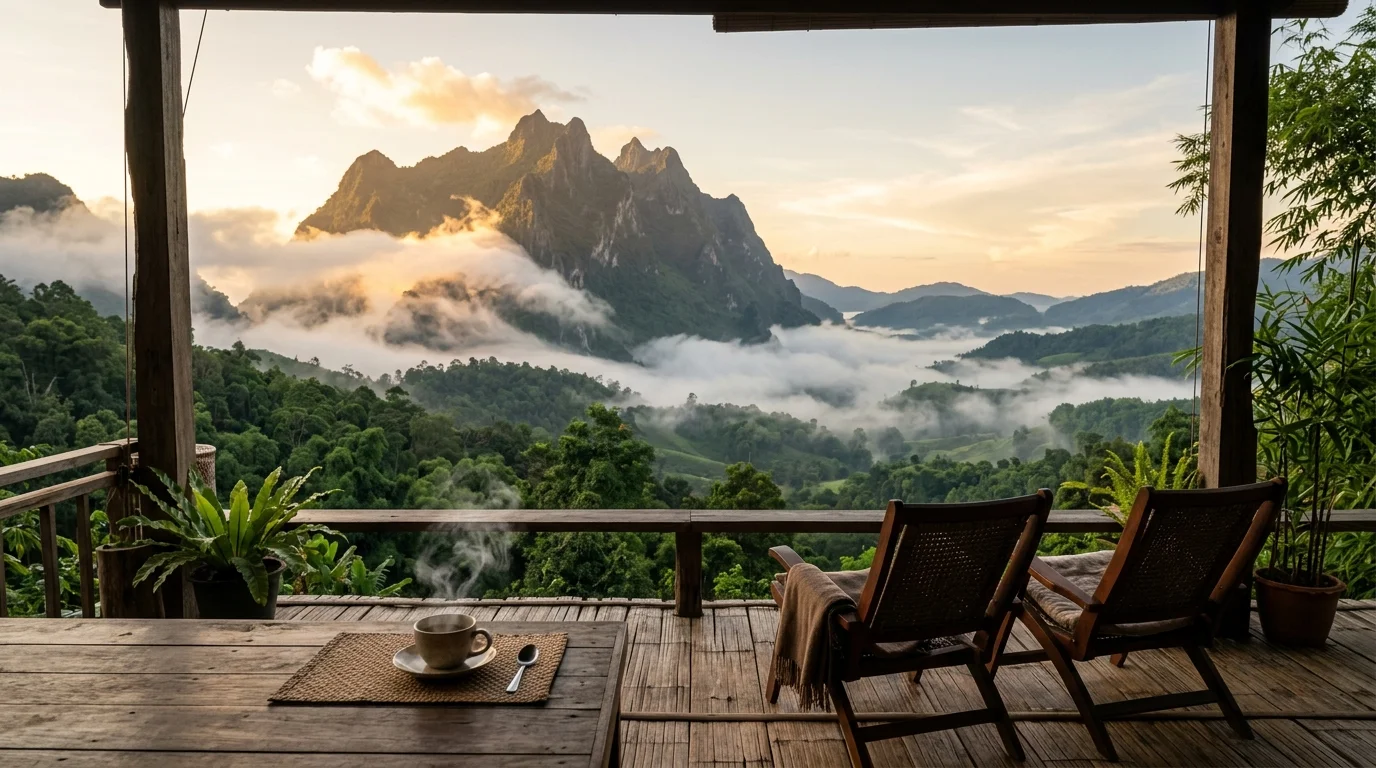
While camping beneath a canopy of stars is an exhilarating rite of passage, it is not suitable for every traveler. If you are journeying with elderly parents, infants, or family members sensitive to severe humidity and single-digit temperatures, braving an unheated mountain tent can lead to colds and exhaustion. Fortunately, the foothills surrounding Chiang Mai—including scenic valleys across Chom Thong, Mae Rim, Fang, and Hang Dong—host an extraordinary array of boutique mountain lodges, teakwood resorts, and heated hillside retreats. Here, you can soak in hot showers, sleep under goose-down duvets, enjoy climate-controlled warmth, and savor panoramic sunrise coffee over mist-filled valleys in absolute comfort. Browse and book handpicked mountain sanctuaries with total confidence at Browse and Book Chiang Mai Hotels and Mountain Resorts, offering guaranteed best prices, pay-later flexibility, and 100% free cancellation privileges* for worry-free winter holidays.
Chiang Mai's mountain forests and cool winter air are precious treasures meant to be cherished with respect, foresight, and care. When we approach nature with sound preparation and reverence, our memories under the starry mountain skies become lifelong keepsakes. Uncle Kham wishes all travelers safe journeys, cozy nights, and unforgettable winter adventures across northern Thailand!
Prefer Comfort Over Camping? Top Eco-Resorts & Glamping Stays
If pitching a tent in sub-zero winds isn't your style, these sustainable luxury mountain resorts offer nature immersion with complete comfort:
• Flora Creek Chiang Mai ↗: Private heated creekside rooms amidst botanical valley landscaping.
• Sibsan Resort & Spa Maetaeng ↗: Riverfront teak craftsmanship with luxury bedding and en-suite marble baths.
• Panviman Chiangmai Spa Resort ↗: Cloud-level hillside sanctuary overlooking Mae Rim's evergreen canopies.
Reserve on Agoda Chiang Mai Eco-Resorts ↗ with Book Now Pay Later and 100% Free Cancellation*.
📌 Related Chiang Mai Guides on Terra Lanna:
• Chiang Mai National Park Camping Guide: Affordable Stargazing, Clean Facilities & Pine Forest Escapes ↗
• Why Highland Mookata is Chiang Mai's Ultimate Winter Ritual: Mountain Pork Barbecue, Dipping Sauces & Sunset Chill ↗
• Preparing for Single-Digit Cold at Doi Inthanon Summit: Clothing Checklist, Frost Hunting & Tips ↗
💡 Looking for more accommodation choices? Explore our comprehensive directory of 1,280 Curated Chiang Mai Hotels & Stays ↗