



When travelers ask Uncle Kham to name Chiang Mai's most iconic and soul-nourishing mountain highway, the answer is always the winding Mae Rim - Samoeng loop (Route 1096). Tucked quietly within the lush western foothills of the Doi Suthep-Pui mountain range lies one of Southeast Asia's greatest ecological masterpieces: Queen Sirikit Botanic Garden (QSBG). Encompassing over 3,500 acres of preserved indigenous mountain forest, this was Thailand's very first international-standard botanical garden, established to advance plant conservation, scientific education, and environmental stewardship.
What began as an elite horticultural research institution under royal patronage has blossomed into a breathtaking eco-tourism destination. QSBG effortlessly balances rigorous biodiversity research with unforgettable visitor experiences—welcoming multi-generational families, botanical enthusiasts, and photography lovers alike. From towering jungle canopies and rare Himalayan flora to climate-controlled glass conservatories housing ancient desert succulents, the garden serves as a living museum where the kingdom's botanical heritage flourishes under pristine mountain skies.
1. The Canopy Walkway: 400 Meters of Suspended Treetop Wonder & Glass Lookouts
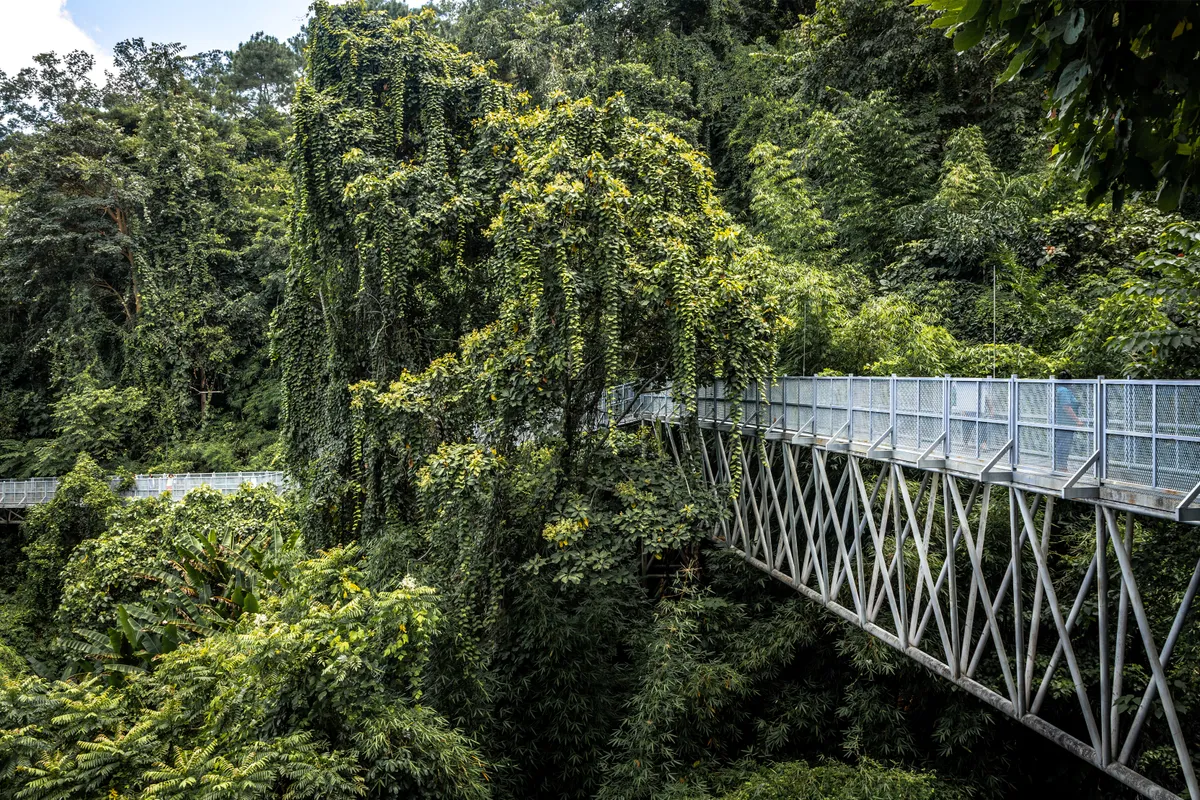
Your journey begins in majestic fashion at the Canopy Walkway, celebrated as Thailand's longest elevated treetop suspension trail. Stretching more than 400 meters in length and soaring up to 20 meters (roughly six stories) above the emerald forest floor, the walkway winds organically through the dense canopy of mixed deciduous and dry evergreen woodland. Engineered with heavy-duty structural steel painted in subdued forest gray, the walkway feels remarkably solid underfoot, with chest-high protective railings that offer absolute peace of mind.
The crowning thrill of the walkway is found at the cantilevered observation lookouts fitted with crystal-clear tempered glass flooring. Stepping onto these transparent panels creates the surreal sensation of floating unsupported over the jungle. Look straight down through your feet to admire moss-draped ironwood trunks, wild ferns, and crystalline mountain rills trickling below. Birdwatchers will be enchanted by sightings of red-whiskered bulbuls, racket-tailed drongos, and energetic hill squirrels darting through the foliage at eye level. It offers a genuine bird's-eye perspective on forest ecology that would otherwise require rigorous arbor climbing gear.
2. The Glasshouse Complex: From Giant Desert Cacti to Misting Tropical Rainforests
Ascending deeper into the mountain ridge brings you to the crown architectural marvel of the park: The Glasshouse Complex. Recognized as the largest conservatory ensemble in Southeast Asia, this panoramic hilltop precinct features 12 specialized pavilions simulating distinct global microclimates. Each house shelters rare, endangered, and ecologically significant plant species from around the world. Uncle Kham highlights four must-see pavilions:
- The Arid Plant Glasshouse: Undoubtedly the most photogenic conservatory in northern Thailand. Giant decades-old Golden Barrel Cacti (Echinocactus grusonii), towering euphorbias, architectural agaves, and exotic aloes create an authentic desert sanctuary. The striking interplay of geometric glass architecture, red volcanic soil, and natural sunlight makes this a premier venue for minimalist lifestyle photography.
- The Tropical Rainforest Glasshouse: Step inside to encounter a thundering two-story indoor waterfall cascading down craggy moss-covered rockfaces. Automated misting jets envelope visitors in cool vapor, while ancient tree ferns, exotic palms, climbing lianas, and bromeliads recreate the primal atmosphere of a deep tropical cloud forest.
- The Aquatic & Water Lily Pavilion: Showcasing magnificent Victoria amazonica (Giant Water Lilies) whose upturned platter-like leaves can span over two meters wide, alongside heritage lotus blossoms and delicate carnivorous aquatic plants floating on serene reflective pools.
- The Orchids & Ferns Conservatory: Dedicated to preserving northern Thailand's endangered wild orchids. Inhaling the intoxicating perfume of indigenous Lanna species like Dendrobium chrysotoxum (Ueang Phueng), Vanda, and fragile epiphytic ferns clinging gracefully to teak driftwood.
3. Practical Visitor Guide: Admission, Route 1096 Driving Tips & Garden Shuttle Trams
Reaching Queen Sirikit Botanic Garden from central Chiang Mai takes approximately 40 to 50 minutes (27 kilometers). Take Highway 107 north toward Mae Rim district, then turn left onto Route 1096 (the Mae Rim - Samoeng scenic road) at KM 12. The entire road is smooth asphalt with gentle mountain curves, easily navigated by standard rental cars, hatchbacks, and motorbikes.
Operating Hours & Admission: Open daily from 8:30 AM to 4:30 PM. Admission for Thai nationals is 50 THB (adults) / 20 THB (children); seniors 60+ and toddlers enter free. International visitor admission is 100 THB (adults) / 50 THB (children). A private passenger car entry fee of 100 THB applies if driving inside.
Uncle Kham's Tram Tip: While you can drive directly to the upper ridge, the internal access road is steep and parking at the top fills rapidly during winter weekends. Uncle Kham highly recommends parking near the lower Visitor Center and taking the open-air Electric Shuttle Tram (30 THB adults / 10 THB children). The tram provides breezy, stress-free hops between the Canopy Walkway, Natural Science Museum, and the Glasshouse Complex with friendly guided commentary.
Where to Stay: 4 Handpicked Luxury Mountain Sanctuaries in Mae Rim
Pairing your botanical exploration with an overnight stay in the Mae Rim valley elevates your trip into an unforgettable alpine retreat. Uncle Kham suggests these four premier highland sanctuaries:
- Four Seasons Resort Chiang Mai (Starting from ฿24,500/night) (Book Now Pay Later • 100% Free Cancellation* • Best Price Guarantee) — An internationally acclaimed luxury sanctuary set amidst working rice paddies in the Mae Rim foothills, offering heritage teak pavilions, cliffside plunge pools, and world-class spa pampering.
- Panviman Chiangmai Spa Resort (Starting from ฿4,200/night) (Book Now Pay Later • 100% Free Cancellation* • Best Price Guarantee) — Perched high atop a misty ridgeline with 360-degree mountain panoramas, renowned for its cascading two-tier rock waterfall swimming pool and private Jacuzzi villas.
- Onsen at Moncham (Starting from ฿7,500/night) (Book Now Pay Later • 100% Free Cancellation* • Best Price Guarantee) — An exquisite Japanese ryokan retreat nestled amidst highland bamboo groves, boasting authentic natural mineral hot spring onsens and serene zen gardens.
- Sukantara Cascade Resort and Spa (Starting from ฿3,800/night) (Book Now Pay Later • 100% Free Cancellation* • Best Price Guarantee) — An intimate eco-luxury lodge built directly along the rushing cascades of Mae Sa stream, featuring jungle-canopied wooden chalets where free-roaming peacocks greet you at dawn.
Queen Sirikit Botanic Garden is more than just a picturesque day excursion; it is a profound testament to the fragile majesty of our living planet. Gazing out across the boundless green canopy, walking among resilient desert cacti, and breathing in the moist perfume of native mountain orchids restores a deep sense of peace within the heart. Uncle Kham warmly welcomes you to Mae Rim, and may the gentle mountain breezes bring wonder and vitality to your travels across Lanna.
📌 Related Chiang Mai Guides on Terra Lanna:
• Mae Rim Mountain View Resorts & Mist Escapes: Quiet Highland Retreats & Scenic Outdoor Bathtubs ↗
• Mon Cham Winter Travel Guide (2026): Terraced Flower Gardens, Mountain Cafes & Glass Dome Resorts ↗
• Bua Tong Sticky Waterfall Complete Guide: Climbing Mineral Limestone Rocks & Secret Forest Spring ↗
💡 Looking for more accommodation choices? Explore our comprehensive directory of 1,280 Curated Chiang Mai Hotels & Stays ↗