



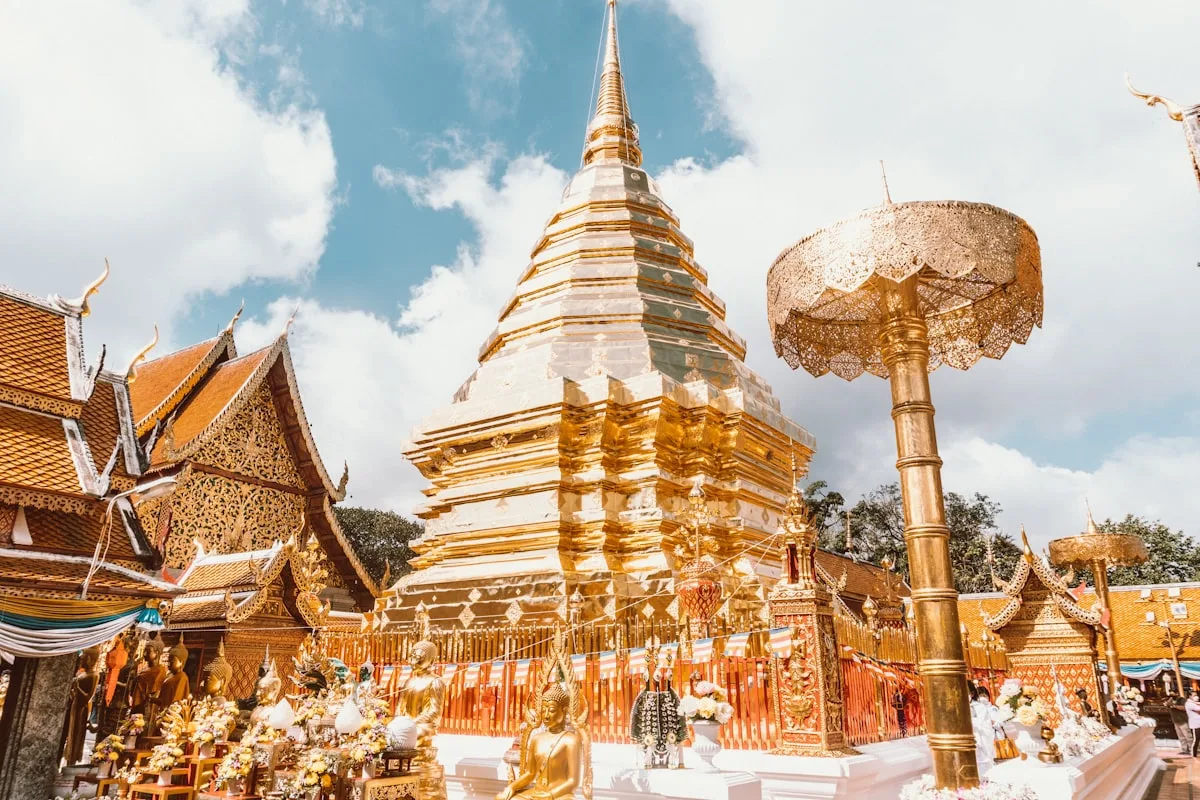
The Old City of Chiang Mai is not a museum piece. It is a living, breathing 1.5-by-1.5-kilometer square still inhabited by families, monks, stray cats, and old men on bicycles. The moat still holds water. The gates still frame the roads. The temples still ring their bells at dawn. Here are 12 things worth doing inside these walls — not as a tourist ticking boxes, but as someone spending time the way this city was meant to be experienced.

1. Wat Chedi Luang — The Ruin That Still Commands the Skyline
Built in the 14th century, Chedi Luang once stood nearly 90 meters tall — the tallest structure in the Lanna kingdom. A 1545 earthquake sheared off its top, leaving a 60-meter stump that is somehow more impressive in its brokenness than most intact temples. The Emerald Buddha was housed here before it was moved to Bangkok. Free entry. Open daily 6:00am–6:00pm. Come at sunset when the brickwork glows amber and the tourist coaches have left.
2. Wat Phra Singh — Lanna Art at Its Peak
Sitting at the western end of Ratchadamnoen Road, Wat Phra Singh is home to the Lai Kham Chapel — a small building containing murals that depict the Sang Thong folk tale. The colors remain vivid, the gold leaf still catches the afternoon light, and the craftsmanship represents Lanna art at its absolute finest. Admission 40 baht. Open daily 6:00am–6:00pm. If you only have time for one temple in Chiang Mai, make it this one.
3. Sunday Walking Street — A Market That Swallows an Entire Road
Every Sunday, Ratchadamnoen Road closes to traffic from Tha Pae Gate to Wat Phra Singh — roughly one kilometer that transforms into one of the best open-air markets in Southeast Asia. Handwoven textiles, silverwork, herbal soaps, paintings from local artists, carved wooden figures. Arrive around 4:30–5:00pm before the crowds thicken. After 6pm, expect shoulder-to-shoulder foot traffic. Must-try food: sai ua sausage, khao khaep rice crackers, fresh mango smoothies.
4. Take a Thai Cooking Class — Get Your Hands Dirty

Chiang Mai is the cooking-class capital of Thailand, and several excellent schools operate right inside the Old City walls. Half-day courses run 800–1,200 baht and typically cover 3–5 dishes: tom kha gai, pad thai, khao soi, and mango sticky rice. Many courses start with a trip to the Pratu Chiang Mai morning market to buy ingredients. For a deeper farm-to-table experience, visit the Organic farm in Lamphun where the herbs used in these classes actually grow.
5. Temple Massage — Traditional Bodywork in the Right Setting
Several temples in the Old City offer traditional Thai massage at prices that make Nimman spas look extravagant: 200–300 baht per hour. The difference is not just cost — it is atmosphere. You lie on a mat in a wooden sala, wind moving through, temple bells audible in the distance. Recommended spots: Wat Chedi Luang (beside the viharn) and Wat Phra Singh (behind the main compound). Come on a weekday afternoon and you will not have to wait.
6. Monk Chat — Sit and Talk
The Monk Chat program at Wat Chedi Luang pairs visitors with monks who want to practice English. Sessions run Monday through Friday, roughly 9:00am–5:00pm. There is no fee, no booking, no formality — just find the designated area and sit down. The monks are disarmingly open: they will discuss Buddhism, monastic life, Lanna history, Thai politics, or whatever you want to ask. Come with questions prepared and you will leave with perspectives that no travel blog can give you.
7. Art Galleries Hidden in Old City Lanes
The narrow sois of the Old City hide more galleries than you would expect — contemporary Lanna painting, woodcarving, black-and-white photography, handmade ceramic cups. Walk the lanes around Soi Ratchanakhet (near Wat Chedi Luang) and the early blocks of Ratchadamnoen Road. Many galleries are free to enter and some double as cafes. Sit with a coffee, look at art, and let the afternoon disappear. No rush.
8. Morning Alms — Something You Should Not Miss
Monks from Old City temples walk their alms rounds every morning between 6:00 and 7:30am, filing silently through the streets in saffron robes. To participate, buy an alms set (sticky rice, sweets, flowers) from the stalls near any temple entrance for 20–30 baht. Stand at the roadside, remove your shoes, dress modestly. When the monks reach you, place the offering in the bowl. It is a simple act, and it will stay with you. The best mornings for this are during the cool season (November–February) when mist hangs low over the moat.
9. Rent a Bike and Ride the Moat
The Chiang Mai moat forms a perfect square — roughly 6 kilometers around. Cycling the full loop takes 30–45 minutes and passes all five city gates, stretches of the original wall, and enormous rain trees leaning over the water. Best times: early morning (6:00–8:00am) or late afternoon (5:00–6:30pm) when the light softens. Rental shops are everywhere in the Old City, charging 50–100 baht per day. If you are staying at Nampiangdin Boutique Hotel, which sits right inside the Old City area, the moat is minutes away on two wheels.
10. Night Food Along Ratchadamnoen Road
Even when the Sunday market is not running, Ratchadamnoen Road comes alive after dark with food carts and small restaurants. Khao soi, chicken rice, noodle soups, som tam, grilled pork skewers, fried meatballs — 40–60 baht a plate. Walk the strip, eat from a different cart every stop, and try something you have never seen before. If your appetite survives, extend the crawl south to the Pratu Chiang Mai morning market which opens at 2am. In the Old City, hunger never wins.
11. Herbal Sauna at Old City Temples — A Lanna Detox
A handful of temples in the Old City still operate traditional herbal steam rooms. You sit in a wooden chamber filled with steam infused with lemongrass, kaffir lime leaf, ginger, and turmeric. Sessions cost 50–100 baht. You sweat, you breathe deeply, your skin clears. The most reputable is Wat Chiang Man, the oldest temple in Chiang Mai, which runs its herbal sauna on select days — typically Tuesdays and Thursdays. Ask at the temple in advance to confirm.
12. Discover Hidden Lanna Architecture
The Old City conceals traditional Lanna houses down its narrow lanes — high gabled roofs, round wooden pillars, galae (carved wooden roof decorations), and patterns that craftsmen left centuries ago. Wander the sois near Wat Chedi Luang, the alleys beside Wat Phan Tao, and Phra Pokklao Road. Some old houses have become cafes, some are guesthouses, and some remain private homes with windows open to the same breeze they caught a hundred years ago. This is architecture you discover by getting lost, not by following a map.
Tips for Exploring the Old City
- Best season: November–February for cool weather, but the Old City has charm year-round.
- Getting around: Walk. The Old City is small enough to reach any point within 20 minutes on foot.
- Budget: Most temples are free. Street food runs 40–60 baht per meal. Temple massage 200–300 baht. Bike rental 50–100 baht per day.
- Dress code: Cover shoulders and knees at temples. Keep a scarf in your bag at all times.
Find accommodation in Chiang Mai near the Old City, or Book tours & activities with local guides who know every hidden corner of the walled city.
Learn more: Chapter 2: Local Historical Development