



























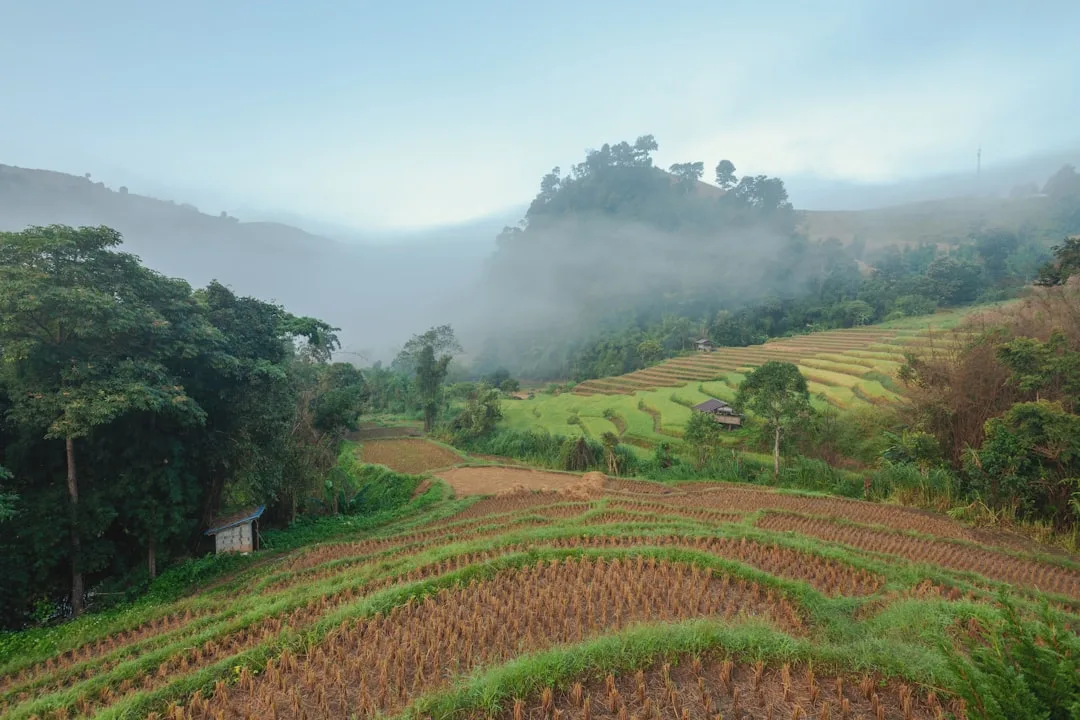
Nine out of ten visitors climb to Doi Inthanon’s cold summit, snap their sign photo, and roll straight back down to Chom Thong. Almost nobody turns left at the Kilometer 38 checkpoint onto the steep western descent—yet drop behind Thailand’s highest peak and you enter Mae Chaem, a peaceful agricultural basin ringed like a green amphitheater. Roughly 115–125 km southwest of Chiang Mai (2.5 to 3 hours driving), Ban Kong Kan still runs on irrigation canals and harvest moons rather than bus schedules.
There are no chain convenience stores on every corner and no late-night bars—just low morning fog drifting across terraced rice bowls and woodsmoke curling from kitchen eaves.
1. Terraced Rice Color Calendar: Emerald Aug–Oct, Gold Nov
Timing your visit to Ban Kong Kan and neighboring paddies (such as Ban Pa Tung Ngam and Kong Khaek) transforms the entire landscape:
- Late July–Mid-August: Flooded transplanting season turns stepped terraces into sky-reflecting mirrors at sunrise and dusk.
- August–October (Lush Green Peak): Young rice swells into emerald amphitheaters climbing the hillsides under misty monsoon skies.
- November (Golden Harvest): Ripening grain paints the entire basin warm gold beneath crisp blue skies—arrive around 07:00–08:30 or 16:30–17:30 for long golden shadows before late-November harvesting begins.
2. Woven Bamboo Khua Tae Bridges & 15th-Century Lanna Temples
Across the paddies wind khua tae—hand-woven bamboo walkways built by villagers so guests can wander deep into the rice terraces without trampling mud dikes or tender stalks (drop 20–40 THB into local bamboo donation boxes where available to support upkeep).
Just minutes away stand two remarkably preserved Lanna cultural anchors:
- Wat Kong Kan: Founded around 1431 CE, this serene timber-pillared temple houses Phra Chao Ton Luang, the largest historic Buddha image in Mae Chaem. Locals say its name evolved from kong khan—"piles of shoulder carrying-poles"—left by devout villagers bringing harvest offerings centuries ago.
- Wat Pa Daet: Nearby stands another quiet historic wihan preserving rare antique hup taem wall murals illustrating Buddhist tales alongside glimpses of traditional Mae Chaem sin tin chok handwoven skirt culture.
Planning Your Chiang Mai Trip? Book Early for Lower Rates
Check real-time rates and secret deals on Agoda, our official travel partner. Enjoy 100% free cancellation, pay at check-in, and earn Agoda Cash rewards.
3. Choosing Your Route & Steep Mountain Descent Tips
Two paved routes reach Mae Chaem from Chiang Mai, with very different personalities:
- Via Doi Inthanon (Hwy 1009 to Hwy 1192): Fastest (~2.5 hours), yet crossing through the park incurs the Doi Inthanon National Park entry fee, and Highway 1192 plunges down intensely steep, tight switchbacks into the Mae Chaem valley—use low engine braking and inspect brakes beforehand.
- Via Hot & Ob Luang (Hwy 108 to Hwy 1088): Slightly longer (~3 hours), bypassing the upper Inthanon gate fee and offering gentler curves along the southern valley edge.
Yellow passenger songthaews run sporadically between Chom Thong temple and Mae Chaem town, but reaching outer terraces is difficult without wheels—arrange a rental car or private driver via our Chiang Mai transport guide.
4. Quiet Homestays & Doi Inthanon Return Loops
Give Mae Chaem at least one night. Simple timber homestays around Ban Kong Kan include hearty home-cooked northern dinners and waking up directly inside rice-field mist. The next morning, climb back up the ridge to walk our Kew Mae Pan nature trail or tick off waterfalls from our Doi Inthanon day trip guide on the way back to town.
Trekkers comparing southern Chiang Mai landscapes can also check our Doi Mon Jong ridge trek. Back in the city, unwind beside calm water at one of our favorite Ping River hotels and celebrate the road trip with dinner from our Chiang Mai Khao Soi guide.
Plan Your Chiang Mai Journey · Verified Booking Partners
Compare real-time rates for stays, curated day tours, flight tickets, and transport with best price guarantee and flexible cancellation: