



























The Crown Jewel of Thailand's Terraced Rice Landscapes
When experienced wanderers speak of the most awe-inspiring agricultural topography in northern Thailand, the legendary name of Ban Pa Pong Piang in Mae Chaem district inevitably crowns the conversation. Carved meticulously into the emerald slopes of the Inthanon mountain range by indigenous Karen (Pgaz K'Nyau) farming families, these cascading rice paddies represent a centuries-old harmony between human subsistence and mountainous nature. Tier upon tier of hand-sculpted earthen dikes descend gracefully into the deep mountain basin, mirroring passing clouds by day and glowing like liquid amber as the golden sun sets behind remote ridges.
Visiting Ban Pa Pong Piang is far more than a routine scenic detour; it is a profound journey of digital detox and pastoral stillness. Here, far above the exhaust fumes and bustling highways of modern tourism, you sit on elevated bamboo verandas, breathing crisp alpine air scented with damp forest loam and ripening grain. The gentle murmur of mountain spring water flowing through wooden bamboo flumes provides a soothing lullaby, anchoring your soul to the authentic rhythms of agrarian Northern Thailand.
The Three Seasons of Pa Pong Piang: Mirrors, Emeralds, and Gold
Travelers frequently ask Uncle Kham: "When is the perfect month to visit Ban Pa Pong Piang?" My answer is that each phase of the highland rice cultivation cycle possesses its own distinct personality, offering three magnificent spectacles throughout the year:
- The Water Mirror Season (July to August): Following the initial monsoon downpours, farmers plow the muddy terraces and transplant tender young seedlings. Every cascading tier fills with crystal-clear mountain water. Viewed from higher elevations, the paddies transform into hundreds of shimmering liquid mirrors reflecting dramatic storm clouds, brilliant blue skies, and fiery sunsets.
- The Emerald Carpet Season (September to mid-October): The peak visual season and the most sought-after window for landscape photographers. The rice plants mature into dense, vibrant stalks, covering the entire valley in a velvety emerald-green blanket. Morning mists drift across the valley floor, creating ethereal seas of white fog that part gently as warm morning sunbeams kiss the mountain slopes.
- The Golden Harvest Glow (Late October to early November): As the cool winter winds begin to blow, the rice heads ripen into rich golden yellow. The entire amphitheater radiates with warm autumnal brilliance. Farmers take to the fields with hand sickles, singing traditional folk melodies as they harvest the grain, marking a festive season of gratitude and mountain abundance.
Planning Your Chiang Mai Trip? Book Early for Lower Rates
Check real-time rates and secret deals on Agoda, our official travel partner. Enjoy 100% free cancellation, pay at check-in, and earn Agoda Cash rewards.
The Candlelit Homestay Experience: Unplugged and Reconnected
The defining soul of spending a night at Ban Pa Pong Piang lies in its complete off-grid lifestyle. The community-run homestays are modest wooden and bamboo stilt cottages perched delicately along the margins of the paddies, built with panoramic open decks that gaze across the cascading scenery. Crucially, there is no electricity in the village. There are no buzzing air conditioners, no televisions, and mobile cellular signals are intermittent at best.
As dusk settles and darkness blankets the valley, the modern world fades away. Warm orange candlelight flickers inside each bamboo cabin, and small kerosene lanterns are hung from wooden rafters. Your Karen hosts deliver a generous woven bamboo tray (khantoke) laden with hearty local dishes: freshly picked chayote shoots stir-fried with garlic, spicy green chili relish (nam phrik num) with steamed wild vegetables, free-range village chicken soup, and piping-hot bowls of fragrant highland hill rice cooked over open wood fires. Eating by candlelight while listening to the nocturnal chorus of mountain crickets and cascading water reawakens a deep sense of human companionship and peace.
Mountain Road Logistics and Spiritual Stopovers by Uncle Kham
Journeying to Ban Pa Pong Piang requires careful route planning and respectful consideration of mountain terrain. From Chiang Mai city, drive south along Highway 108 toward Chom Thong before climbing Doi Inthanon on Highway 1009. Pass the second national park checkpoint and veer right toward Mae Chaem. The final 4 to 8 kilometers of the access road consist of deeply rutted red clay, narrow earthen ledges, and slippery mountain trails. Uncle Kham gives you one firm, unyielding rule: never attempt this final stretch in a regular sedan or low-clearance vehicle. Park your car at the designated staging checkpoint and hire a local 4WD pickup driven by experienced village drivers. This ensures personal safety while supporting the local village economy.
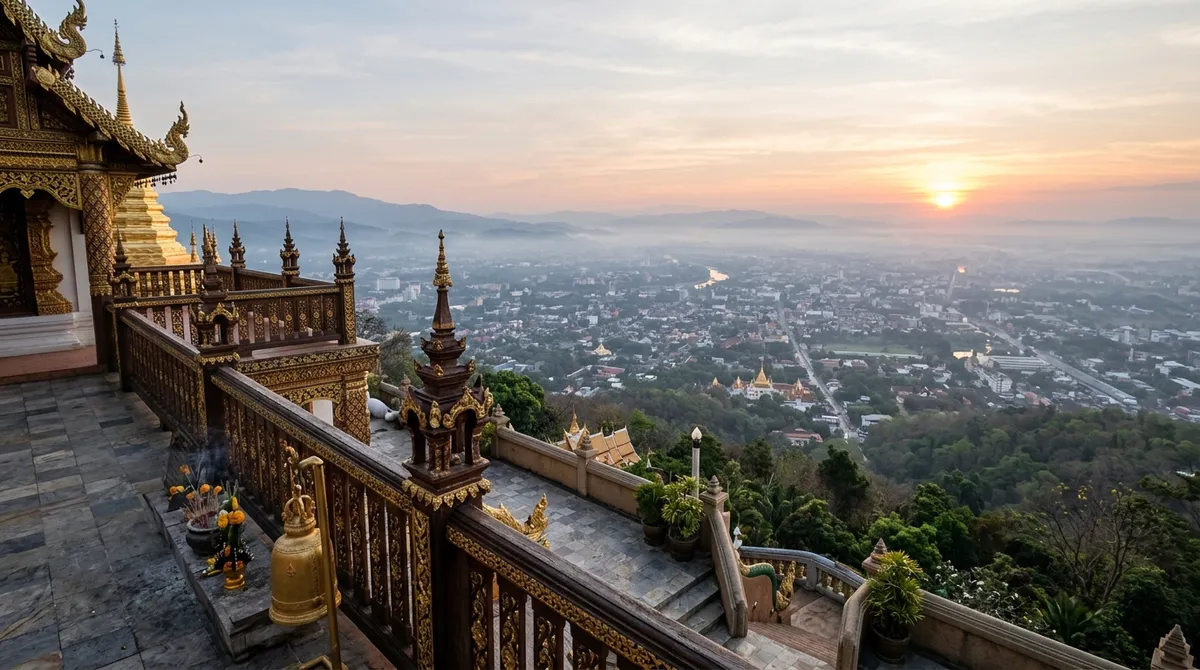
Before ascending into remote highland wilderness, take time to visit revered cultural sanctuaries to receive blessings for safe passage. If traveling through Hang Dong and Samoeng, ascend the hillside stairs to Wat Phra That Sri Mueang Pong Hilltop Stupa for sweeping forest panoramas. If your broader loop passes north through Mae Taeng, stock up on seasonal fruits and regional provisions at Kad San Mahaphon Morning Market.
Within Chiang Mai's historic old town, stop by Wat Phan Waen Ancient Herbal Temple to learn about traditional Lanna herbal medicine, or explore the intricate teakwood architecture of Wat Sai Mun Mueang Shan Temple near the southern moat. For those traveling through the eastern rural districts of San Sai, pay homage beside the riverbanks at Wat Mae Kaet Noi Riverside Monastery before beginning your mountain ascent.
Essential Packing Checklist for an Off-Grid Stay
To ensure your stay among the terraces is comfortable and rejuvenating, keep these practical necessities in your daypack:
- High-Capacity Power Banks: Bring at least one or two fully charged 20,000 mAh portable battery banks to keep your camera batteries and smartphones powered throughout your stay.
- Reliable Headlamp or Flashlight: Navigating narrow earthen terrace borders or visiting the outdoor bathroom after twilight requires hands-free, dependable illumination.
- Warm Layers and Insect Defense: Even during warm daytime months, mountain evening temperatures drop rapidly to 14 to 17 degrees Celsius. Pack a cozy fleece, thermal socks, and botanical mosquito repellent.
- Strict Environmental Respect: Never step heavily or trample earthen retaining dikes. Never pick growing rice heads for photographs, and carry every scrap of plastic waste back to municipal collection points in Chiang Mai city.
Plan Your Chiang Mai Journey · Verified Booking Partners
Compare real-time rates for stays, curated day tours, flight tickets, and transport with best price guarantee and flexible cancellation: