



























Ban Ton Pao: The Mulberry Sa Paper Capital of Southeast Asia
Welcome, fellow admirers of eco-conscious artistry and tactile craftsmanship. Today, Uncle Kham invites you along the historic Old San Kamphaeng Road east of Chiang Mai city to explore a community whose botanical creations touch every corner of the globe: Ban Ton Pao. Celebrated as the largest traditional mulberry Sa paper manufacturing village in Southeast Asia, this quiet rural hamlet has mastered the transformative alchemy of turning wild mulberry bark into silky, durable, and floral-embellished art sheets.
The name Ton Pao commemorates the native Pao trees that historically blanketed these plains. In past centuries, Tai Lue and Northern Thai villagers recognized that the wild Paper Mulberry tree (Broussonetia papyrifera) flourishing along stream banks possessed long, flexible bast fibers. Monks and temple scribes initially processed this bark to create sacred folding manuscripts (Samut Khoi), colorful festival lanterns, and ceremonial Tung flags for Yi Peng. Over generations, this religious craft blossomed into an internationally respected village industry dedicated to green, renewable stationery.
The Ancient Mulberry Paper Process: Boil, Pound, Dip, Frame, and Sun-Dry
Visiting the family-run workshops and community learning centers of Ban Ton Pao offers a mesmerizing glimpse into centuries-old artisanal production. The journey begins with dried ribbons of raw mulberry bark, which are boiled in large iron cauldrons with natural wood ash for three to four hours. The alkaline ash softens the tough lignin without harsh synthetic bleaching agents, leaving behind clean, creamy-white vegetable fibers.
Next comes the energetic step of wooden mallet pounding. Artisans strike the softened fibers on massive teak blocks until the individual filaments separate into a smooth, fluffy pulp. In the dipping studio, this pulp is dispersed within wide basins of water. Master papermakers dip a fine mesh bamboo frame (deckle) into the water, rhythmically shaking it to distribute fibers uniformly across the screen.
Before lifting the screen to dry, artisans arrange freshly picked botanical petals—vibrant bougainvillea, orange marigolds, green maidenhair ferns, and wild grasses—directly onto the wet fiber slurry. The framed screens are then aligned in open-air drying yards beneath the bright Northern Thai sun. Once fully dried, the finished Sa paper peels away smoothly from the mesh, revealing an organic, textured sheet with wildflower petals permanently fused into the natural fiber matrix.
Planning Your Chiang Mai Trip? Book Early for Lower Rates
Check real-time rates and secret deals on Agoda, our official travel partner. Enjoy 100% free cancellation, pay at check-in, and earn Agoda Cash rewards.
Hands-On Creative Workshops & Eco-Friendly Living
Ban Ton Pao is a welcoming destination for experiential travelers of all generations. Hands-on DIY Sa Paper Workshops invite guests to dip their own frames, compose bespoke botanical artworks using freshly clipped garden blossoms, and craft personalized keepsakes. Visitors can fold their dried sheets into hand-stitched journals, origami gift boxes, desk lanterns, calligraphy greeting cards, and classical folding fans.
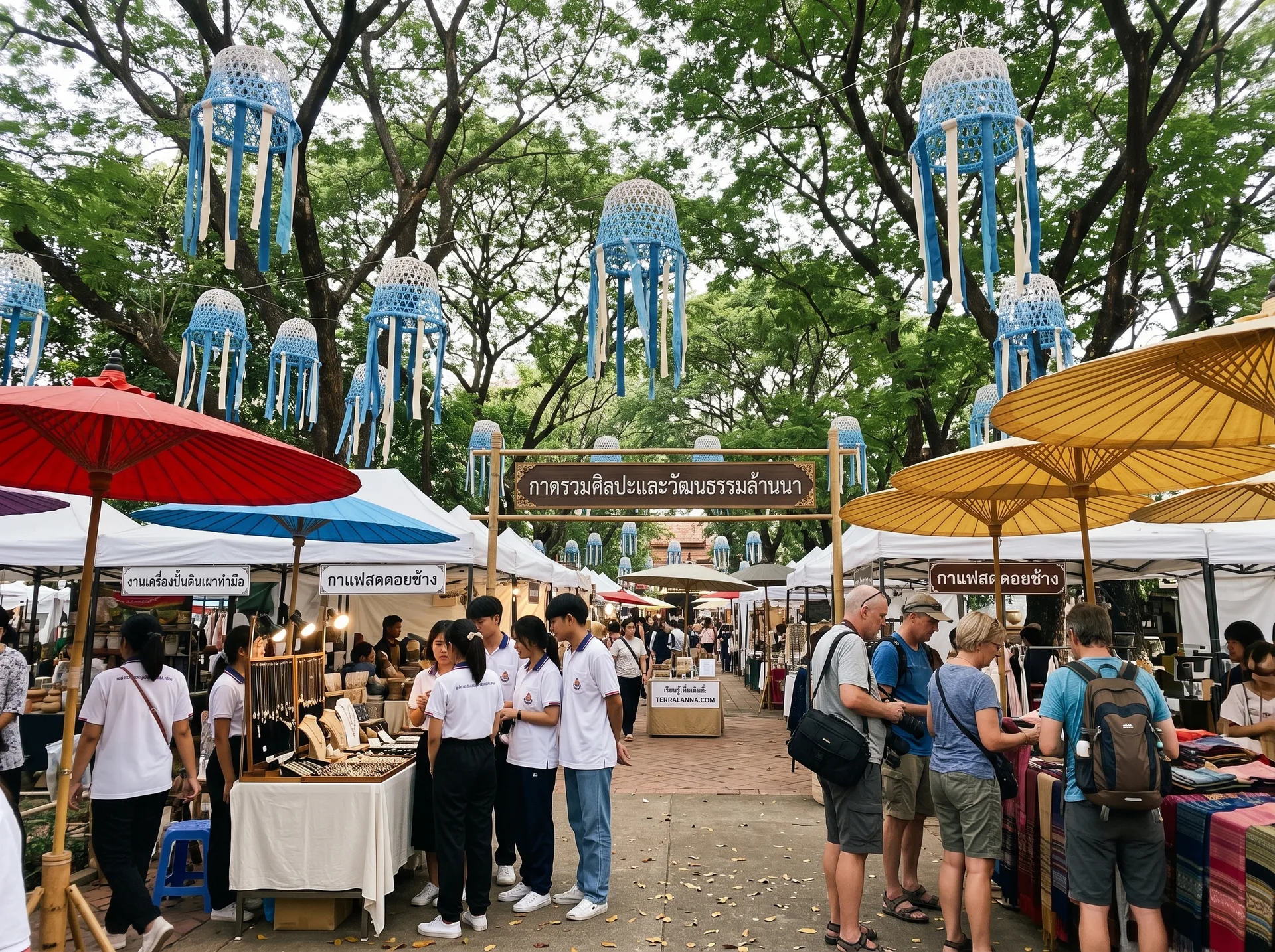
Moreover, Ban Ton Pao acts as the vital artisanal foundation for its famous neighbor, the Bo Sang Umbrella Village. Local umbrella makers source their tough, tear-resistant mulberry parchment directly from Ban Ton Pao to frame parasols and festival lanterns. Because Sa paper is 100% biodegradable, chemical-free, and crafted from sustainably pruned tree bark, it represents the epitome of circular green craftsmanship.
Harmonizing Sustainable Craft with Eco-Conscious Travel
The organic, circular ethos of Ban Ton Pao aligns perfectly with Chiang Mai's modern environmental initiatives. For travelers eager to embrace sustainable festival participation and river protection, Uncle Kham recommends reading our comprehensive guides to zero-waste celebrations, including zero-pollution ice krathong making guide for the Ping River, as well as an honest environmental analysis at biodegradable bread krathongs and their pros and cons on river ecology.
When participating in water festivities, consider selecting designated enclosed waterways via closed-system krathong floating spots in Chiang Mai for green travel, or volunteer to help restore the riverbanks by joining morning-after river cleanup volunteers along the Ping River.
To conclude your cultural explorations with timeless spiritual merit, light an earthen oil lantern at the ancient heart of the Old City by visiting Wat Inthanon city navel Yi Peng candle-lighting blessing guide, basking in peaceful Buddhist mindfulness.
Visitor Travel Guide & Uncle Kham's Helpful Advice
- Location: Ban Ton Pao, Ton Pao Sub-district, San Kamphaeng District, Chiang Mai 50130, Thailand.
- Getting There: Drive east from Chiang Mai along Highway 1006 (Old Chiang Mai-San Kamphaeng Road). Just 800 meters beyond the Bo Sang intersection, the entrance to Ban Ton Pao village appears on the left with large directional signs. Distance is roughly 9 kilometers (15 to 20 minutes).
- Opening Hours: Studios and workshops are open daily from 08:30 AM to 05:00 PM.
- Uncle Kham's Workshop Tip: Plan to arrive in the morning around 09:00 to 11:00 AM. Crafting your paper before midday ensures that the tropical afternoon sun will dry your botanical frame completely within 1 to 2 hours, allowing you to take your personalized stationery home on the very same day.
Plan Your Chiang Mai Journey · Verified Booking Partners
Compare real-time rates for stays, curated day tours, flight tickets, and transport with best price guarantee and flexible cancellation: