



























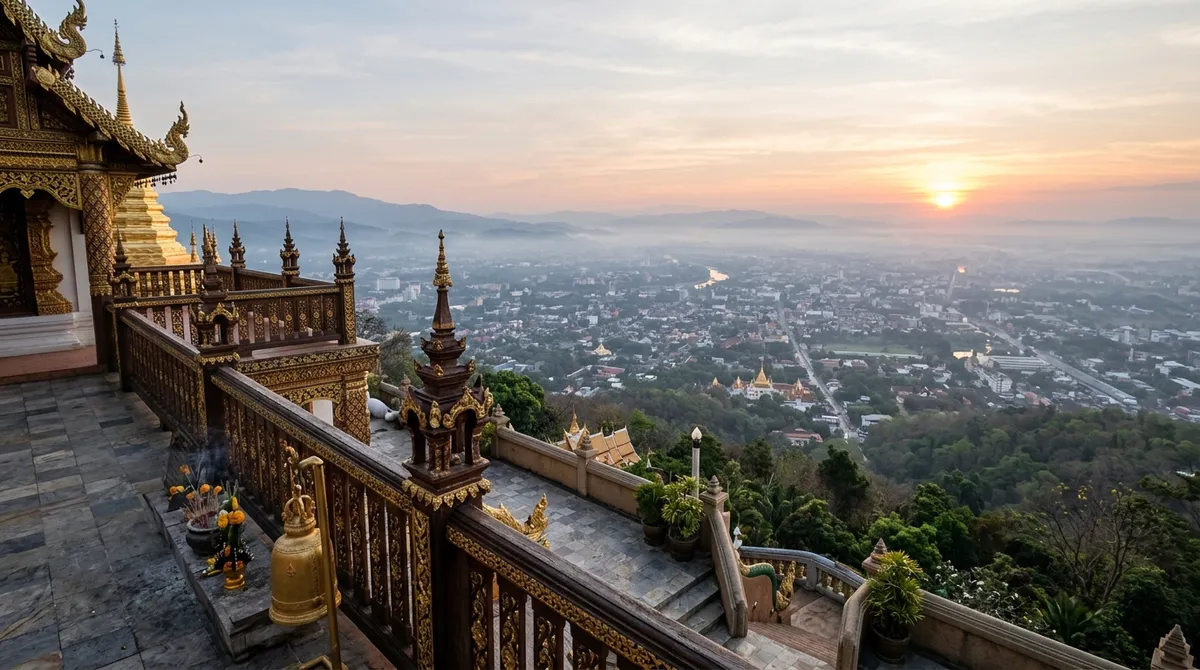
A warm northern welcome to all history scholars, antique enthusiasts, and mindful travelers! Today, Uncle Kham takes you along the Superhighway near the historic royal monastery of Wat Chet Yot to explore northern Thailand's premier archaeological repository: the Chiang Mai National Museum. Under the care of the Fine Arts Department, this distinguished institution safeguards the finest archaeological discoveries, sacred sculptures, royal epigraphy, and artistic triumphs of the Lanna Kingdom spanning prehistoric times to modern statehood.
Lanna Architectural Pavilion and Northern Thailand's Premier Antiquities Repository
Officially inaugurated in 1973 under royal patron auspices, the Chiang Mai National Museum was purposefully constructed in an elegant modern-adaptive Lanna architectural style. The building features soaring multi-tiered hipped roofs tiled in traditional unglazed terracotta, surrounded by airy verandas, timber fretwork, and decorative Kalae roof apexes that harmonize beautifully with northern aesthetic ideals.
As the primary antiquities repository for the eight upper northern provinces, the museum underwent comprehensive gallery modernizations to provide world-class conservation environments with temperature and humidity controls. Clear, engaging bilingual interpretation panels (Thai and English) guide visitors effortlessly through centuries of royal triumphs, architectural evolution, and artistic expression.
The Masterpiece: Colossal Bronze Buddha Head of Wat Manorom
Entering the classical Lanna sculpture hall, visitors are inevitably drawn to the undisputed masterwork of northern Thai Buddhist art: the colossal bronze Buddha head of Wat Manorom. Unearthed from an ancient temple ruin in Chiang Mai city, this monumental sculpture measures nearly two meters in height for the head alone — suggesting that the complete seated image originally soared over seven to eight meters tall!
Cast during the 15th-century reign of King Tilokaraj (1441–1487), Lanna's greatest warrior-monarch and Buddhist patron, this sculpture represents the peak of classical Lanna bronze foundries. The serene oval countenance, gracefully arched eyebrows sweeping like drawn bows, downcast contemplative eyes radiating profound compassion, and tightly coiled curls culminating in an ornate flame finial reveal unmatched metallurgical mastery. Casting a bronze statue of this colossal scale required sophisticated kiln engineering and alloy formulas that rivaled any civilization in contemporary Europe or Ming-dynasty China.
Planning Your Chiang Mai Trip? Book Early for Lower Rates
Check real-time rates and secret deals on Agoda, our official travel partner. Enjoy 100% free cancellation, pay at check-in, and earn Agoda Cash rewards.
Masterpieces of Wiang Kalong and San Kamphaeng Kiln Celadon Wares
Another exhibition that consistently captivates Uncle Kham is the extensive gallery devoted to historic Lanna ceramics, featuring rare specimens produced by the renowned Wiang Kalong kilns of Chiang Rai and the San Kamphaeng kilns of Chiang Mai. Wiang Kalong celadon is world-famous among collectors for its eggshell-thin white clay bodies, pale crackled glazes, and flowing underglaze black iron-oxide brushwork depicting birds, flora, and mythical beasts reminiscent of classical Chinese ink paintings.
These excavated vessels prove that during the 14th to 16th centuries, Lanna functioned as a vibrant industrial exporter. Northern celadon wares traveled along overland horse caravan routes and river networks across Southeast Asia, reaching the Sultanate of Malacca, the Ayutthaya Kingdom, and maritime trade ports.
Historical Chronology: Golden Era, Burmese Dominance, and King Kawila's Revival
The museum's chronological layout begins with the 7th-to-13th century Hariphunchai Kingdom of Lamphun, featuring evocative terracotta Buddha plaques and guardian deities displaying Mon-Dvaravati artistic traits. It then flows into the foundational glory of King Mengrai's 1296 founding of Chiang Mai, moving onward through the prosperous 15th-century golden age.
Visitors then confront the complex two-century era of Burmese suzerainty (1558–1774), examining how northern craftsmanship absorbed Pagan and Mandalay stylistic motifs, before culminating in the heroic late-18th-century revival led by King Chao Kawila. Under the resettlement policy known as "Gep Phak Sai Sa, Gep Kha Sai Mueang" (Gather vegetables into the basket, gather people into the city), Kawila resettled Shan, Tai Lue, and Tai Khun clans to repopulate a devastated Chiang Mai, shaping the rich ethnic mosaic of our modern northern culture.
Admission Fees, Location Access on Superhighway, and Guided Gallery Navigation
Situated on the Superhighway (Highway 11) adjacent to Wat Chet Yot, the museum is easily reached in 15 to 20 minutes from Chiang Mai International Airport following Uncle Kham's Chiang Mai airport transfer guide covering buses and taxis. Admission is exceptional value at 30 THB for Thai citizens and 100 THB for international travelers.
After your museum visit, refresh with artisanal pour-over brews using our Chiang Mai specialty coffee roasters cupping guide, or unwind at One Nimman lifestyle village for evening dining and boutique shopping.
For your subsequent exploration days, escape to the tranquil forested hillside of Wat Pha Lat secret monk's trail forest monastery on Doi Suthep, or plan an exhilarating alpine hiking adventure across the golden savannah ridges of Doi Mon Chong goral sanctuary and golden grassland.
The Chiang Mai National Museum provides the crucial intellectual compass that transforms any trip to northern Thailand into a deeply resonant cultural discovery. Uncle Kham warmly welcomes you to explore our ancestral treasures!
Plan Your Chiang Mai Journey · Verified Booking Partners
Compare real-time rates for stays, curated day tours, flight tickets, and transport with best price guarantee and flexible cancellation: