



























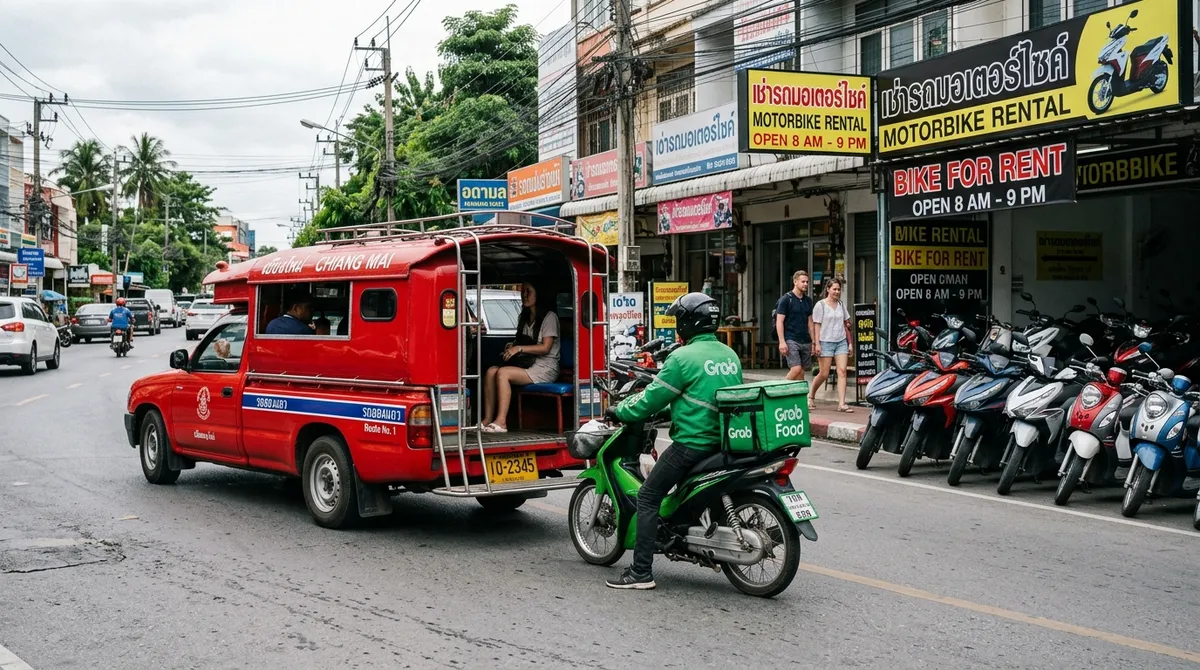
Chiang Mai Red Truck (Songthaew): Decoding Our Iconic Transit System
Sawatdee krub! I am Uncle Kham, your local elder and neighbor from Chiang Mai. If you ask anyone what single vehicle defines the visual rhythm of Chiang Mai streets, the answer is undoubtedly our beloved Red Songthaew (literally "Two-Rows," referring to the twin bench seats mounted in the rear bed). These scarlet modified pickup trucks have crisscrossed our city avenues, moats, and narrow alleyways for over half a century, serving as the heartbeat of northern public transit.
Yet for first-time visitors, hailing a red truck can feel intimidating and confusing. Why do some drivers quote 150 THB while others charge 30 THB? Why did that empty red truck drive right past you without stopping? Today, Uncle Kham demystifies the dynamic workings of our shared transit system, reveals the official 30-baht fare rule, and equips you with insider hailing tactics so you ride across town with effortless local confidence.
Mastering the red truck makes hopping between the ancient temple lanes of our Chiang Mai Old City walking guide, the bustling food stalls of Warorot Market (Kad Luang), the lively festivities of the Sunday Walking Street, and boutique lodgings featured in our guide to best Nimman hotels in Chiang Mai an affordable and authentic breeze.
The Golden Principle: Red Trucks Are Dynamic Shared Shuttles, Not Cabs
The single most important concept travelers must understand is that a red truck is a dynamic shared transit shuttle, not a private metered taxi. Drivers do not operate along fixed bus numbers, nor do they cruise exclusively for a single private party. Instead, the driver dynamically plans their route based on the destination of everyone sitting in the back.
For example, if the truck already holds two local passengers bound for Warorot Market on the eastern riverbank, and you hail the truck asking to go west to Nimman Road, the driver will calculate that delivering you first will take existing passengers miles out of their way. The driver will simply shake their head and drive on. This is never personal or rude; it simply means your route clashes with their current run. When your destination aligns with their heading, the driver nods immediately.
Planning Your Chiang Mai Trip? Book Early for Lower Rates
Check real-time rates and secret deals on Agoda, our official travel partner. Enjoy 100% free cancellation, pay at check-in, and earn Agoda Cash rewards.
The Official 30 THB Municipal Fare Rule & Out-of-Zone Rates
Under regulations established by the Chiang Mai Provincial Land Transport Office, fare structures are clearly defined:
- Inner City Municipal Zone (Standard 30 THB Flat Fare): Encompasses the entire square Old City, Tha Phae Gate, Chiang Mai Gate, Warorot Market, Chang Khlan / Night Bazaar, Nimman Road, Santitham, Jed Yod, and the Chiang Mai Railway Station. Any journey between these inner urban zones costs precisely 30 THB per passenger.
- Outer Ring Roads & Suburbs (40 - 60 THB per passenger): Traveling outside the primary municipal ring—such as to Central Festival mall, Arcade Bus Terminal, Payap University, or the Government Provincial Complex—justifies a fair supplemental charge of 40 to 50 THB based on extra mileage.
- Mountain Ascents & Distant Districts: Trips up Doi Suthep, Wat Phra That Doi Kham, or outer districts like Mae Rim require dedicated fixed songthaew terminal queues or mutually negotiated private charter rates.
How to Hail & Communicate Destinations Like a Seasoned Local
Here are Uncle Kham’s 3 golden rules for securing standard 30-baht fares without getting quoted steep private charter prices:
- The Proper Local Hail: Stand safely on the sidewalk curb. Extend your arm outward at waist level with your palm facing downward, gently waving your hand up and down. (Never wave wildly above your head or point aggressively like calling a New York yellow cab).
- State Major Landmarks Only—Never Ask the Price: Step up to the driver’s side window and state your target landmark clearly: "Pratu Tha Phae krub" (Tha Phae Gate), "Kad Luang krub" (Warorot Market), or "Nimman Soi 9 krub." Crucially: Never ask "How much?" or "Can you go?" Asking "How much?" instantly signals that you are an unfamiliar tourist unaware of standard prices, practically inviting the driver to quote an inflated private charter rate of 100 to 200 THB!
- If the Driver Nods, Hop in Immediately: When the driver nods, the destination is accepted. Walk immediately around to the back and climb aboard without negotiating. Settle comfortably into the bench and pay your 30 THB upon arrival.
“Quiet confidence is your greatest asset. Name your landmark clearly, make respectful eye contact, hop on board, and hand the driver exact change at the end. That is how locals ride!” — Uncle Kham's Insider Trick
On-Board Etiquette, Bell Ringing & Payment Secrets
To enjoy a pleasant ride alongside local commuters, keep these simple manners in mind:
- Slide All the Way Forward: When stepping into the truck bed, slide toward the forward cabin wall to leave open space near the rear tailgate for incoming passengers.
- Keep Benches Clear of Bags: Rest backpacks, daypacks, and grocery bags on the floor between your knees rather than taking up a paid seat.
- Pressing the Stop Bell: Look up at the ceiling above the central aisle. You will see black or red buzzer buttons. When your destination approaches roughly 50 meters ahead, press the buzzer once firmly. The driver will indicate and pull smoothly to the curb. (Never yell or pound on the glass window).
- Payment at the Cab Window: Exit carefully via the rear steps, walk to the front passenger or driver window, and hand over your exact 30 THB fare (a 20-baht note plus a 10-baht coin). Almost all drivers now accept PromptPay QR mobile transfers as well.
Plan Your Chiang Mai Journey · Verified Booking Partners
Compare real-time rates for stays, curated day tours, flight tickets, and transport with best price guarantee and flexible cancellation: