



























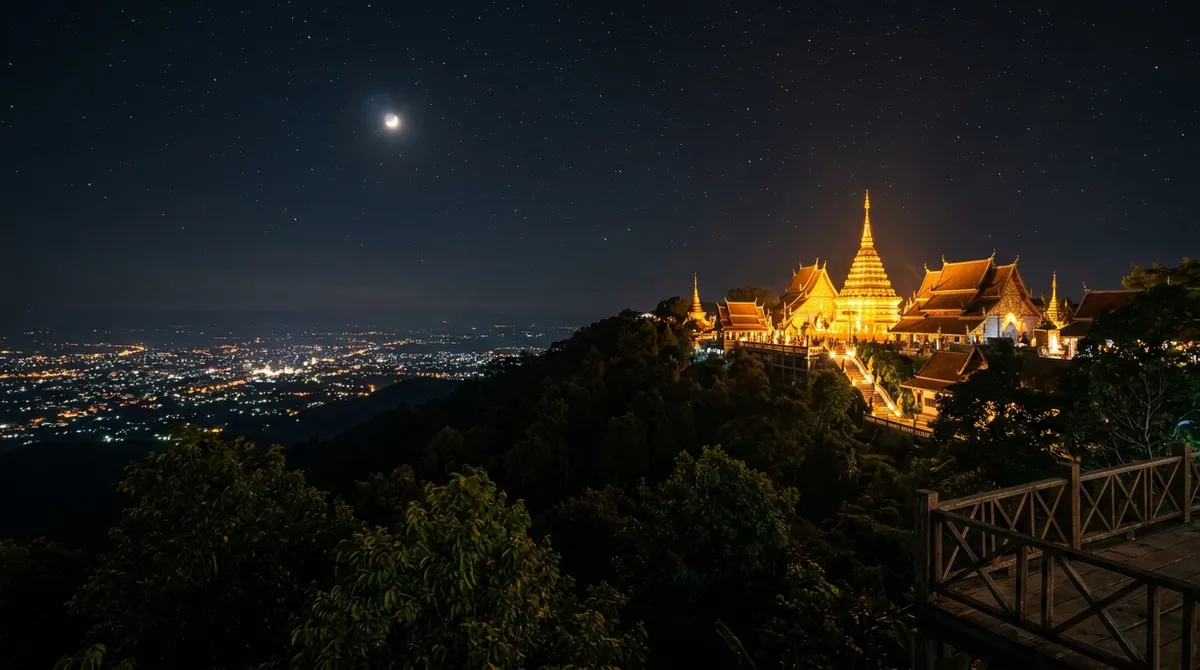
Doi Mon Chong: The Jewel of the Western Wilderness and Highland Savannas
For backcountry trekkers yearning for an untamed expedition into Northern Thailand’s deep wilderness, Uncle Kham awards first honors to Doi Mon Chong in the Omkoi Wildlife Sanctuary. Resting in the southernmost pocket of Chiang Mai province along the rugged frontier of Tak, this mountain ridge ascends to 1,929 meters above sea level at its iconic Hua Singha (Lion's Head) summit. In ancient Northern Thai, "mon" designates a high rounded hill, while "chong" evokes an elevated sanctuary or meditation hermitage.
The sublime wonder of Mon Chong lies in its dramatic seasonal metamorphosis. In early winter (November), the high-altitude meadow canopies shimmer in vivid emerald green. But as cold continental winds sweep through between mid-December 2026 and February 2027, the grasses desiccate, transforming the ridge into an unbroken "Golden Alpine Savanna" billowing rhythmically beneath the mountain gusts. The wildlife sanctuary permits human entry for only three to four months annually, strictly safeguarding the delicate montane ecology and the sanctuary’s endangered ungulate populations.
Online Permits and the Musoe Hill Tribe Porter Cooperative
Because Doi Mon Chong is legally designated as a sanctuary rather than a standard national park, regulations are rigorously enforced by the Omkoi Wildlife Sanctuary authorities:
- Advance Quota Reservations: Hikers must register in advance via the sanctuary’s electronic permit portal or through the Ban Musoe Lang Mueang community center. Daily visitor entries are strictly capped to mitigate human disturbance upon native Asian elephant herds and wild serow.
- The 16-Kilometer 4WD Wilderness Transfer: From the Musoe visitor center, trekkers board local four-wheel-drive modified farm trucks to traverse 16 kilometers of punishing rutted mud tracks and boulder fields. This spine-rattling 1.5-to-2-hour off-road journey terminates at the Huai Ling trailhead.
- Local Musoe (Lahu) Porter Cooperative: Uncle Kham cannot stress this enough: hire the local village porters. Standardized fees run roughly 30 to 35 THB per kilogram for a standard two-day, one-night trek. These indigenous hill tribe guides carry bulky communal tents, sleeping bags, and water provisions with extraordinary grace, allowing hikers to walk unburdened while funneling vital economic support directly into village households.
Planning Your Chiang Mai Trip? Book Early for Lower Rates
Check real-time rates and secret deals on Agoda, our official travel partner. Enjoy 100% free cancellation, pay at check-in, and earn Agoda Cash rewards.
Trail Anatomy: Scaling Hua Singha Peak and Spotting Mountain Serow
The walking distance from the Huai Ling drop-off to the designated wilderness campsite measures approximately 4 to 5 kilometers, requiring 2.5 to 3.5 hours of steady hiking across two distinct environments:
- The Montane Jungle Ascent: The initial kilometer climbs steeply through a dense canopy of ancient Himalayan oaks, wild banana stands, and gnarled fig roots. The incline quickens as you negotiate "Noen Ma Hop" (Panting Dog Ridge), where hikers must pause frequently to regulate respiration at increasing altitude.
- The Dragon-Back Ridge and Golden Savanna: Emerging abruptly from the trees onto the open ridge, fierce northern breezes whistle through your fleece layers. The trail narrows to an undulating dirt spine resembling the back of a sleeping dragon. Golden grasslands sweep in all directions, framed by sheer chasms tumbling down into the Omkoi river basin.
- Hua Singha (The Lion's Head Summit): The crowning zenith of Mon Chong features a sheer granite prow jutting proudly southward, resembling a crouching lion gazing into the distance. Standing here at sunset, golden rays ignite the dry grass blades into a sea of amber light. If you scan the vertical limestone cliffs below with binoculars, you stand an exceptional chance of observing the endangered Chinese Serow (Capricornis sumatraensis) grazing peacefully along vertiginous ledges.
Primitive Wilderness Camping and Leave-No-Trace Principles
The designated camp zone sits sheltered within a mountain swale below the exposed ridge to block violent winds. This is primitive wilderness camping in its purest form: there is no electrical grid, zero cellular signal at camp (reception flickers only on exposed ridge points), and all cooking water must be hauled by porters from deep mountain springs.
Winter night temperatures routinely tumble to between 2°C and 6°C. Crucial equipment includes an insulated ground mat to block earth chills and a sleeping bag rated to a comfort level of 0°C. Uncle Kham’s most sacred instruction is unwavering: pack out every single gram of trash you bring in. No plastic food wrappers or glass bottles should ever remain on this wild ridge, preserving this sacred mountain ecosystem for generations to come.
Connecting Your Northern Backcountry Expedition
After trekking back to civilization from Omkoi’s southern ridges, consider expanding your northern expedition. Journey northward to experience dawn atop Thailand’s pinnacle with the New Year first sunrise blessing on Doi Inthanon, sleep under pine-fringed stars at Doi Pha Hom Pok high-altitude ridges, or refresh your muscles with a fun scramble up the non-slip ledges of the Bua Tong sticky waterfalls climbing tour. When you return to provincial headquarters, take a leisurely stroll through the moated lanes with the Chiang Mai Old City cultural walking guide, and replenish your calories over steaming curried noodles at legendary local khao soi institutions across town.
Plan Your Chiang Mai Journey · Verified Booking Partners
Compare real-time rates for stays, curated day tours, flight tickets, and transport with best price guarantee and flexible cancellation: