



























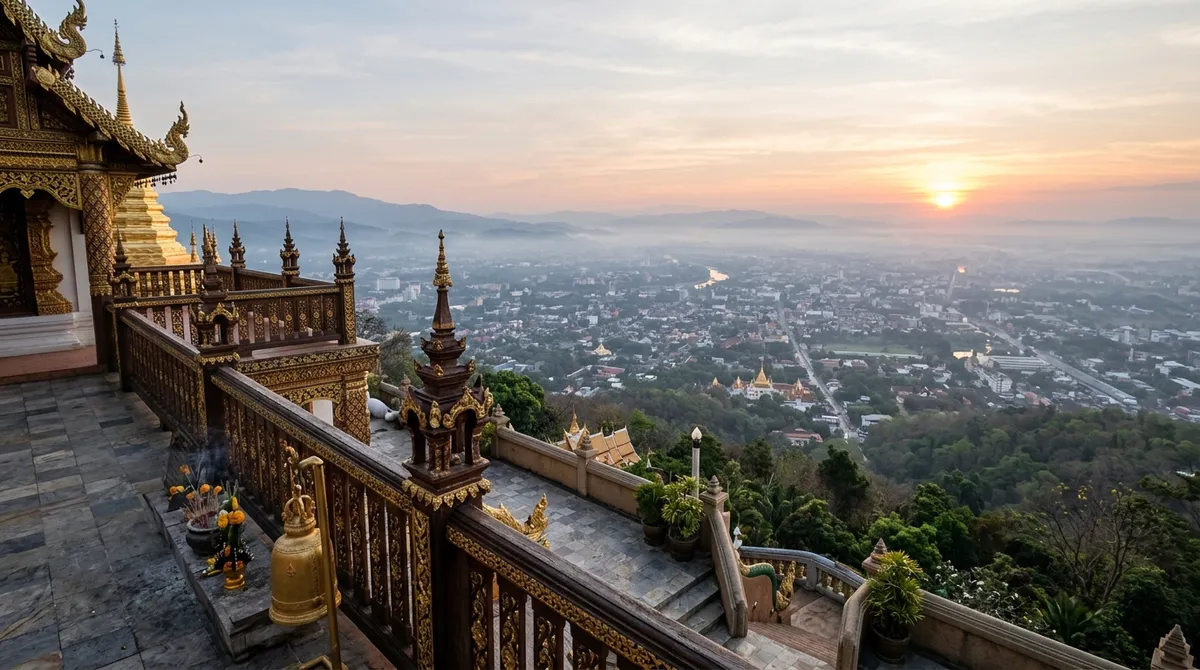
Welcome, dear travelers and kindred adventurers, to Uncle Kham's local travel journal. Today, I am taking you away from the bustling urban avenues of Chiang Mai into the cool, mist-kissed highlands of Mae Taeng District. Perched at an elevation of approximately 1,425 meters above sea level, Doi Mon Ngo remains one of Northern Thailand's most tranquil highland retreats. Far removed from the congested tourist crowds, this mountain sanctuary offers an extraordinary 360-degree panoramic sunrise viewpoint over endless oceans of white mist, cascading heirloom tea terraces, and the heartfelt warmth of an authentic Hmong hill-tribe community.
1. The Timeless Lore and Heritage of Doi Mon Ngo
Many travelers ask Uncle Kham about the origins of the name “Mon Ngo”. In local Northern Lanna vernacular, the word “Ngo” historically described an atmosphere enveloped in perpetual shadows, dense mist, or secluded stillness. Local village folklore also recounts ancient rocky cliffs protruding like weathered tree snags atop the mountain ridge, standing firm against seasonal monsoon winds. For generations, the indigenous Hmong people inhabited these ridge tops, initially cultivating subsistence mountain crops before the transformative Royal Project introduced sustainable agricultural practices, organic Arabica coffee, Assam tea, and cool-climate orchards, turning once-barren hillsides into thriving emerald green slopes.
“When dawn breaks over the summit ridge of Doi Mon Ngo, the billowing white cloud cover settles quietly beneath your feet like a boundless sea of cotton. The silence of the mountain cleanses the soul.” — Uncle Kham
Standing upon the summit rim during clear winter dawns, visitors can gaze across layered mountain ridges spanning as far as the eye can see. To the north lies the rugged contour of the Phi Pan Nam range; to the east, the sun rises with golden brilliance over the Mae Taeng valley; while to the west, pristine watershed jungles stretch beneath the crisp morning canopy. It is one of the few places in Chiang Mai where one can witness both sunrise and sunset from virtually the same ridgeline.
2. Key Highlights: 360-Degree Sea of Mist, Heirloom Tea Terraces & Agro-Tourism
To help you extract the deepest joy and practical value from your journey, Uncle Kham has detailed the top experiences awaiting you at Doi Mon Ngo:
- Summit 360-Degree Sunrise Viewpoint: The undisputed crowning jewel. Rising early at around 05:30 AM allows you to ascend to the crest just in time to watch the horizon transform from deep indigo into vibrant amber, illuminating thick cloud blankets resting peacefully in the lower mountain basins.
- Terraced Tea Plantations & Village Roasteries: Gentle hillside slopes are cloaked in emerald tea bushes. Visitors can stroll through organic rows, observe traditional hand-picking of tender tea leaves, and savor freshly wok-roasted tea brews boasting a sweet, lingering fragrance.
- Doi Mon Ngo Royal Project Development Center: An inspiring highland agricultural research station showcasing thriving experimental plots of Hass avocados, passionfruit, vibrant winter blossoms, and crisp organic greenhouse vegetables.
- Highland Camping Under Starlit Canopies: Camping enthusiasts will find designated community grounds perched on windy ridges. Sleeping beneath brilliant constellations with temperatures dropping into single digits, followed by waking up to drifting mist outside your tent flap, is an unforgettable mountain memory.
Planning Your Chiang Mai Trip? Book Early for Lower Rates
Check real-time rates and secret deals on Agoda, our official travel partner. Enjoy 100% free cancellation, pay at check-in, and earn Agoda Cash rewards.
3. Navigating the Route, Road Conditions, and Recommended Vehicles
Doi Mon Ngo is situated roughly 65 kilometers north of Chiang Mai city center, requiring approximately 1.5 to 2 hours of driving time. Travel north along Chotana Road (Highway 107) toward Mae Taeng. Upon reaching Mae Malai Market, take a left turn onto Highway 1095 (the scenic mountain highway toward Pai). Continue along Route 1095 for about 12 kilometers until you see the marked right turn leading to Mueang Kai subdistrict and Ban Mon Ngo.
Uncle Kham must share an essential cautionary note regarding road logistics: The route from Highway 1095 into the valley and up toward Ban Mon Ngo village is entirely paved with asphalt and concrete, although winding and featuring steady gradients. Any well-maintained family sedan, eco-car, or motorbike can safely reach the main village and the Royal Project Center. However, the final 2-kilometer ascent from the village up to the summit viewpoint consists of steep, rutted dirt and crushed-rock trails. Low-clearance passenger cars must never attempt this last leg. Uncle Kham strongly recommends parking at the village station and hiring a local community 4WD pickup truck, which costs a modest fee and directly supports local families while ensuring complete road safety.
| Journey Segment | Distance / Surface Type | Recommended Vehicle | Uncle Kham's Insider Advice |
|---|---|---|---|
| Chiang Mai City to Mae Malai Market | ~40 km / 4-lane paved highway | All vehicles | Refuel your vehicle and purchase fresh supplies or warm snacks at the bustling morning market. |
| Highway 1095 Junction to Ban Mon Ngo | ~23 km / Winding paved mountain road | Sedans, geared motorbikes, pickups | Use low engine gear on steep sections and gently tap your horn when navigating blind hairpin curves. |
| Ban Mon Ngo Village to Summit Crest | ~2 km / Steep unpaved dirt & gravel track | High-clearance 4WD or community pickup | Do not attempt with standard sedans. Local transport services are readily available at the village base. |
4. Indigenous Hmong Culture, Highland Flavors & Sustainable Travel
Beyond its breathtaking geographical drama, the living soul of Doi Mon Ngo resides within the modest wooden dwellings of Ban Mon Ngo. Here, Hmong matriarchs skillfully hand-stitch intricate geometric batik fabrics, while elders share timeless mountain folklore beside crackling hearths. Food lovers will delight in hearty highland specialties prepared from freshly harvested mountain ingredients: crunchy stir-fried tea leaves, roasted hill-tribe chili dip served with steamed highland mustard greens, fragrant purple sticky rice, and soothing double-boiled black bone chicken herbal soup that warms you to the core.
As responsible travelers, Uncle Kham urges everyone to tread lightly upon this precious terrain. Avoid single-use plastics, pack out all personal refuse, honor the privacy of villagers going about their daily routines, maintain quiet hours after 21:00 at campsites, and purchase fresh farm produce directly from the villagers to foster genuine sustainable tourism.
5. Connecting Your Journey: Complementary Trails and Cultural Sanctuaries
Once you descend from the cloud-kissed heights of Mae Taeng, consider linking your journey with other natural and cultural treasures across Chiang Mai. On your route back through Mae Rim, take a restorative detour into the lush forest canopy at Tad Mork Waterfall Mae Rim, a secluded woodland cascade cascading down a dramatic rock gorge. If your travels take you up the winding trails of Doi Suthep, make time to explore Wang Bua Ban Waterfall Doi Suthep, renowned for its crystal pools and touching historical lore.
Upon returning to the historical heart of Chiang Mai city, pay homage to the city's protective spiritual foundation at the revered Inthakhin City Pillar Shrine Wat Chedi Luang. Afterwards, stroll through the bustling centuries-old trading district along the Ping River to pay your respects for prosperity and courage at the historic Kuan U Shrine Kad Luang, and cross nearby to receive blessings for safe journeys and trade harmony at the riverside Chao Mae Tubtim Shrine Ping River, where local heritage flourishes across generations.
Plan Your Chiang Mai Journey · Verified Booking Partners
Compare real-time rates for stays, curated day tours, flight tickets, and transport with best price guarantee and flexible cancellation: