



























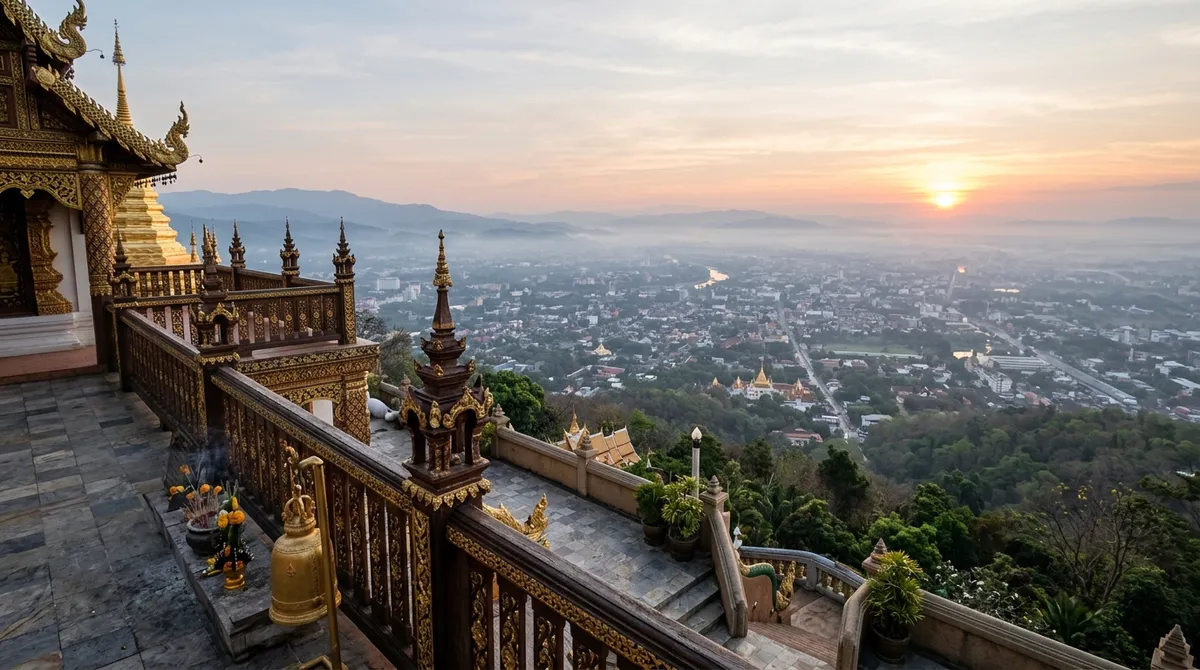
Welcome to Kew Mae Pan: The Crown Jewel of Doi Inthanon's High Alpine Ridge
Warmest greetings to all travelers and adventure seekers around the globe! Uncle Kham is delighted to welcome you to the majestic peak of Doi Inthanon, Thailand's highest summit. Whenever fellow wanderers ask me which short hiking trail in Northern Thailand provides the most breathtaking vistas, freshest mountain air, and dramatic sub-alpine scenery, my immediate and unhesitating answer is always the Kew Mae Pan Nature Trail. Perched at an altitude of approximately 2,200 meters above sea level, this 3.2-kilometer loop trail serves as an awe-inspiring open-air ecological classroom and a sanctuary of untouched high-altitude biodiversity.
What makes Kew Mae Pan genuinely extraordinary is its dramatic landscape contrast. Within a single two-to-three-hour circuit, you transition from a dense, emerald-green mossy cloud forest teeming with prehistoric ferns into an expansive, windswept golden sub-alpine savanna perched precariously on a razor-thin ridge. Below you, vast oceans of white fluffy mist crash against rugged granite crags like silent ocean waves. For those eager to deepen their winter trekking plans across Chiang Mai's roof, you can also consult Uncle Kham's comprehensive companion piece on the Kew Mae Pan winter mist trail Doi Inthanon guide.
The 21 Nature Stations: Traversing Cloud Forest to Open Ridge
The trail is meticulously designed into 21 numbered interpretive stations, providing deep ecological insights into how plants and wildlife adapt to extreme mountain conditions. Uncle Kham divides the journey into three distinct environmental chapters:
- Zone 1: The Primeval Mossy Evergreen Cloud Forest (Stations 1 to 5) As soon as you step past the trail gateway, the ambient temperature drops noticeably. Giant Podocarpus trees and ancient mountain oaks are wrapped in thick cloaks of Sphagnum moss, lichens, and epiphytic orchids. Moisture condensing from morning clouds feeds the crystalline Mae Pan Creek, cascading over moss-draped boulders in tranquil harmony.
- Zone 2: The High Alpine Savanna & Clifftop Ridge (Stations 6 to 14) Suddenly, the dense canopy opens into brilliant, unfiltered daylight. You emerge onto the famous Kew, a narrow mountain ridge where the mountain flanks plunge steeply into the valley of Mae Chaem on the western side. Here, golden sub-alpine grasses sway in the brisk alpine breeze, offering uninterrupted 360-degree panoramas of endless forested peaks floating above sea of mist.
- Zone 3: Clifftop Flora and Ecological Regrowth (Stations 15 to 21) Curving gently along the cliff face past dramatic rock spires, the trail winds back into dense secondary forest, showcasing how high-altitude forest ecosystems naturally regenerate following historical disturbances before returning safely to the visitor center.
This commitment to untouched environmental stewardship reflects Chiang Mai's broader conservation mindset, seen also in civic initiatives like the closed-system Krathong floating spots Chiang Mai green travel recommendations aimed at protecting local aquatic ecosystems.
Planning Your Chiang Mai Trip? Book Early for Lower Rates
Check real-time rates and secret deals on Agoda, our official travel partner. Enjoy 100% free cancellation, pay at check-in, and earn Agoda Cash rewards.
Must-See Natural Marvels: Rare Red Rhododendrons and Pha Ngaem Noi
Among the botanical treasures preserved along Kew Mae Pan, none shines brighter than the spectacular Red Rhododendron (Rhododendron delavayi Franch.), known locally as Kularb Pan Pee Daeng (Thousand-Year Rose). Clinging resiliently to sheer limestone cliffs exposed to gale-force winds and bone-chilling cold, these magnificent woody shrubs burst into dense clusters of vivid scarlet blooms from late December through February. The contrast of vibrant crimson petals against silvery clouds and golden cliffside grasses creates an unforgettable visual spectacle.
Just past the rhododendron groves stands Pha Ngaem Noi, an iconic natural monolith consisting of two monolithic granite pillars pointing skyward above the precipice. Local Hmong folklore tells the bittersweet tale of two devoted lovers who vowed eternal fidelity at this very cliff edge. When photographing this landmark, Uncle Kham urges everyone to respect the bamboo barriers installed by park rangers. Never lean over the cliff edges or step beyond boundary ropes; mountain gusts can be unpredictable and sudden.
Regulations, Local Hmong Guide Fees, and Practical Logistics
To prevent trail erosion, protect wildlife, and foster community-based tourism, Doi Inthanon National Park requires all hiking parties to be accompanied by a certified Local Hmong Eco-Guide. Here is the essential operational information you need before arriving:
| Parameter | Details & Official Rates | Uncle Kham's Insider Tips |
|---|---|---|
| Annual Season | Open November 1 to May 31 annually | Strictly closed June 1 - October 31 for forest recovery |
| Registration Hours | Daily from 06:00 AM to 04:00 PM | Arrive between 06:30 - 07:30 AM for peak sunrise mist |
| Community Guide Fee | 200 THB per group (up to 10 people) | 100% of this fee directly supports the local Ban Khun Klang Hmong village |
| Hiking Duration | 2.0 to 3.0 hours (3.2 km loop) | Well-maintained path with rest benches at scenic points |
| National Park Entrance | 300 THB foreign adults / 60 THB Thai citizens | Paid at the main Doi Inthanon highway checkpoints |
These local indigenous guides possess intimate knowledge of mountain medicine, bird calls, and endemic orchids. Walking with them enriches your experience far beyond ordinary sightseeing.
How to Pack and Prepare for 3°C Mountain Chills
During the peak winter months of December and January, early morning temperatures at the Kew Mae Pan trailhead regularly hover between 2°C and 5°C, occasionally dipping to freezing with glistening frost (Mae Khab) coating the alpine grass. To ensure a comfortable trek, Uncle Kham recommends the following packing essentials:
- Smart Layering: Wear a moisture-wicking synthetic base layer, an insulating fleece mid-layer, and a wind-blocking outer shell. As you exert energy climbing the staircases, you can easily strip down layers to stay comfortable.
- Sturdy Trail Footwear: The wooden boardwalks and damp earthen sections can be remarkably slick with morning dew. Wear running shoes or hiking boots with deep rubber treads.
- Trekking Pole: Free bamboo walking sticks are available to borrow at the registration station. Taking one will significantly reduce stress on your knees during the descents.
- Hydration and Leave-No-Trace: Carry a 500ml reusable water bottle. Remember that Doi Inthanon enforces a strict zero-plastic waste policy; pack out every scrap of trash you bring in.
For digital nomads, remote professionals, and long-term expatriates visiting Chiang Mai for both nature exploration and productive living, managing life logistics smoothly is essential. Make sure you check out Uncle Kham's clear walkthrough on opening Thai bank account tourist visa DTV Chiang Mai, keep your paperwork fully updated via the 90-day reporting online Chiang Mai immigration walkthrough, and discover the best work setups through our curated list of top 10 high speed coworking spaces Chiang Mai.
Uncle Kham's Final Reflections: Preserving the Sacred Waters of Lanna
Kew Mae Pan is not just a breathtaking photo spot; it is the sacred watershed cradle of Northern Thailand, feeding clean mountain streams down into the Ping River basin. When you set foot upon these misty trails, tread gently, breathe deeply, and allow the timeless tranquility of Doi Inthanon to rejuvenate your spirit. Travel with mindfulness, respect the local mountain communities, and cherish every single moment on the roof of Thailand!
Plan Your Chiang Mai Journey · Verified Booking Partners
Compare real-time rates for stays, curated day tours, flight tickets, and transport with best price guarantee and flexible cancellation: