



























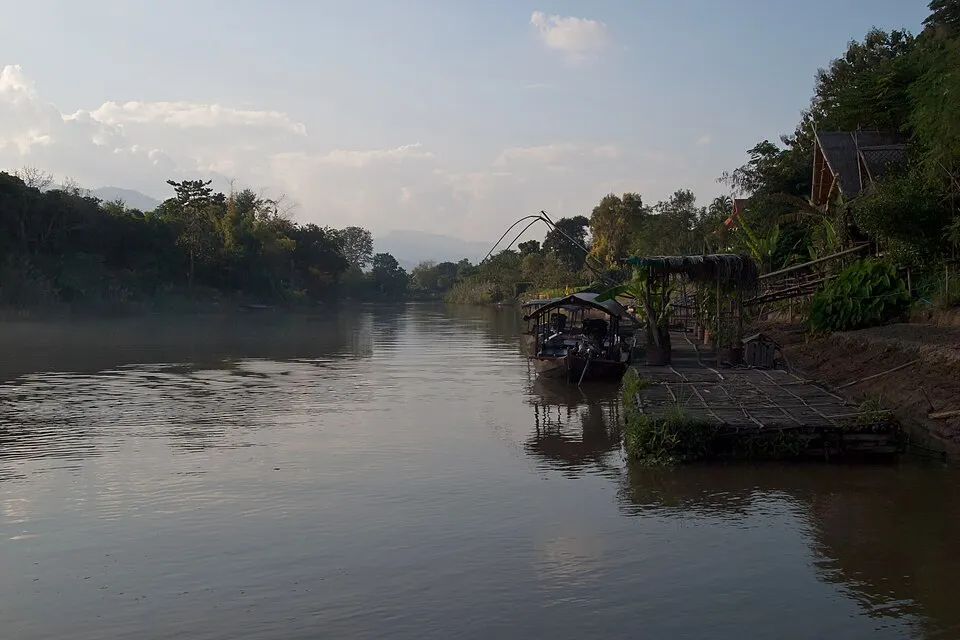
The Untamed Majesty of the Mae Taeng River and Its Rapids
Welcome to Mae Taeng District, a mountainous sanctuary sculpted by rushing torrents that have nourished northern Lanna communities for untold generations. Having called Chiang Mai home for well over six decades, I have observed the Mae Taeng River through all its moods—from emerald-tinted tranquility during the arid hot months to a roaring, cafe-au-lait powerhouse carving through deep jungle canyons during the southwest monsoon. The Mae Taeng is far more than an agricultural lifeline for riverside hamlets; its ten-kilometer canyon stretch between Ban Sob Gai and Ban Gued Chang forms one of Southeast Asia's premier whitewater rafting corridors.
For wanderers seeking high-adrenaline thrills within our curated Chiang Mai outdoor adventure and nature activities, conquering turbulent river channels aboard an inflatable raft is an unmatched baptism by water. Yet the river commands absolute humility. Rapids do not negotiate with bravado. Without proper respect for hydraulic power, an exhilarating voyage can quickly transform into a hazardous ordeal. Allow me to walk you through the anatomy of these granite boulders, seasonal water rhythms, and non-negotiable safety standards so that your expedition remains unforgettable for all the right reasons.
Deconstructing the Rapids: Class 2 Warmups to Class 4 Hydrology
A standard whitewater run down the Mae Taeng covers roughly eight to ten kilometers, taking between two and three hours depending on hydraulic velocity and water volume. International river runners categorize rapids from Class 1 (flatwater ripple) to Class 6 (unrunnable lethal cataract). The Mae Taeng predominantly fluctuates between Class 2 and Class 4, featuring signature river obstacles that demand physical focus and synchronized paddle execution:
- Class 2 Warm-up Flats: Departing from the sandy put-in at Ban Sob Gai, the river glides gently over small gravel shallows. This gentle stretch serves as an indispensable training ground. Here, your professional river helmsman drills your crew on mandatory voice commands: "Forward!", "Back paddle!", "Stop!", and the crucial "Get down!" (dropping into the floor of the boat to lower center of gravity).
- Kaeng Kod (Class 3 Dogleg): A severe serpentine bend where the entire river volume squeezes against a towering granite wall on river right. The compression produces churning standing waves and secondary boils. Paddlers must lean inward and stroke powerfully on command to keep the raft from broadsiding against abrasive stone faces.
- Kaeng Khok Wua (The Bull Pen - Class 4): Widely recognized as the emotional and technical crux of the upper canyon. Massive submerged monoliths disrupt the channel, causing sudden hydraulic drops, foaming rooster-tails, and deep recirculating holes. Plunging over the primary drop, your raft is instantly swallowed by blinding white spray. Success depends entirely on locking your feet securely beneath interior cross-thwarts and executing frantic forward strokes above the roaring hydraulic chaos.
- Kaeng Pang Kwang & Huay Tad (Class 3-4): A rapid-fire succession of continuous technical chutes featuring erratic wave trains and deceptive underwater eddies that test upper-body endurance before the river finally broadens into placid downstream flats near Ban Gued Chang.
Once you navigate past these turbulent foam gates, the valley walls open to unveil pristine bamboo forests and limestone karst cliffs. Travelers looking to continue their northern itinerary often combine this river run with a gentle climb up the non-slip limestone tiers of Bua Tong Sticky Waterfalls, or transition seamlessly into a scenic one-day Mae Rim valley excursion across nearby floral nurseries and valley lookouts.
Planning Your Chiang Mai Trip? Book Early for Lower Rates
Check real-time rates and secret deals on Agoda, our official travel partner. Enjoy 100% free cancellation, pay at check-in, and earn Agoda Cash rewards.
Seasonal Water Dynamics: Gauging When to Paddle
The personality of the Mae Taeng River changes dramatically with the monsoon clock. Selecting the exact calendar window determines whether your rafting trip feels like a high-octane battle against nature or a gentle, scenic paddle through pristine wilderness:
- Monsoon Deluge (August to October): Peak adrenaline season. Runoff pouring from the Doi Chiang Dao massif swells the river into an angry ochre surge. Water volume spikes dramatically, burying submerged boulders and turning Class 3 drops into thunderous Class 4+ wave trains. Reputable river outfitters employ continuous scout stations along the gorge and will cancel runs without hesitation when river markers breach hazard thresholds. Beginners should steer clear of mid-September when tropical depressions linger overhead.
- Post-Monsoon Golden Window (November to January): My personal favorite time of year. Floodwaters recede, suspended silt settles into a crisp translucent green, and the air turns cool and crisp under northern morning mists. Rapids retain exciting Class 3 technicality with clean lines and dependable drop pools, making it the supreme sweet spot for active travelers and intermediate adventurers.
- Dry Season Shallowness (February to May): As regional precipitation vanishes, river volume shrinks to gentle trickles. Boulders protrude high above the surface, reducing rapids to gentle Class 1-2 riffles. While hardcore thrill-seekers will find this period tame, it provides a delightful, sun-dappled eco-float for families traveling with younger children. If you are exploring northern Thailand with youngsters, consult our dedicated family-friendly Chiang Mai guide to balance active adventures with easygoing holiday experiences.
Safety Disciplines: Gear Certification and Defensive Swimming
True adventure thrives on discipline. Every reputable outfitter along the Mae Taeng adheres to international river running protocols, and as a guest, your commitment to safety must match theirs. Never treat whitewater equipment as casual beachwear.
First and foremost, your Type V Whitewater Personal Flotation Device (PFD) must be engineered specifically for violent turbulent water, featuring rugged quick-release buckles and integrated crotch straps. Strap it snugly against your ribcage; a loose vest will slip directly over your head the moment hydraulic currents pull you under. Second, a certified hardshell whitewater helmet must remain buckled beneath your chin from put-in to take-out. In the event of a capsize, this piece of plastic is the only shield between your skull and sharp riverbed granite.
Should you find yourself swimming outside the boat, remember the golden rule of whitewater survival: Never fight the river in panic, and never attempt to stand up in rushing water. Foot entrapment occurs when a wading foot wedges into underwater rock crevices while rushing water pins your torso forward. Instead, assume the defensive whitewater swim position immediately: flip onto your back, point your feet downstream with toes breaking the surface, keep your hips high, and use your arms as rudders to steer away from obstructions. Keep your eyes fixed on your rescue kayaker or raft team, who will deploy a weighted throw bag. Grasp the rope over your chest, face away from the boat, and allow the crew to swing you smoothly to safety.
Pairing a morning of river navigation with a leisurely afternoon road trip along the scenic mountain bends of the Samoeng Loop scenic drive creates one of the most fulfilling, multi-layered holiday days northern Thailand can possibly offer.
Plan Your Chiang Mai Journey · Verified Booking Partners
Compare real-time rates for stays, curated day tours, flight tickets, and transport with best price guarantee and flexible cancellation: