



























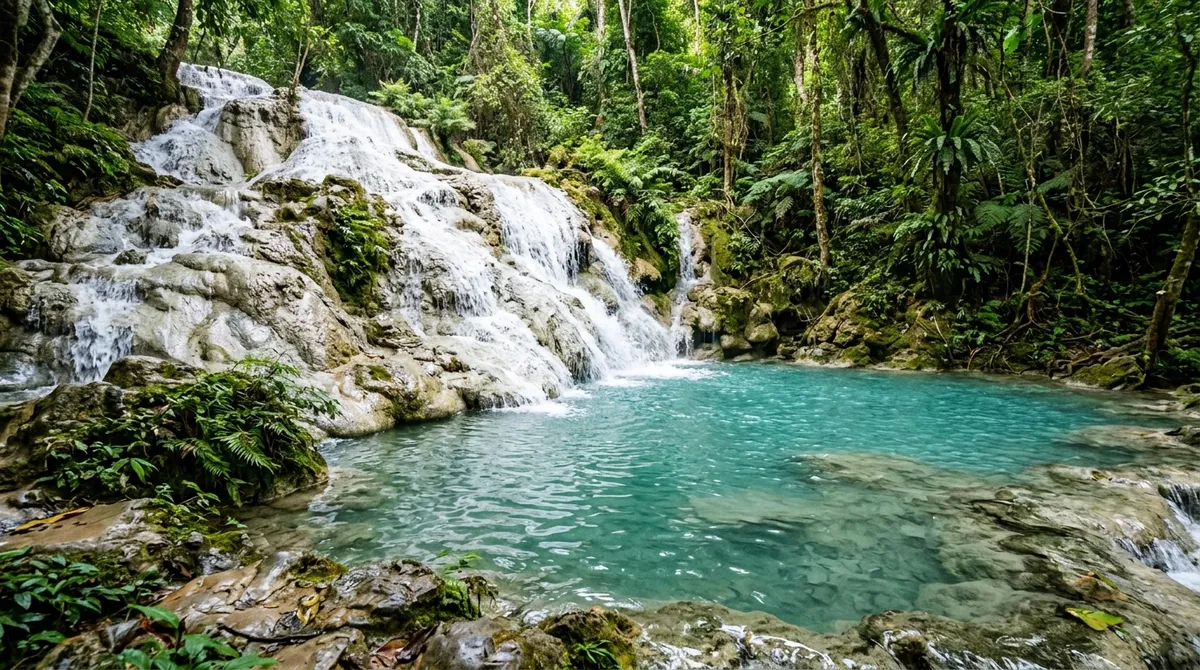
The Mystery in the Deep Forest: Sacred Spring Lore in Mae Taeng
Deep within the moist tropical woodlands of Mae Taeng District, well shielded from highway noise, rests an ancient ecological sanctuary revered across Northern Thailand: Namphu Chet Si (The Seven-Color Spring). Bubbling steadily from subterranean limestone aquifers hundreds of feet below the mountain floor, this sacred spring sustains a vibrant rainforest ecosystem year-round. Village elders in Mae Taeng recounted to Uncle Kham that for generations, local hunters and foragers paused before this pool to offer prayers of reverence to the mountain spirits and water deities.
The foremost wonder greeting every visitor is the crystal glass clarity of the pool. Across the pale limestone bottom, delicate effervescent bubbles rise continuously from fissures in bedrock, like living liquid diamonds. Even during severe dry seasons when neighboring highland streams dry into gravel gullies, the Seven-Color Spring discharges thousands of cubic meters of pure mineral water daily, nourishing forest fauna and lower agricultural communities without fail.
The Science Behind the Rainbow Sparkle: Dissolved Calcite & Light Refraction
Travelers frequently marvel at how this secluded forest spring earned its name, "The Seven-Color Spring." Uncle Kham loves explaining how rigorous earth science explains this poetic visual magic. As rainwater percolates through subterranean limestone strata (Calcium Carbonate) over decades, it dissolves massive concentrations of calcium and bicarbonate ions under subterranean pressure.
When this mineral-saturated groundwater emerges into the open forest pool and encounters sunlight filtering through the canopy, clean water molecules and suspended calcite particles act as a natural optical prism. Sunlight refracts through the ultra-clear column against white calcium sands below, splitting into vibrant spectral hues. From the raised viewing decks, observers witness shifting bands of turquoise, brilliant emerald green, deep azure, and shimmering iridescent rainbow tones dancing across rippling waters.
Planning Your Chiang Mai Trip? Book Early for Lower Rates
Check real-time rates and secret deals on Agoda, our official travel partner. Enjoy 100% free cancellation, pay at check-in, and earn Agoda Cash rewards.
The Hydrological Genesis of Bua Tong 'Sticky Waterfall'
The mineral-laden water bubbling from the Seven-Color Spring flows over a natural weir, cascading downstream through jungle ravines to form one of the planet's most astonishing geological features: Bua Tong Waterfall, globally famous as the "Sticky Waterfall." A remarkable chemical reaction occurs as calcium carbonate precipitates out of the agitated mountain stream, depositing layers of crystalline travertine limestone across the bedrock.
Unlike typical river stones coated in slick organic algae, travertine limestone is textured like a pumice stone or rigid calcified sponge. The non-slip surface provides immense friction against bare human skin. Visitors can literally walk and climb directly up sheer vertical waterfall cascades against running water without slipping—a delightful, barefoot climbing adventure found almost nowhere else on Earth, made possible entirely by the geochemical engine of the Seven-Color Spring.
Conservation Ethics, Visitor Protocols & 2026 Mae Taeng Travel Tips
Bua Tong Waterfall and Seven-Color Spring Forest Park is situated within Mae Taeng National Forest Reserve along Highway 1001 (the Chiang Mai-Phrao Road) at Kilometer 48. Travel time from downtown Chiang Mai is approximately 1 hour and 15 minutes along smooth paved highways. Entry to the park is currently free of charge for domestic and international visitors, supported by voluntary donation boxes for trail upkeep. The grounds open daily from 08:00 to 17:00 with shaded picnic areas and clean restrooms.
Because the Seven-Color Spring is both an irreplaceable ecological headwater and a sacred regional sanctuary, strict conservation rules apply: swimming and wading within the spring basin are strictly prohibited, and tossing coins or foreign objects into the pool is forbidden. Visitors observe and photograph the spring from elevated wooden boardwalks constructed to protect surrounding root systems. After admiring the spring, stroll downstream to conquer the cascades via our Bua Tong Sticky Waterfall adventure guide, explore further rainforest treks through our outdoor nature and adventure activities in Chiang Mai guide, enjoy family-friendly nature stops in our family outdoor attractions in Chiang Mai directory, and review premier highlights in our top 10 things to do in Chiang Mai overview.
Plan Your Chiang Mai Journey · Verified Booking Partners
Compare real-time rates for stays, curated day tours, flight tickets, and transport with best price guarantee and flexible cancellation: