



























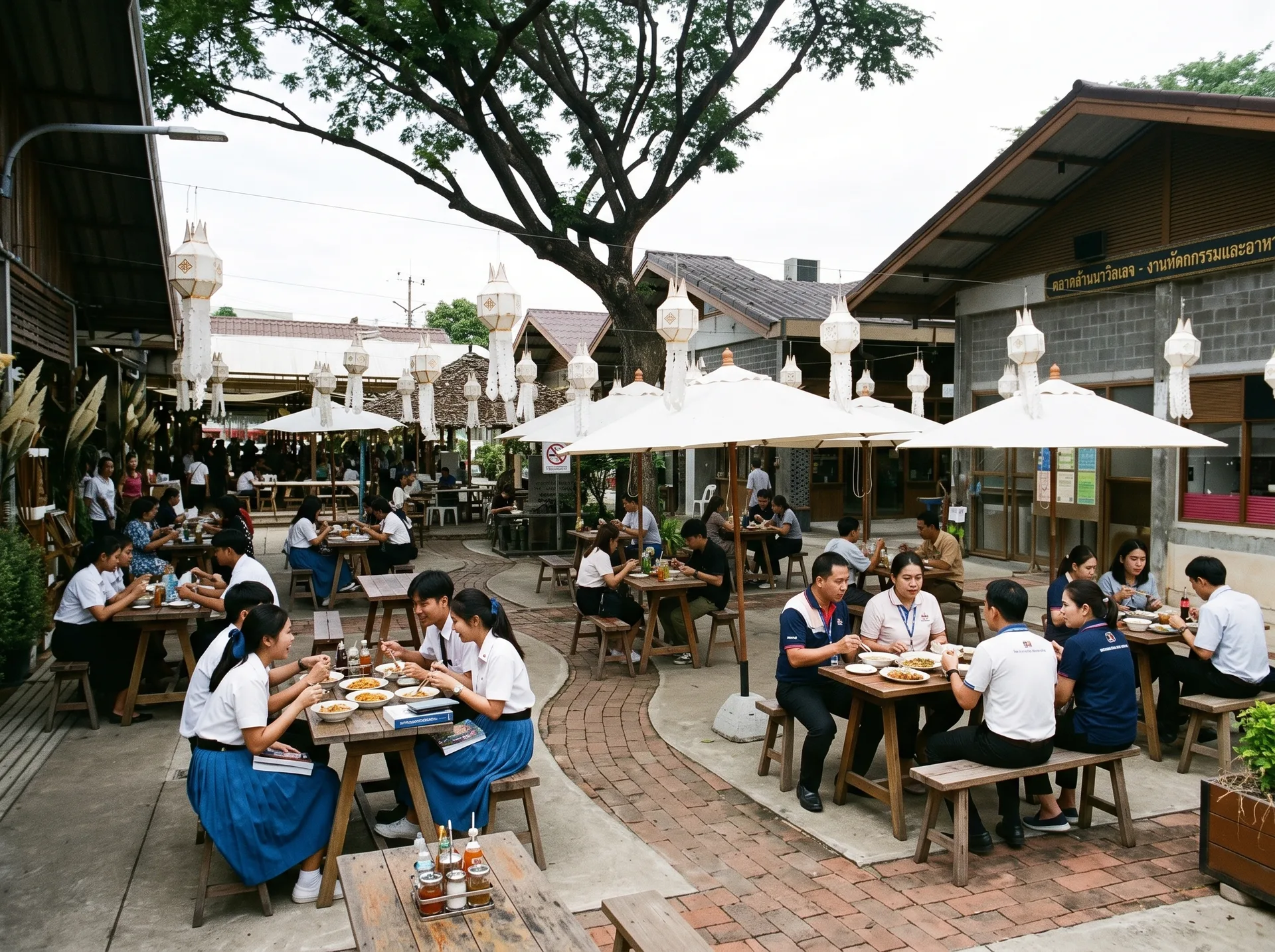
The Birthplace of Khantoke Banquets: Half a Century of Living History
Over fifty years ago, the ritual of the khantoke dinner was an exclusive privilege reserved for northern royal courts, aristocratic teak estates, and momentous temple dedication ceremonies. That all changed in 1971 when the visionary Nimmanahaeminda and Chutima families established the Old Chiang Mai Cultural Center on historic Wualai Road. Their mission was visionary yet humble: to welcome travelers from around the globe into the authentic sensory world of Lanna domestic culture. Uncle Kham always reminds visitors that Old Chiang Mai is not merely a restaurant; it is a living heritage sanctuary that has safeguarded the authentic soul of Chiang Mai for over half a century.
The cultural center is anchored by classic teakwood pavilions built in the revered Kalae style, roofed with weathered wooden shingles that have aged into a distinguished deep mahogany hue. Walking across the polished timber verandas feels like stepping backward through time. The scent of aged teak, natural beeswax candles, and the gentle strumming of the three-stringed Seung create an intimate, reflective ambiance that stands in stark contrast to the hectic pace of modern commercial tourism.
After a leisurely morning discovering heritage breakfast spots along Chang Moi breakfast street or enjoying a serene iced tea alongside the river at Ping River scenic cafes, concluding your day at Old Chiang Mai Cultural Center weaves the story of Chiang Mai from contemporary urban charm back into its deep ancestral roots.
The Heritage Khantoke Feast: Recipes Handed Down Across Generations
What distinguishes the dining experience at Old Chiang Mai Cultural Center is an unwavering commitment to authentic home-style northern culinary traditions. The kitchen eschews modern shortcuts and cloying sweeteners in favor of time-honored slow-cooking methods and garden-fresh northern aromatics. Dishes are served in classic ceramic bowls arranged atop an authentic raised teakwood khantoke platter, completely unlimited and replenished as you please.
- Heritage Gaeng Hang Lay: Succulent cubes of pork belly and shoulder marinated in Burmese-style roasted spices, tamarind pulp, and garlic. Slow-simmered over low coals until meltingly tender, creating a richly nuanced sauce perfumed with slivers of young ginger and whole pickled shallots.
- Charcoal-Grilled Sai Oua (Lanna Herbal Sausage): Handcrafted northern sausage bursting with lemongrass, galangal, kaffir lime leaves, and dried chilies. Grilled over charcoal for a taut, crackling skin and a smoky, robust herbal finish.
- Nam Prik Noom with Kaeb Moo: Charred local green banana peppers pounded coarsely with garlic and sea salt. Eaten by scooping with airy pork cracklings and tender steamed cauliflower, winged beans, and sweet local cabbage.
- Nam Prik Ong (Northern Tomato-Pork Dip): Tangy heirloom cherry tomatoes gently stewed with minced pork and fermented yellow soybeans, providing a bright, refreshing counterpoint to the richer curry notes.
- Northern Sesame Fried Chicken: Crisp-fried chicken wings encrusted with toasted white sesame seeds, delivering a satisfying nutty crunch before yielding to juicy meat.
- Crispy Banana Fritters & Ginger Infusions: Concluding the feast with ripe Nam Wa bananas coated in light rice batter, flash-fried golden and served with warm mountain ginger tea to soothe digestion.
The quiet elegance of the meal mirrors the refined intimacy of a private estate dinner. The flavors do not assault the palate with fiery burn; rather, they present a sophisticated layered balance of earthy turmeric, citrusy lemongrass, and comforting savory warmth.
Planning Your Chiang Mai Trip? Book Early for Lower Rates
Check real-time rates and secret deals on Agoda, our official travel partner. Enjoy 100% free cancellation, pay at check-in, and earn Agoda Cash rewards.
Classical Royal Court Dances & Garden Courtyard Performances
Academics and master choreographers throughout Thailand hold Old Chiang Mai Cultural Center in high esteem because its stage programs preserve the authentic, unadulterated standards of the fine-arts academy. The evening unfolds in two deliberate acts. The first takes place inside the candlelit teak hall, featuring refined courtly choreography:
- Fon Man Mui Chiang Ta: A treasured court dance originating from the royal palace of Princess Dara Rasmi, marrying Burmese court costumes with graceful Lanna hand gestures in delicate, flowing symmetry.
- Fon Ngiew: A high-spirited folk dance of the Shan (Tai Yai) people, accompanied by rhythmic Mong Saeng gongs and clashing bronze cymbals, radiating communal joy.
- Fon Leb (Fingernail Dance) & Fon Thian (Candle Dance): Sacred devotional movements performed with six-inch brass finger ornaments and glowing wax tapers, symbolizing the gentle flame of Buddhist devotion.
Following the indoor performance, guests are gently escorted down into the leafy open-air garden courtyard. Under the canopy of ancient tropical trees, the second act commences: vibrant mountain dances presented by highland hill-tribes. Performers showcase bamboo mouth-organ melodies, ceremonial ring dances, and participatory bamboo jumping games where travelers join hand-in-hand with local artisans. The warmth of this outdoor exchange recalls the artistic mastery seen at Wat Ban Den blue temple or the pristine natural drama of Fang hot springs.
Textile Archive Museum & The Silversmith Heritage of Wualai
An exceptional highlight unique to Old Chiang Mai Cultural Center is its on-site Lanna Textile & Folk Craft Museum. Housed within an adjoining teak pavilion, this curated gallery preserves museum-grade Tin Jok sarongs, royal Lamphun brocades, and antique repousse silverware crafted by Wualai silversmith guilds over a century ago. Uncle Kham strongly recommends arriving 30 minutes before dinner service to explore these exhibits without the daytime crowds.
Because Wualai Road has been Chiang Mai's silversmithing heartland since the reign of King Kawila, the cultural center stands as a living bridge between culinary art and metallurgy craft. Watching silver artisans at work nearby elevates your appreciation of the brass and silverware resting on your dining tray. If you have ever been mesmerized by the misty rainforest scenery at Chom Cafe, you will appreciate how Old Chiang Mai preserves a rainforest of living history and human craftsmanship.
Strategic Schedule & Planning Information
To ensure a seamless, relaxing evening at Old Chiang Mai Cultural Center, Uncle Kham has summarized the operational hours, pricing structure, and transport details below:
| Feature | Details | Uncle Kham's Practical Notes |
|---|---|---|
| Opening Hours | 18:30 – 21:00 Daily | Arrive by 18:30 to tour the antique textile museum before the dinner bell. |
| Show Runtime | 19:20 – 20:45 | Indoor court dances (45 mins) followed by outdoor garden folk shows (30 mins). |
| Standard Admission | THB 600 – 750 / person | Includes all-you-can-eat khantoke banquet, herbal beverages, and both show acts. |
| Location & Access | Wualai Road (Near Airport Junction) | Just 10 minutes from Chiang Mai International Airport; 5 minutes from Chiang Mai Gate. |
"Antiques and heritage traditions are not obsolete relics of the past; they are the deep taproots that nourish a grand tree so it can stand proud against the winds of time. Old Chiang Mai is that living taproot for our city." — Uncle Kham's timeless advice.
For discerning travelers seeking an evening defined by historical dignity, intimate teakwood architecture, and the true pioneering spirit of northern hospitality, Old Chiang Mai Cultural Center remains an unmatched cultural jewel.
Plan Your Chiang Mai Journey · Verified Booking Partners
Compare real-time rates for stays, curated day tours, flight tickets, and transport with best price guarantee and flexible cancellation: