



























The Meaning Behind Terracotta Lamps and “Crow’s-Foot” Wicks
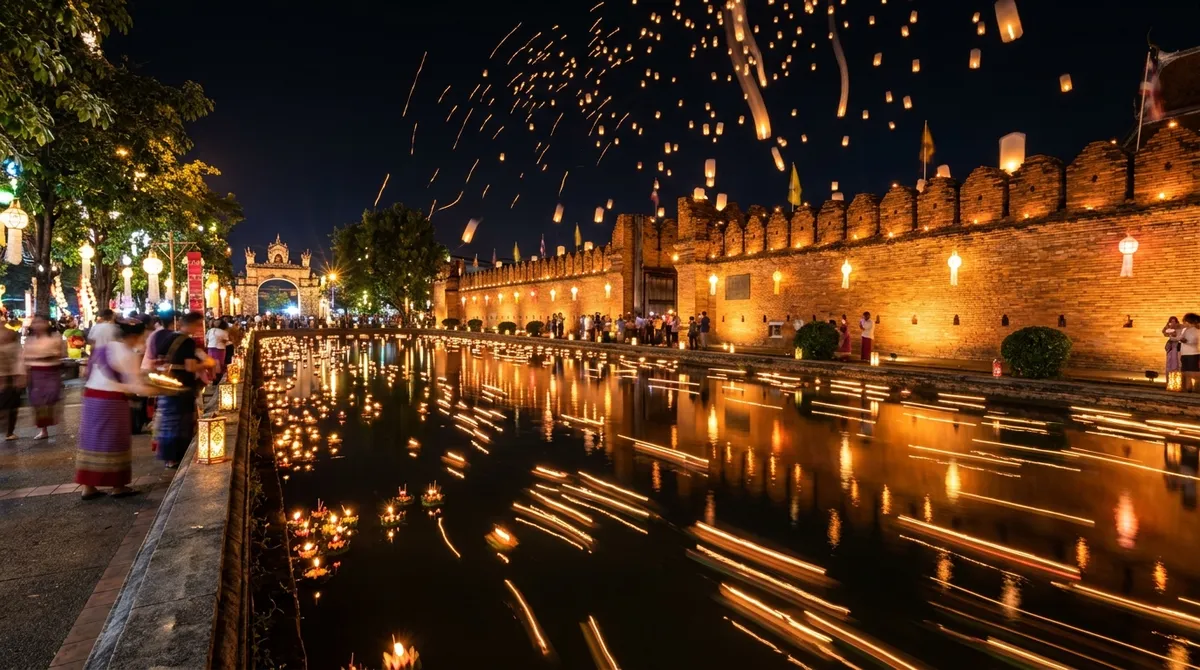
Ask me which single sight defines Yi Peng in Chiang Mai, and I will not point to fireworks over the Ping River. I will take you along the brick moat wall around 20:00 on November 24–25, 2026, when tens of thousands of tiny Phang Pratheep oil lamps flicker inches above the dark water, sending warm beeswax scent drifting through cool November air.
In Northern Thai, phang refers to a small unglazed clay saucer and pratheep means lamp or guiding light. Lighting Phang Pratheep honors the Buddha, Dharma, and Sangha while symbolizing inner wisdom clearing away spiritual darkness. Look closely into an unlit clay dish and you will notice a small three-pronged cotton wick twisted by hand—locals call it teen ka (“crow’s foot”), traditionally linked to reverence for the five Buddhas of the current cosmic age. For context on how this sits inside the wider festival calendar, explore our Chiang Mai Yi Peng and Loy Krathong guide and 2026 festival calendar.
Best Free Places to See Phang Pratheep Around the Old City (Nov 24–25, 2026)
You do not need an expensive festival ticket to witness Chiang Mai glowing in candlelight. Simply follow our Old City moat and Tha Phae Gate walking route between 18:30 and 21:30:
- Three Kings Monument Plaza: Volunteers and local residents arrange thousands of terracotta lamps across the stone courtyard in calm, sweeping geometric rows—one of the most photogenic and respectful spots in town.
- Tha Phae Gate & Moat Corners: Brick battlements glow along the water’s edge, an easy five-minute walk if you stay at hotels near Tha Phae Gate.
- Wat Chedi Luang & Wat Phan Tao: Monks and devotees line wooden steps and monastery ponds with clay saucers beside hanging Lanna paper lanterns—check our Wat Chedi Luang guide and nearby Wat Phra Singh guide before sunset.
- Wat Gate Teak Quarter: Across the Ping River, quiet lanes around Wat Ket Karam still display humble rows of clay lamps outside wooden garden gates.
Planning Your Chiang Mai Trip? Book Early for Lower Rates
Check real-time rates and secret deals on Agoda, our official travel partner. Enjoy 100% free cancellation, pay at check-in, and earn Agoda Cash rewards.
Beeswax & Coconut Oil vs Paraffin: Better for Air and Heritage
Walk past stalls around Warorot Market (Kad Luang) or outside temple walls and you will see clay cups sold for a few baht each. Whenever possible, pick natural beeswax or coconut-oil Phang Pratheep with plain cotton wicks rather than cheap dyed paraffin cups. Natural wax burns cleaner with far less black soot, spares crowds from harsh chemical smoke, and directly supports local pottery villages still firing terracotta by hand.
Critical Fire Safety Around Chiang Mai’s Historic Teak Homes
Much of old Chiang Mai—from family shophouses in Wat Gate to guesthouse verandas inside the moat—is built from dry, century-old teak timber. Respecting the ritual means keeping those historic roofs safe:
- Use Stone, Brick, or a Second Clay Saucer Underneath: As oil runs low, the thin terracotta base gets scorching hot. Never set a bare lamp directly onto teak railings, wooden steps, or dry grass.
- Keep 50 cm Clearance from Dry Garlands & Curtains: Night breezes pick up suddenly after sunset; keep flames clear of paper lanterns and fresh-turned-dry banana-leaf arches.
- Never Pour Water onto Hot Wax: Water splatters boiling wax upward. Snuff the flame gently with a clay lid or blow it out carefully and wait for the dish to cool.
- Extinguish Before Leaving or Sleeping: Never leave unattended clay lamps burning overnight on wooden balconies, and once dishes cool down, place used terracotta cups into solid waste bins rather than dropping them into the moat. Pair your evening candle stroll with Ping River viewpoints after checking Chiang Mai’s evening road closures.
Plan Your Chiang Mai Journey · Verified Booking Partners
Compare real-time rates for stays, curated day tours, flight tickets, and transport with best price guarantee and flexible cancellation: