



























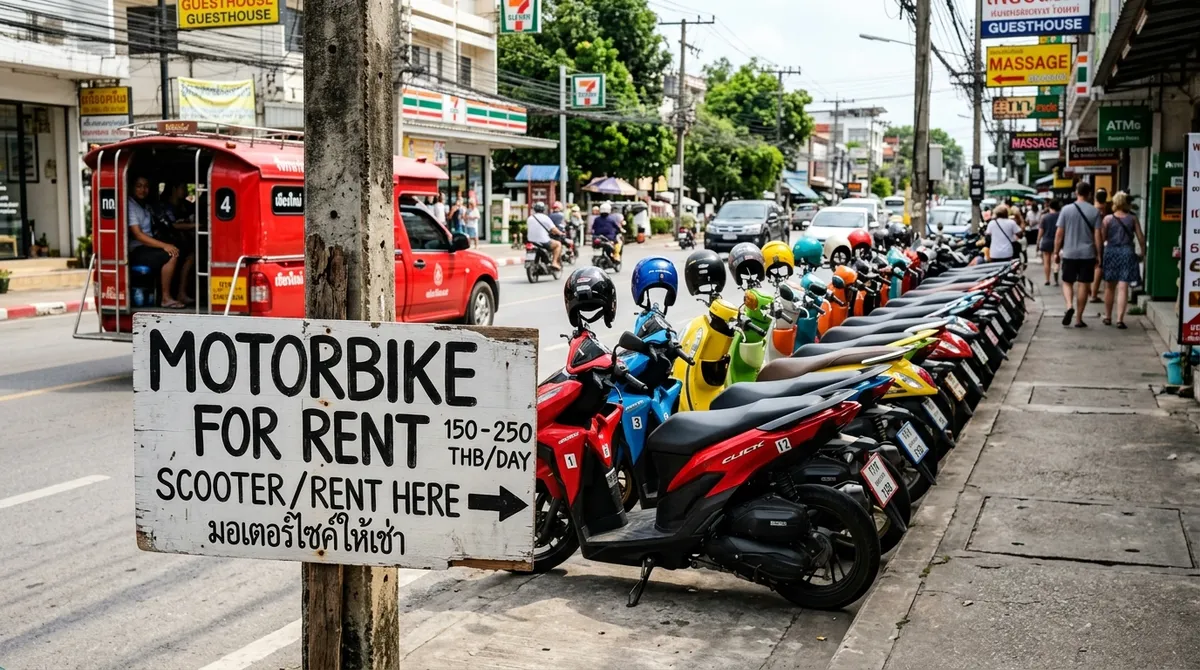
Why Renting a Scooter in Chiang Mai Is a Double-Edged Sword
To many global wanderers, Chiang Mai represents the quintessential Southeast Asian journey: crisp morning mountain air, the comforting aroma of roasted Arabica beans, and mist-veiled peaks beckoning from the horizon. The notion of picking up a nimble automatic scooter, winding through the historic alleys within the Chiang Mai Old City walking perimeter, and heading straight into mountain sunrises possesses an undeniably romantic allure. Yet, as an elder who has observed Chiang Mai roads evolve from dusty gravel trails to complex arterial networks, Uncle Kham must speak with unvarnished candor. Renting a scooter here is a double-edged sword. When approached with meticulous preparation, proper credentials, and defensive caution, it becomes an instrument of absolute liberation. But when entered carelessly, it can instantly derail your finances and physical wellbeing.
Over recent years, emergency rooms and traffic division logbooks across the city have recorded a steady influx of travelers involved in road incidents. The challenges stem not only from unfamiliarity with left-side traffic flow or negotiating loose gravel on tight hairpin bends, but also from serious misunderstandings regarding legal statutes, compulsory motor vehicle insurance limits, and systematic traffic enforcement cordons operated daily by Chiang Mai Provincial Police.
Traffic Regulations, International Driving Permits (IDP), and Valid Insurance
The primary checkpoint requirement every traveler must comprehend is the legal status of your driving credentials. Under the Thai Motor Vehicle Act, visitors operating any motorized two-wheel vehicle must possess a valid domestic motorcycle license alongside a legitimate International Driving Permit (IDP). This permit must be issued under either the 1949 Geneva Convention or the 1968 Vienna Convention on Road Traffic, and it must explicitly bear an authorized stamp under Category A for motorcycles. Possessing an ordinary automobile driver license from your home country, or an IDP endorsed solely for Category B passenger cars, carries zero legal validity for operating a scooter on public roads in the Kingdom of Thailand.
When intercepted at an official checkpoint without proper motorcycle endorsements, officers will issue a formal citation carrying fines up to 1,000 THB. While paying a fine is annoying, the truly catastrophic danger lies in travel insurance and medical liability clauses. Uncle Kham has counseled far too many distraught families over the decades: almost every international travel and health insurance policy contains ironclad exclusion clauses. If the policyholder is involved in a road collision while operating a motor vehicle without the legally required domestic and international license categories, the insurance underwriter will completely deny coverage. Complex surgeries and intensive care treatments in top private facilities can easily escalate past 500,000 THB, leaving uninsured riders stranded in devastating personal debt.
Planning Your Chiang Mai Trip? Book Early for Lower Rates
Check real-time rates and secret deals on Agoda, our official travel partner. Enjoy 100% free cancellation, pay at check-in, and earn Agoda Cash rewards.
Frequent City Checkpoints and Proper Police Interaction Protocol
Chiang Mai traffic police maintain regular, scheduled inspection checkpoints across key arterial chokepoints daily, typically between 09:30 and 11:30 in the morning and 14:00 to 16:00 in the afternoon. Uncle Kham recommends being fully aware of these prominent locations:
- Sri Phum Corner (Northeast Moat): Positioned right before traffic turns onto Sri Phum Road, this post strictly scrutinizes helmet compliance for both riders and pillion passengers, along with active headlights.
- Chiang Mai Gate (South Moat): Located opposite the bustling fresh food stalls, this major checkpoint verifies driving permits, vehicle tax discs, and rental registration contracts.
- Huay Kaew Road Checkpoint (near former Kad Suan Kaew): The primary inspection corridor for traffic traveling between the Old City moat, the trendy Nimman neighborhood hub, and the base of Doi Suthep mountain.
- Hua Lin Corner (Northwest Moat): A tactical checkpoint monitoring vehicle flow coming off the northern superhighway and deterring sidewalk riding or reckless lane-weaving.
When approaching a visible police checkpoint, slow down smoothly, engage your left turn signal, come to a halt in the designated inspection lane, switch off the engine, and remove your sunglasses or lift your full-face visor. Politely present your passport copy, physical driving license, IDP booklet, and rental agreement. If your documents are orderly, your helmet meets TIS safety certifications, and your vehicle carries up-to-date road tax, the encounter will conclude courteously within sixty seconds. Never attempt an evasive U-turn across double yellow lines or accelerate away from a checkpoint; police units deploy pursuit vehicles, and evading law enforcement escalates a modest infraction into severe criminal charges.
Vehicle Pre-Inspection Checklist and Mountain Descent Riding Technique
Before handing over a security deposit or signing a rental waiver, follow Uncle Kham five-point mechanical inspection protocol to protect both your safety and your wallet:
- Record a Continuous High-Definition Video Walkaround: Capture existing scratches, cracked plastic fairings, underneath the exhaust shield, and side mirror housings while standing right next to the shop attendant.
- Test Lever Resistance and Brake Pad Thickness: Squeeze both hand levers firmly. There should be progressive hydraulic resistance rather than spongy collapse to the handlebar grip. Inspect the brake calipers to verify friction material remains above the metal backing plate.
- Inspect Tire Tread Depth and Pressure: Never accept a machine fitted with bald or hardened tires. Chiang Mai roads collect fine red dust and mountain runoff, making deep tread channels essential for grip.
- Verify All Lighting Systems: Ensure high and low headlight beams, rear running lights, brake lights, and turn signals function brightly.
- Demand Certified Safety Helmets: Reject flimsy, eggshell-thin plastic caps with loose plastic clasps. Request a snug, proper three-quarter or full-face helmet with an unblemished, clear visor and a reliable chin buckle.
If your itinerary involves climbing the winding mountain gradients up to Wat Phra That Doi Suthep temple grounds or embarking on the iconic, twisty corners of the scenic Samoeng Loop mountain route, mastering downhill throttle discipline is life-critical. Modern automatic scooters utilize centrifugal dry clutches. If you close the throttle completely during a steep descent, the clutch disengages into free-wheeling neutral, forcing you to rely solely on friction brakes. Constant brake dragging causes hydraulic fluid to boil within minutes, leading to total brake fade. Instead, keep a tiny touch of throttle engaged to keep the clutch shoes connected to the bell, allowing engine compression to brake the wheels, and apply firm, brief pulses of braking only when entering apexes.
Uncle Kham Closing Advice for a Worry-Free Northern Ride
In closing, Uncle Kham urges every visitor not to chase the absolute cheapest daily rate of 150 THB offered in obscure back alleys. Patronize established rental outfits that hold legitimate commercial licenses, maintain comprehensive third-party insurance, supply roadworthy machinery, and provide round-the-clock roadside emergency support. Paying an extra 80 to 100 THB per day for fresh tires, reliable disc brakes, and honest customer service is the wisest travel investment you will ever make in Northern Thailand. Ride defensively, respect the locals sharing the road, and the breathtaking beauty of Chiang Mai will welcome you warmly on every horizon.
Plan Your Chiang Mai Journey · Verified Booking Partners
Compare real-time rates for stays, curated day tours, flight tickets, and transport with best price guarantee and flexible cancellation: