



























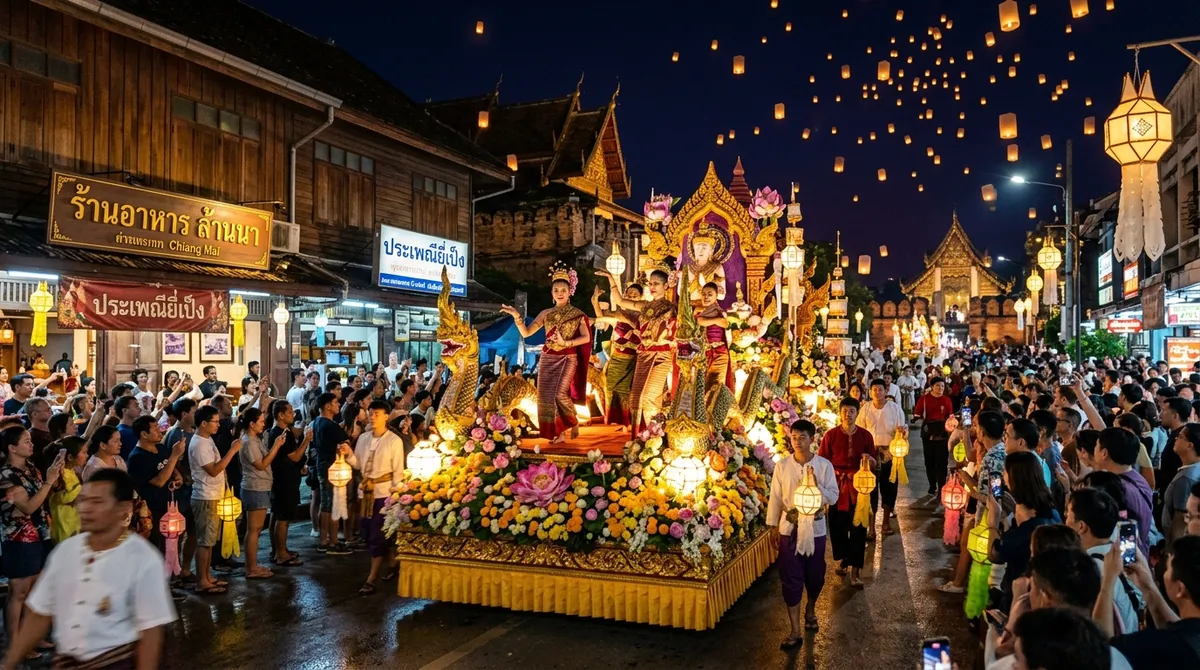
What is a Lanna Sapao?: Buddhist Philosophy and the Merit Vessel to Nirvana
Among the sacred waterfront traditions of ancient northern Thailand, no ceremonial creation embodies Buddhist philosophical depth and artisanal elegance quite like the Lanna Sapao (often reverently called Sapao Kham or the Golden Galleon). In the northern dialect, 'Sapao' designates an ocean-going merchant galleon or trade junk. In sacred cosmology, however, northern ancestors did not view the sapao merely as a seafaring vessel; they regarded it as the Dharma Ship (Dhamma Nava) destined to navigate sentient beings across the tumultuous ocean of Samsara toward the serene shores of ultimate Enlightenment.
This spiritual symbolism draws inspiration from the Jataka tales, notably the legendary voyage of Prince Mahajanaka, who persevered across endless storm-tossed seas through pure spiritual determination. Launching a sapao on Yi Peng full moon night represents accumulating transcendent merit and dedicating karmic fruits to departed ancestors, parents, and spiritual preceptors. This profoundly elevates the ritual beyond simple river apologies, as detailed in Uncle Kham's guide to the spiritual meaning of river gratitude and floating offerings.
Sacred Anatomy of the Sapao: Pennants, Lamps, Provisions & Celestial Offerings
Constructing a traditional northern merit ship according to monastic manuscripts demands strict adherence to ritual craftsmanship. Uncle Kham outlines the primary components required for a sacred sapao vessel:
- Tung Streamers and Ceremonial Pennants: Adorning the masts and gunwales, these paper banners represent triumph over worldly defilements and spiritual beacons guiding the vessel.
- Phang Pratheep Oil Lamps: Handcrafted earthen oil lamps stationed along the deck to illuminate the dark, perilous waters of worldly existence.
- Symbolic Sustenance: Uncooked jasmine rice, paddy grains, betel nuts, sugarcane, lengths of homespun cotton cloth, needles, and thread packed into the hull as karmic provisions for ancestral souls.
- Sacred Sweet Confectionery: Miniature offerings of Madhupayasa (honeyed milk rice) offered in reverent tribute to historical Buddhas and Arahats.
These detailed offerings reflect an ancient northern worldview that regards physical death not as an absolute termination, but as a journey across spiritual planes where descendants provide continuous loving sustenance through generous merit-making.
Planning Your Chiang Mai Trip? Book Early for Lower Rates
Check real-time rates and secret deals on Agoda, our official travel partner. Enjoy 100% free cancellation, pay at check-in, and earn Agoda Cash rewards.
Mastery of Bamboo Craftsmanship: From Forest Canes to Radiant Art
The construction of a sapao is an exacting discipline preserved by village 'Sala' (master artisans). Materials must be chosen with deep discernment: mature indigenous Mai Pai Ban bamboo harvested at the correct moon phase to prevent insect infestation. Master carpenters split, plane, and heat-bend the green bamboo canes into streamlined hulls echoing the lines of historic junk ships, binding the intersections with consecrated cotton cords.
Once the skeletal frame is stabilized, artisans line the hull with handmade mulberry saa paper from traditional artisan villages or luminous tinted cellophane. Master craftsmen employ specialized chisels to punch intricate Lanna gilded filigree—stylized lotus blossoms, flame motifs, and celestial serpent scales—adhered along the gunwales. Precise calculation of the vessel's center of gravity ensures that the sapao glides effortlessly across river currents without overturning, even when bearing heavy earthen lamps.
Communal Solidarity: Uniting Village Guilds Across Northern Valleys
In traditional northern village life, preparing a communal sapao was the ultimate unifier. Days before the full moon, households converged upon the monastery courtyard. Able-bodied men felled bamboo and built the main timbers; women and youth folded paper banners and prepared cotton wicks; and village elders shared oral legends of the Dharma with younger generations.
Gathering small contributions of rice, coins, and oil from every family into a single communal hull fostered intense social cohesion and shared purpose. When the ceremonial launch arrived, hundreds of villagers clasped the consecrated white cords connected to the ship, whispering unison prayers as the vessel entered the river. It stands as an enduring monument to communal harmony and selfless devotion.
Preserving Lanna Sapao Heritage in Modern Times
While mass-produced commercial floats have become ubiquitous across modern Thailand, northern provinces continue to preserve the authentic sapao tradition, most brilliantly celebrated during the river festivals in Lampang, as captured in Uncle Kham's Kad Kong Ta Lampang shophouse and river festival guide.
Understanding the historical distinction between the northern sapao and central Thai banana-leaf floats in our analysis of Yi Peng vs Loy Krathong history and cultural differences, alongside attending the annual Tang Tham Luang Vessantara Jataka temple sermons, empowers travelers to appreciate northern heritage as a living spiritual compass rooted in mindfulness, compassion, and respect for all living things.
Plan Your Chiang Mai Journey · Verified Booking Partners
Compare real-time rates for stays, curated day tours, flight tickets, and transport with best price guarantee and flexible cancellation: