



























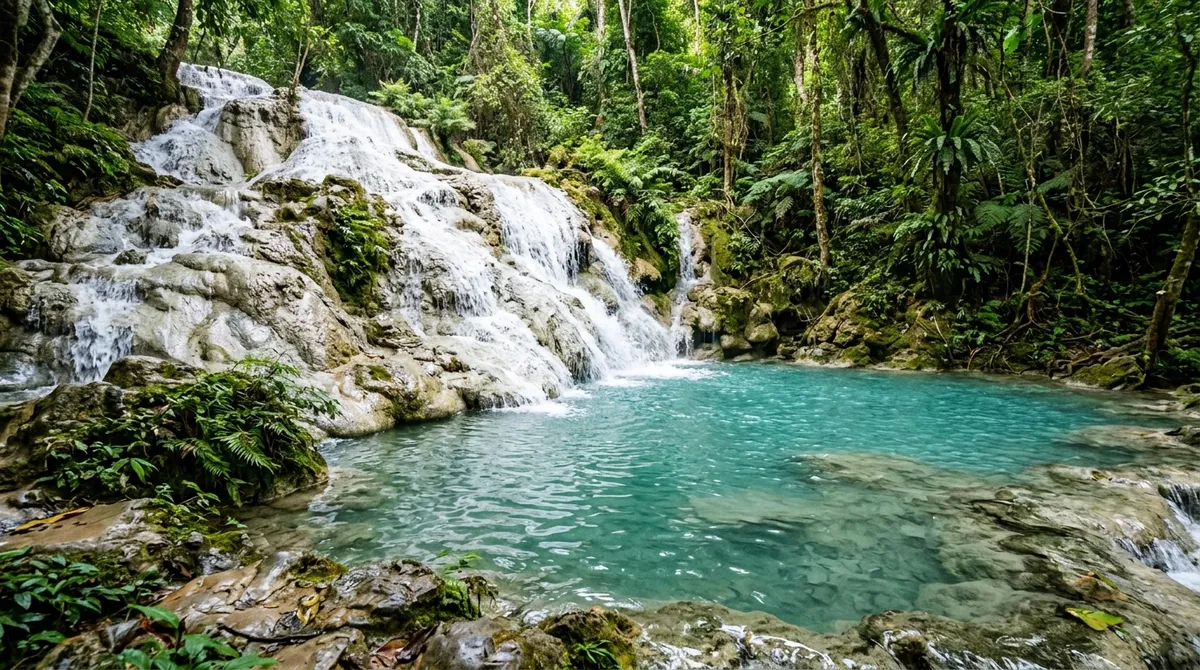
1. Geological Marvel: Why Bua Tong Sticky Waterfall Resists Slipping
Whenever elders in Northern Thailand talk about rainforest waterfalls, their customary warning to visiting youth is almost always: "Watch out for wet algae and slippery boulders!" Yet the laws of tropical hydrology seem suspended when you set foot in Bua Tong Waterfalls in Mae Taeng district, north of Chiang Mai. Celebrated internationally as the famous Sticky Waterfall, this natural wonder invites adventurers to do what is impossible almost anywhere else on earth: walk, scramble, and climb barefoot straight up rushing vertical torrents of cascading water with absolute grip.
The secret behind this gravity-defying phenomenon lies in the chemistry of its subterranean headwaters, the Nam Phu Chet Si (Seven Colors Spring). This artesian spring surges from subterranean limestone strata, saturated with immense concentrations of calcium carbonate. As the mineral-dense water cascades down the sunlit forested slopes and aerates, calcium carbonate precipitates onto the riverbed, forming a porous layer of travertine limestone. This crust possesses an abrasive micro-texture akin to rough sea sponge or medium-grain sandpaper. Most importantly, the extreme mineral alkalinity strictly inhibits the growth of green slime algae that makes ordinary river rocks treacherous. Your bare feet adhere firmly to the stone, creating a sensation like climbing on solid gecko pads. For an exhaustive technical breakdown of safety considerations, consult our companion Bua Tong sticky waterfalls climbing safety day tour guide.
2. Traversing All Four Tiers: Scrambling Upward Safely
Bua Tong cascades down a verdant jungle hillside through four distinct, tiered geological amphitheaters, each offering unique challenges and photo perspectives. Uncle Kham maps out the tiers from top to bottom:
- Tier 1 (Upper Tier - The Gentle Inflow): A wide, gently sloping terrace where clear stream water washes over smooth stone. Shaded by ancient dipterocarp trees, it is ideal for small children and wading seniors. Wooden stairways flank the entire ravine, allowing visitors to walk comfortably down to the lowest tier before starting their upward climb.
- Tier 2 (The Cream-Colored Dome): A broad, rounded travertine bulge where water spreads into a glittering sheet. With its rounded turtle-shell formations, this tier offers flawless traction. Heavy manila anchor ropes are secured down the center to provide reassuring support for first-time scramblers.
- Tier 3 (The Steep Vertical Face): The most photographed and thrilling section of the waterfall. Pitching upward at angles between 50 and 60 degrees, white foam rushes around your legs while your soles grip dry mineral shelves. Standing perpendicular against the cascade with water rushing past produces breathtaking adventure photography.
- Tier 4 (The Lower Basin): The hidden bottom tier plunging into a tranquil forest stream fringed by wild wild ginger and creeping vines. Here, the water pools calmly before merging into the greater Mae Taeng river system.
Uncle Kham's Climbing Technique: Always plant your soles flat against the rockface. Avoid walking on your tiptoes; pressing your full body weight across the soles maximizes surface contact with the travertine crystals. Furthermore, target paths where water flows constantly. The running water cleanses the rock continually, whereas bone-dry peripheral patches can occasionally harbor fallen forest soil or decomposing leaves that might cause an unexpected slip.
Planning Your Chiang Mai Trip? Book Early for Lower Rates
Check real-time rates and secret deals on Agoda, our official travel partner. Enjoy 100% free cancellation, pay at check-in, and earn Agoda Cash rewards.
3. The Sacred Source: Nam Phu Chet Si (The Seven Colors Spring)
Once you conquer Tier 3 and ascend back to the summit plateau, do not hurry away to your car. Follow the raised timber boardwalk meandering 150 meters deeper into the quiet primary forest to discover Nam Phu Chet Si (Seven Colors Spring), the sacred cradle of the entire waterfall system.
Here, icy, crystalline water wells up continuously from deep subterranean caverns into a tranquil jungle basin. As sunbeams penetrate the thick canopy and strike the mineral-rich waters, optical refraction creates an ethereal array of turquoise, cobalt, jade, and cerulean hues resembling a liquid rainbow. Northern Thai villagers revere this spring as the dwelling place of guardian nature spirits (Phraya Naga). A small traditional spirit shrine stands beneath the ferns, and notices strictly prohibit swimming or casting coins into the pristine water. This remarkable geological phenomenon highlights the rich subterranean hydrological wealth of Chiang Mai province, echoing the geothermal forces powering the hot geysers at Fang Hot Springs at Doi Pha Hom Pok further north.
4. Park Facilities, Gear Essentials, and Mae Taeng Itinerary Logistics
To enjoy an effortless, rejuvenating day trip to Bua Tong, keep Uncle Kham's four essential logistics tips in mind:
- Getting There: Bua Tong sits roughly 55 kilometers north of Chiang Mai Old City. Driving takes between 60 and 75 minutes along Highway 1001 (Chiang Mai-Phrao Road). Passing through San Sai and Mae Taeng, well-marked road signs at kilometer marker 42 point right onto a smooth paved rural road leading 2.5 kilometers straight to the park gate. Paved access makes the drive easy for rental sedans and scooters alike.
- Packing Essentials: Bring a sturdy dry bag (10L to 15L) to protect electronic car keys and smartphones, micro-fiber quick-dry towels, and a complete change of dry clothes. Wear snug rashguards or athletic swimwear that will not snag on abrasive travertine limestone edges.
- Combining Attractions: The Mae Taeng valley is renowned for sustainable wildlife programs. Dedicate your morning to observing rescued pachyderms at certified ethical elephant sanctuaries in Chiang Mai, then travel 25 minutes east to spend your afternoon splashing and climbing at the Sticky Waterfall.
- Food and Environmental Etiquette: Shaded lawns at the summit feature clean picnic pavilions and local food stalls serving fresh green papaya salad (som tam), grilled herb chicken, and sticky rice at local prices. Plastic containers and alcoholic beverages are strictly forbidden beyond the top tier to protect forest wildlife. On your drive back down into the city basin, reward your exertion with steaming bowls from legendary local khao soi shops in Chiang Mai.
Plan Your Chiang Mai Journey · Verified Booking Partners
Compare real-time rates for stays, curated day tours, flight tickets, and transport with best price guarantee and flexible cancellation: