



























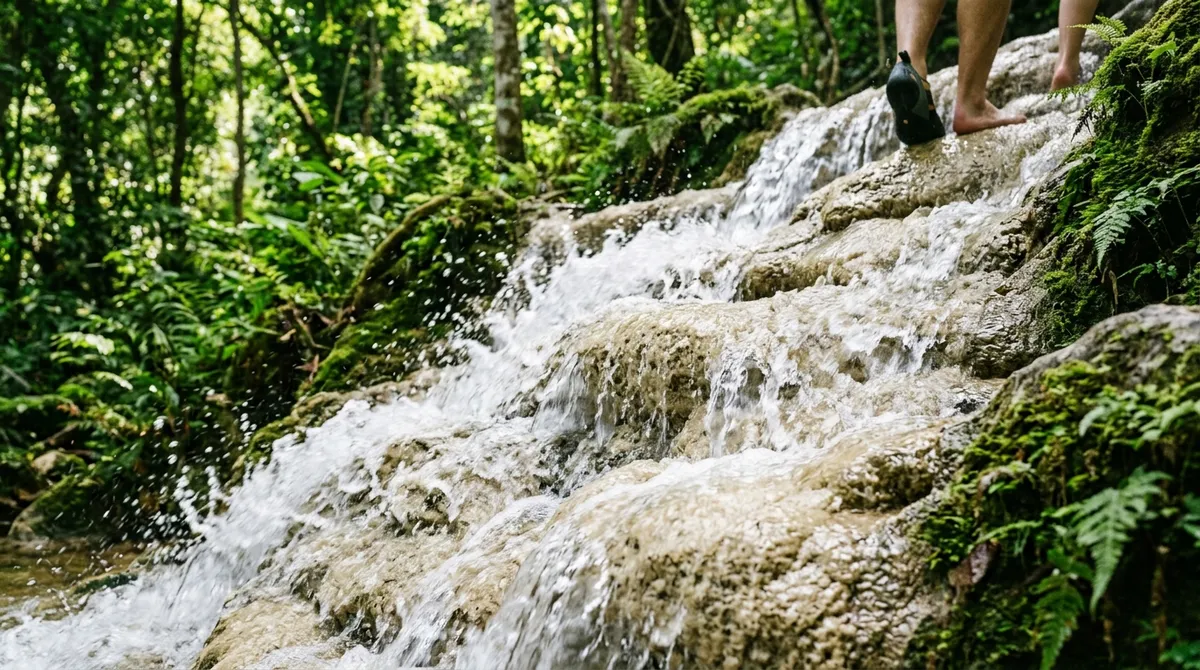
Mountain River Slides Along the Mae Chaem–Inthanon Foothills
Every March and April, when midday heat settles hard over Chiang Mai's basin, families around Mae Chaem and Chom Thong pack sticky rice and cold drinks and head straight for the shaded river valleys draining off Doi Inthanon. One of their favorite countryside escapes is Wang Khwai Waterfall—situated along the scenic mountain river corridor linking the Inthanon slopes with Tha Pha and Mae Chaem.
Do not picture a towering sheer cliff plunge here. Wang Khwai is all about smooth granite rock slides and deep, cool river eddies shaded by riverside trees and rustic bamboo cabanas. Patches of fine riverbed sand meet crystal-clear mountain water, inviting locals to wade, drift on rented inner tubes, and slide gently down water-worn stone ledges.
Peak Season (Nov–April) vs. Strict Monsoon Flood Rules (July–Sept)
Uncle Kham places safety ahead of every photograph: check the rainfall calendar before ever stepping toward Wang Khwai's water.
- Best & safest season (November–April): Once monsoon storms pass, river levels drop to reveal clear water over visible granite ledges and sandy pockets. Cool-season months bring crisp air, while March–April hot season delivers peak local picnic energy under the bamboo huts.
- Strictly avoid entering the water (July–September): During heavy monsoon downpours across Doi Inthanon and Mae Chaem ridges, calm eddies transform within hours into fast, muddy brown floodwaters. Submerged boulders vanish from sight and currents turn treacherous—never swim or slide on the rocks during July–September flood conditions; stay strictly on dry high banks.
Planning Your Chiang Mai Trip? Book Early for Lower Rates
Check real-time rates and secret deals on Agoda, our official travel partner. Enjoy 100% free cancellation, pay at check-in, and earn Agoda Cash rewards.
Smart River Habits Even in Dry Season
Even during clear dry-season afternoons, treat natural mountain rivers with respect:
- Test pool depth first: Granite hollows drop unevenly beneath shimmering water—never dive headfirst and wade slowly before sliding down any rock chute.
- Watch damp moss borders: Transition zones between dry sun-warmed stone and splashing eddies stay slick; gripped water sandals protect ankles far better than bare feet or smooth flip-flops.
- Keep children within arm's reach: Inner tubes drift faster than expected near narrow chutes.
- Carry cash and pack out litter: Roadside bamboo stalls serving papaya salad and grilled chicken run on cash; take plastic bottles back up to shore bins so the Mae Chaem watershed stays clean.
Combining Wang Khwai With Mae Chaem and Doi Inthanon
Travelers exploring Tha Pha's ancient temple murals, Mae Chaem's terraced valleys, or Route 1009's mountain viewpoints on a Doi Inthanon day trip can easily stop at Wang Khwai during warm afternoons between November and April. If you want to compare this rustic swimming river against gentler limestone cascades closer to the city, browse our top Chiang Mai nature attractions guide—or swap steep mountain corridors for relaxed river drifting in our Mae Wang bamboo rafting guide and shaded bamboo huts at Pong Jo Reservoir in Doi Lo.
Driving Logistics and Returning to Chiang Mai
Follow Highway 108 south out of Chiang Mai toward Chom Thong before branching onto Route 1009 and the valley spurs linking toward Mae Chaem (roughly 75–100 km, 1.5–2 hours depending on your exact valley stop). Main highways are paved and well marked, though mountain curves demand steady pacing. Because ride-hailing apps do not operate out in the Mae Chaem–Inthanon valleys, arrange a flexible private car and driver via our Chiang Mai transport guide if you do not self-drive. Fuel up early with breakfast from our Chiang Mai Khao Soi guide, and cruise back to town by evening to unwind at one of our hotels near Chiang Mai Night Bazaar.
Plan Your Chiang Mai Journey · Verified Booking Partners
Compare real-time rates for stays, curated day tours, flight tickets, and transport with best price guarantee and flexible cancellation: