



























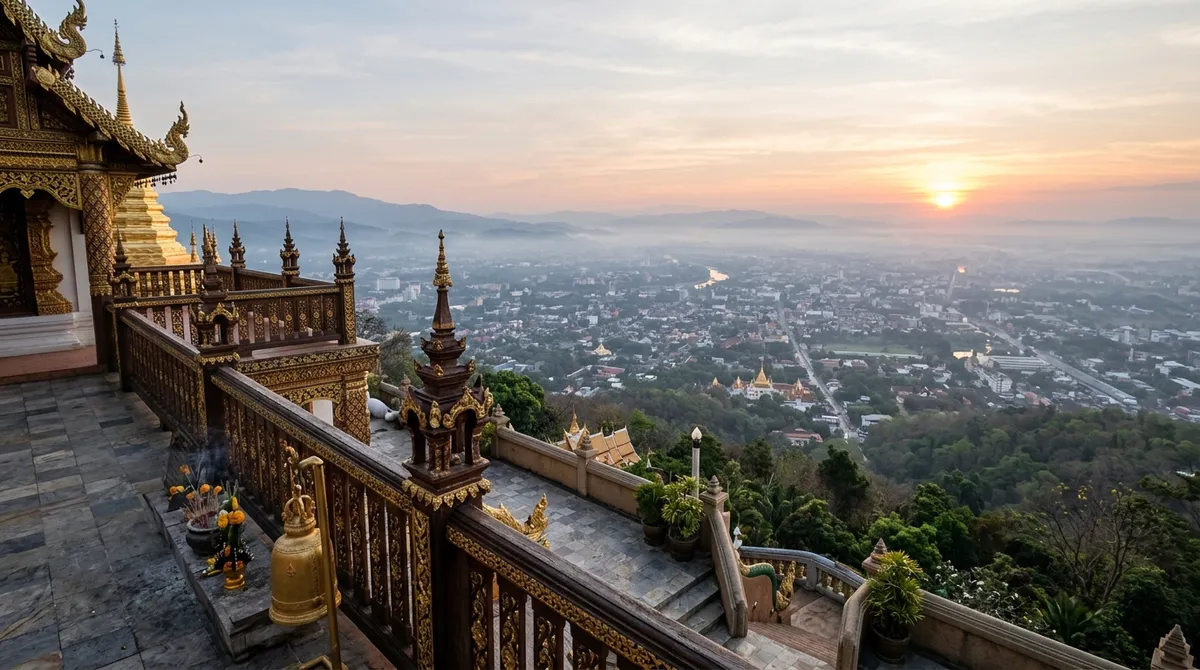
Sawadee krub, dear travelers and cultural explorers! Today, Uncle Kham welcomes you on an unforgettable journey back through more than seven centuries of northern history. Long before the bustling cafes of Nimman and the sacred bells of Doi Suthep defined modern Chiang Mai, King Mangrai ruled an ancient kingdom from a magnificent capital nestled along the Ping River. That lost underground realm is known today as Wiang Kum Kam, and at its spiritual heart stands Wat Chang Kham (historically chronicled as Wat Kan Thom)—a timeless sanctuary of weathered terracotta, elephant guardian stupas, and living legends.
The Genesis of Wiang Kum Kam & Wat Chang Kham: A 700-Year Sunken Legacy
The chronicle began in 1292 CE when King Mangrai, the visionary founder of the Mangrai Dynasty, conquered the Mon Kingdom of Hariphunchai (modern Lamphun). Seeking a strategic riverine bastion to expand northern trade and fortify military defense, the monarch established his first official capital at Wiang Kum Kam in 1294 CE, two years prior to founding the walled city of Chiang Mai beneath Doi Suthep.
To establish the realm's protective Buddhist merits, King Mangrai commissioned master craftsman Kan Thom to erect the capital's inaugural royal monastery. Combining the elegant architectural traditions of Hariphunchai with nascent Lanna masonry, craftsman Kan Thom raised a grand stepped stupa and enshrined sacred Buddha relics alongside a holy Bodhi sapling gifted from Sri Lanka. The monastery swiftly became the spiritual anchor of northern aristocracy and commoners alike.
However, the city's low-lying proximity to the original meandering course of the Mae Ping River ultimately sealed its fate. Around the late 16th to early 17th century, catastrophic monsoon floods burst the riverbanks, submerging palaces, monastic compounds, and city gates under 1.5 to 3 meters of thick river silt and sand. The entire settlement was abandoned and forgotten beneath agricultural hamlets for hundreds of years, until systematic excavations by the Fine Arts Department in 1984 miraculously uncovered the sunken ruins of Wat Chang Kham.
Architectural Splendor: Elephant-Buttressed Chedi & Teak Assembly Halls
The centerpiece of Wat Chang Kham today is its breathtaking Elephant-Buttressed Chedi (Chedi Chang Kham). Rising gracefully from a square plinth, the lower tier features sculpted half-elephant statues emerging majestically from the brickwork around all four directional faces. In Buddhist cosmology, elephants represent royal strength, stability, and guardians of sacred relic mounds. Though partially restored, the intricate stucco work and weathered terracotta exude profound antiquity.
Directly adjacent to the stupa lie the sunken excavations of the Original 13th-Century Viharn (Assembly Hall). Walking along the wooden boardwalks, visitors gaze down upon original brick foundations, laterite pillar bases, and the ancient stone pedestal (Chukchi) where the primary Buddha image once sat. The visual contrast between the excavated subterranean floor and modern village ground level provides striking physical proof of the catastrophic alluvial deluge that buried Wiang Kum Kam centuries ago.
Beside the archaeological zone, the monastery features an active contemporary teakwood Viharn built in classical Lanna style. Inside, visitors can admire vibrant murals narrating King Mangrai's migration from Chiang Saen to Wiang Kum Kam, pay respects before revered gilded Buddha statues, and experience the quiet reverence of an authentic living village temple.
Planning Your Chiang Mai Trip? Book Early for Lower Rates
Check real-time rates and secret deals on Agoda, our official travel partner. Enjoy 100% free cancellation, pay at check-in, and earn Agoda Cash rewards.
Getting There & Exploring: Traditional Horse Carriages, Scooters & Red Songthaews
Wat Chang Kham and Wiang Kum Kam are situated in Tha Wang Tan subdistrict, Saraphi district, just 5 to 6 kilometers south of Chiang Mai's Old City moat. Travelers landing at Chiang Mai International Airport can easily navigate transfer choices by reviewing the Chiang Mai airport transport and city transit guide to arrange taxis or private transfers directly to Saraphi.
For those traveling from central urban districts, hopping into a shared crimson pickup truck is an essential local ritual; be sure to consult our comprehensive Chiang Mai red truck songthaew fares and bargaining rules to negotiate fair rates with drivers. Alternatively, independent travelers who prefer the flexibility of riding through quaint rural lanes can rent a motorbike, keeping in mind the essential safety regulations covered in our guide to renting scooters, license rules, and police checkpoints.
Upon arriving at the Wiang Kum Kam Visitor Information Center near Wat Chang Kham, the absolute best way to tour the dispersed ruins is by hiring a traditional horse-drawn carriage. Local carriage operators serve as passionate neighborhood guides, clip-clopping through shaded country lanes, lush longan orchards, and quiet temple compounds while sharing vivid folk tales about each excavation site.
Responsible Heritage Exploration: Practical Tips & Ideal Visiting Hours
To ensure a smooth, culturally respectful, and photography-friendly outing at Wat Chang Kham, Uncle Kham shares these vital local pointers:
- Optimal Photography Hours: Arrive between 8:00 AM and 10:00 AM or after 3:30 PM. The golden morning and late afternoon sunlight illuminates the warm ochre tones of the historic brickwork while sparing you the midday tropical heat.
- Respectful Attire: Because Wat Chang Kham remains a sacred active place of worship with resident monks, dress modestly by covering shoulders, chests, and knees. Remove sunglasses and hats when stepping inside worship areas.
- Preservation Guidelines: Ancient brick masonry is delicate and fragile after centuries beneath wet silt. Never sit, stand, or climb on excavated walls or stupa platforms, and never remove loose brick fragments as souvenirs.
- Connecting Your Travel Itinerary: If your visit coincides with the festive Loy Krathong season, combine your afternoon at Wiang Kum Kam with evening festivities at designated eco-friendly venues listed in our Chiang Mai closed-system krathong floating guide. Or, if heading into the highlands the following morning, make sure to read the Kew Mae Pan winter mist trail on Doi Inthanon to prepare cold-weather gear and trail timings.
Standing before the weathered elephant stupa of Wat Chang Kham, listening to the gentle rustle of sacred Bodhi leaves and distant temple bells, one cannot help but marvel at the resilience of Lanna heritage. May your visit to this subterranean cradle of northern civilization inspire profound peace and curiosity. Travel gently, and welcome to Chiang Mai!
Plan Your Chiang Mai Journey · Verified Booking Partners
Compare real-time rates for stays, curated day tours, flight tickets, and transport with best price guarantee and flexible cancellation: