



























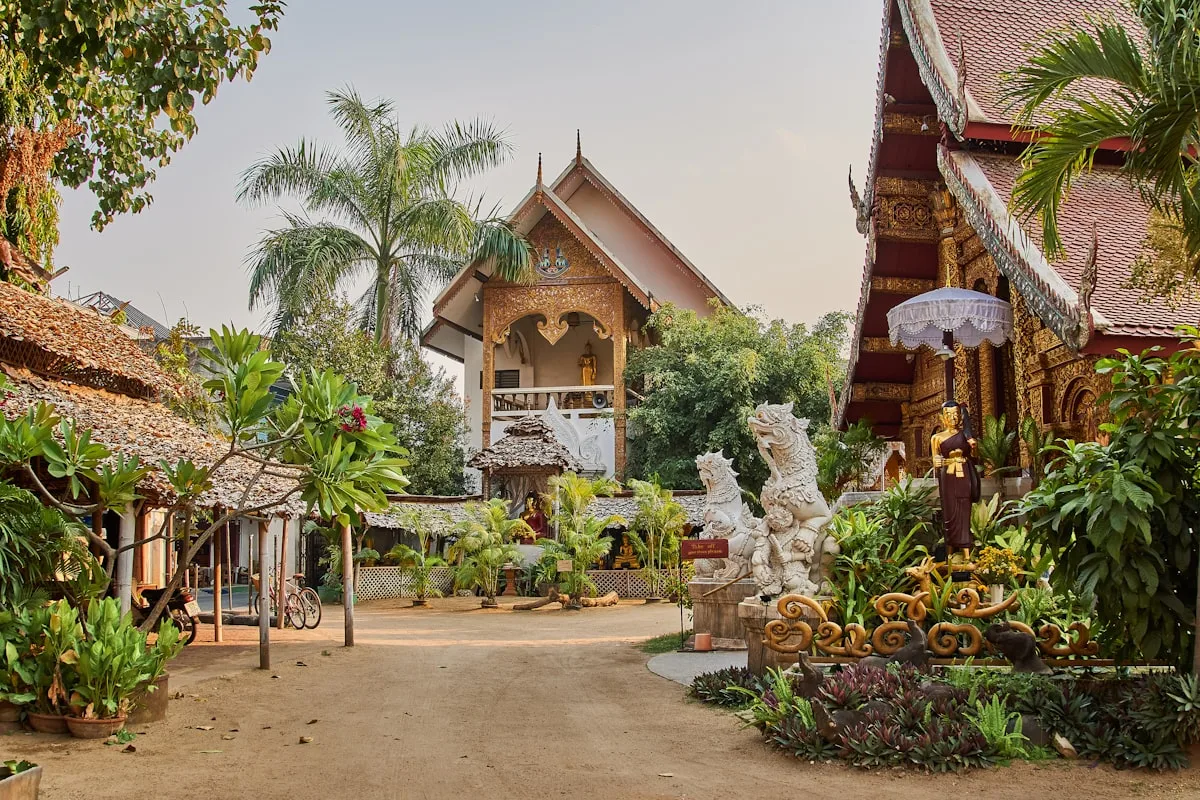
Getting Your Bearings First: Loi Kroh Road, Not Ratchadamnoen
Before wandering up Ratchadamnoen Walking Street looking for the wrong gate, double-check your map: Wat Chang Khong stands just outside the southeastern moat corner on Loi Kroh Road (near Kamphaeng Din), roughly a six-to-eight-minute walk from both Tha Phae Gate hotels and the Chiang Mai Night Bazaar.
Originally founded around 1357 CE during King Mangrai’s era under the name Wat Si Phun To, the compound fell empty during Burmese rule until Chiang Mai’s early nineteenth-century revival under King Kawila. Resettled families of bronze gong and bell founders brought down from Chiang Saen rebuilt this quarter around their foundry skills—giving the sanctuary its enduring name, "Temple of the Gong Makers."
The 1903 Ho Trai: Lanna, Chinese & Burmese Craft Under One Roof
As Loi Kroh and Chang Khlan evolved into bustling merchant quarters, prosperous Chinese-Thai traders moved beside the foundry families and became devoted temple patrons. Their greatest gift still anchors the courtyard today: an extraordinary two-story masonry-and-timber Ho Trai (Scripture Library) built in 1903 CE (BE 2446) by merchant Jek Bunyuen and his wife, Nang Bua Kham Chaiwongyat.
- Three-Culture Architecture: Rarely do Lanna, Burmese, and Chinese decorative traditions merge so fluidly on one modest building. Tiered roofline silhouettes echo Lanna and Shan-Burmese monastery craft, while stucco window arches, relief garlands, cinnabar-red lacquer, and gold-leaf fretwork unmistakably bear southern Chinese merchant artistry.
- Panyasajataka Upper-Veranda Murals: Along the second-floor gallery, historic color murals illustrate the folk Jataka romance of Chao Suwat and Nang Bua Kham—a subtle nod sharing the very name of the patron’s wife who funded the library over a century ago.
- Morning Calm on a Nightlife Street: Though Loi Kroh hums with massage shops and bars after dark, step through Wat Chang Khong’s gate by morning and the courtyard holds only sunlit terracotta tiles and soft temple bells.
Planning Your Chiang Mai Trip? Book Early for Lower Rates
Check real-time rates and secret deals on Agoda, our official travel partner. Enjoy 100% free cancellation, pay at check-in, and earn Agoda Cash rewards.
Hours, Conservation Courtesy & Easy Walking Access (2026)
- Hours & Entry: Open daily during daytime hours roughly 08:00 to 17:00 with free admission. Ask a resident monk or caretaker before ascending the narrow stairs to the second-story veranda, and never use camera flash near the delicate 1903 murals.
- Getting There: From Tha Phae Gate, stroll south along the outer eastern moat toward Jaeng Katam corner and turn left onto Loi Kroh Road (6–8 minutes on foot). Guests at hotels near the Night Bazaar walk west in under 5 minutes. Shared red songthaews across central roads cost 30 THB; GrabCar typically runs 60–80 THB (see our Songthaew & Grab guide).
- Dress Code: Modest attire covering shoulders and knees; remove footwear cleanly at hall thresholds.
Linking Loi Kroh Heritage with Markets & Old City Loops
Visit around 08:30–09:30 AM when soft morning light hits the red-and-gold Chinese-Lanna stucco cleanly. Afterward, walk north along Chang Khlan into bustling Warorot Market for dried fruit and northern textiles, or cross back into the brick square via Tha Phae Gate to continue along our Chiang Mai Old City walking guide. Few short detours deliver this much architectural richness in ten minutes on foot.
Uncle Kham’s Parting Note
Most travelers know Loi Kroh only for evening neon. Catch it in morning sunlight at Wat Chang Khong instead, stand beneath that 1903 cinnabar-and-gold scripture library, and picture Chiang Saen bell founders and Chinese shopkeepers pooling their finest craft into one small courtyard.
Plan Your Chiang Mai Journey · Verified Booking Partners
Compare real-time rates for stays, curated day tours, flight tickets, and transport with best price guarantee and flexible cancellation: