



























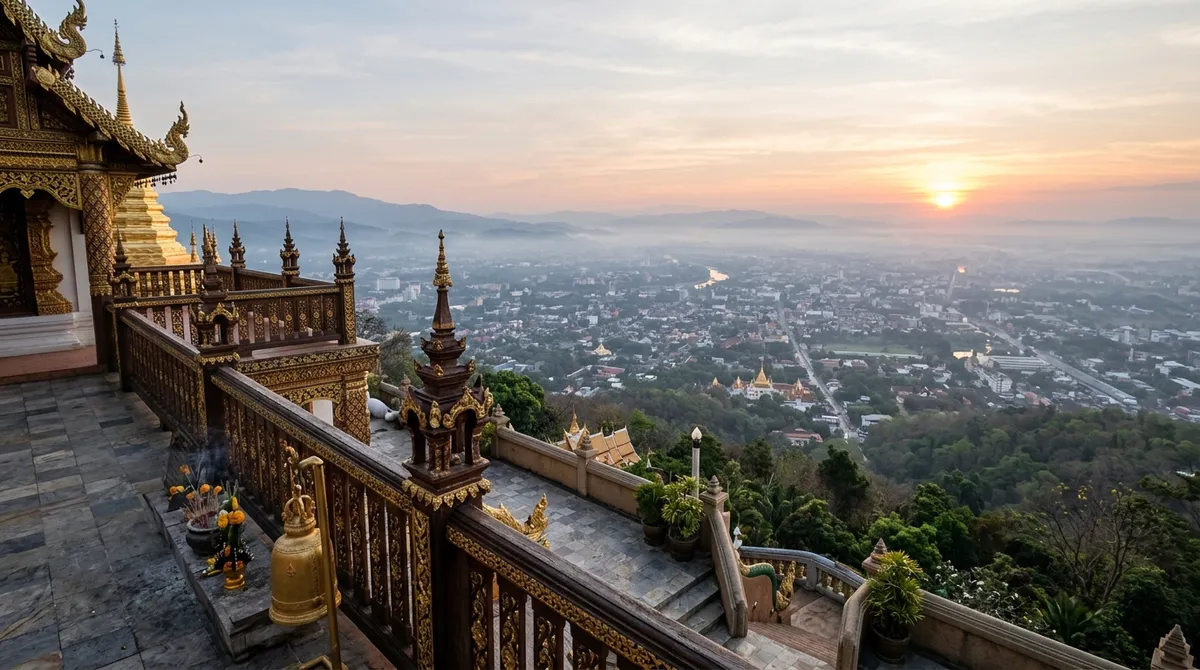
The Sacred City Navel: Spiritual Epicenter of 13th-Century Chiang Mai
Sawasdee krub, fellow explorers and cultural seekers! Uncle Kham welcomes you back to the historic core of Chiang Mai. Many visitors stroll past the iconic Three Kings Monument without realizing that merely a few dozen steps behind it stands a serene, centuries-old monastery possessing immense metaphysical importance: Wat Inthakhin Sadue Muang (The City Navel Temple).
When King Mangrai founded Chiang Mai in 1296, assisted by King Ramkhamhaeng of Sukhothai and King Ngam Mueang of Phayao, they employed sophisticated cosmological planning to lay down the city's rectangular moated grid. King Mangrai designated this very location as the Sadue Muang—literally the "Navel of the City." It was here that he erected the original Inthakhin City Pillar, acting as an anchor connecting cosmic harmony, earth spirits, and human prosperity to protect the burgeoning Lanna kingdom from famine, conflict, and misfortune.
Getting around this historic quarter is delightfully simple. You can easily hop on a classic Chiang Mai red Songthaew truck from anywhere in the city, alighting conveniently along Inthawarorot Road right in front of the temple grounds without having to navigate tricky parking lanes.
Luang Pho Khao (The White Buddha): 700 Years of Grace and Benevolence
Stepping inside the atmospheric teak viharn, your eyes are immediately drawn to Luang Pho Khao (also affectionately known as Phra Chao Khao, the Sacred White Buddha). Dating back over seven centuries to the Chiang Saen-Lanna transitional period, this revered statue depicts the Buddha in the Maravijaya (Subduing Mara) posture, sculpted from brick and stucco coated with pristine white lime wash and delicate gold leaf embellishments.
The countenance of Luang Pho Khao radiates extraordinary peace and gentle warmth. His downcast eyes and soft smile convey an intimate sense of solace that instantly puts restless minds at ease. Local legend holds that this miraculous image survived numerous sieges, fires, and the long decades when Chiang Mai was left deserted in the late 18th century. Townspeople gather here daily to pray for healing, emotional resilience, family harmony, and good fortune in life's major milestones.
"Whenever heavy troubles weigh upon your shoulders, sit quietly before the White Buddha. Listen to the temple wind chimes, and your spirit will regain its natural stillness." — Uncle Kham's local reflection
After your quiet contemplation, you can venture into the neighborhood's culinary spots to savor regional favorites, such as the authentic ancient northern pomelo salad with crab paste extract or hunt down aromatic bowls along our famous Chiang Mai curry noodle trail situated just minutes away.
Planning Your Chiang Mai Trip? Book Early for Lower Rates
Check real-time rates and secret deals on Agoda, our official travel partner. Enjoy 100% free cancellation, pay at check-in, and earn Agoda Cash rewards.
Historical Relocation: The Journey of the Inthakhin Pillar to Wat Chedi Luang
One of the most fascinating chapters in Chiang Mai's municipal chronicles is the relocation of the Inthakhin Pillar. In 1800, King Kawila—who liberated Chiang Mai from two centuries of Burmese vassalage and initiated the city's heroic renaissance—realized that the original open-air shrine at Wat Sadue Muang was geographically constrained and vulnerable. To restore civic confidence and celebrate Lanna revival, he moved the City Pillar to the towering grounds of Wat Chedi Luang, where the grand annual Inthakhin Flower Offering Festival (Inthakhin Sai Khan Dok) could accommodate tens of thousands of worshippers.
Despite the physical transfer of the pillar, Wat Inthakhin Sadue Muang never forfeited its spiritual sanctity. A handsome replica pavilion and sacred stupa remain positioned over the exact original navel coordinates. Furthermore, the temple preserves an ancient consecrated well, holy stone inscriptions, and historical artifacts that remind every modern traveler of Chiang Mai's earliest municipal dawn.
Architectural Marvels: Octagonal Viharn and Master Teak Woodcraft
Beyond its profound spiritual gravitas, Wat Inthakhin Sadue Muang is an architectural gem of traditional Northern Thai craftsmanship. The primary viharn is built with sturdy teak timber, featuring inward-sloping walls designed to create visual majesty and intimate acoustics. The multi-tiered roof is tiled with rustic terracotta shingles and crowned with hand-carved floral bargeboards (chofa, bairaka, and hang hong) depicting mythical nagas and entwined celestial vines.
The interior ceiling boasts exquisite gilded lotuses set against black lacquer beams, complemented by colorful handwoven Tung flags and handmade mulberry paper lanterns gently swaying in the breeze. Travelers who appreciate indigenous textile craftsmanship should make time to visit the renowned Pasang cotton weaving village in nearby Lamphun, where ancient handloom traditions share the same aesthetic heritage visible in these sacred Lanna temple decorations.
Visitor Summary & Practical Guide Table for 2026
| Visitor Category | Details & Practical Information | Uncle Kham's Insider Tip |
|---|---|---|
| Opening Hours | 06:00 AM – 06:00 PM (Daily all year) | Arrive between 07:00 and 08:30 AM for sublime morning light and peaceful solitude. |
| Admission Fee | Free admission for all Thai and international guests | Consider placing a small donation in the maintenance boxes for temple upkeep. |
| Dress Code | Modest temple attire (shoulders and knees covered) | Always remove footwear before stepping onto the raised wooden viharn deck. |
| Key Highlights | Luang Pho Khao, Original Navel Shrine, Phra Sangkachai | Offer fragrant white jasmine garlands or lotus blossoms at the altar. |
Etiquette and Respectful Practices for Visiting Ancient Temples
To ensure your pilgrimage to Wat Inthakhin Sadue Muang is enriching and culturally sensitive, Uncle Kham recommends following these traditional customs:
- Mindful Demeanor: The viharn is compact and acoustically sensitive. Please maintain a gentle, hushed tone and switch mobile devices to silent mode while observing devotees in prayer.
- Photography Etiquette: Photography without flash is welcome. Always avoid standing tall over meditating monks or seated elders; take photos from a respectful seated or kneeling posture whenever possible.
- Offerings: Worship trays with incense, white candles, and fresh flowers are readily available inside the compound for a modest donation. Lighting three incense sticks honors the Buddha, Dhamma, and Sangha.
- Walking Tour Connections: Combine your visit seamlessly with the adjacent Chiang Mai City Arts & Cultural Centre, the Three Kings Monument square, and Wat Duang Di—all situated within a 3-minute walking radius.
May the tranquil blessings of Luang Pho Khao accompany your travels throughout northern Thailand. Wat Inthakhin Sadue Muang is a gentle reminder that even in the vibrant center of modern Chiang Mai, the sacred heartbeat of ancient Lanna beats as clearly and steadily as ever.
Plan Your Chiang Mai Journey · Verified Booking Partners
Compare real-time rates for stays, curated day tours, flight tickets, and transport with best price guarantee and flexible cancellation: