



























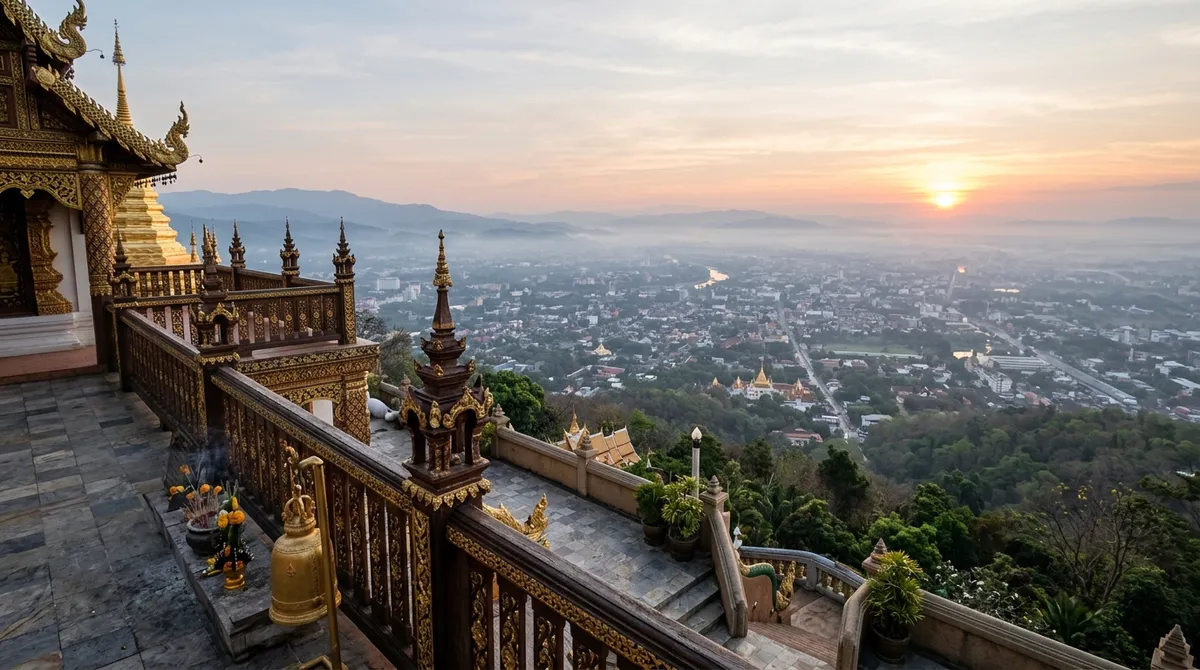
Sawadee krub and a cordial welcome to all seekers of historical truth and spiritual depth! It is Uncle Kham once again, guiding your steps through the ancient heartlands of northern Thailand. Today, we step back to the true Genesis of the Lanna Kingdom at Wat Kan Thom in Wiang Kum Kam. Before King Mangrai built the fortified walls of Chiang Mai beneath the protective gaze of Doi Suthep, he laid the cornerstone of his first capital right here, founding Wat Kan Thom as the spiritual heart of his nascent empire.
The Genesis of an Empire: King Mangrai & Master Artisan Kan Thom (1290 CE)
According to ancient palm-leaf chronicles, including the Yonok Chronicle and Jinakalamali, King Mangrai triumphed over the Mon kingdom of Hariphunchai in 1292 CE. Recognizing the rich agricultural fertility and strategic riverine transport of the Mae Ping River basin, the great monarch decided to build a fortified royal settlement: Wiang Kum Kam. Demonstrating devout Buddhist kingship, his initial undertaking was not a fortified citadel, but the erection of an auspicious Royal State Monastery.
King Mangrai appointed his chief royal architect, master craftsman Kan Thom, to oversee construction, bestowing the sanctuary with the enduring name Wat Kan Thom. Master artisan Kan Thom mobilized skilled Mon stonemasons from Hariphunchai alongside northern carpenters, raising a stepped castle-style stupa, an expansive royal viharn, and consecrated boundary walls that served as the spiritual epicenter for state ceremonies.
Wat Kan Thom was thus far more than a neighborhood temple; it stood as the living anchor of royal sovereignty and religious patronage. Even after severe monsoon floods subsequently forced King Mangrai to move his court to higher ground at Chiang Mai, Wat Kan Thom remained deeply venerated throughout the centuries.
The Sacred Sri Lankan Bodhi Tree & The Famous Kan Thom Terracotta Tablets
What elevates Wat Kan Thom into a revered pilgrimage destination for global Buddhists is its Sacred Sri Lankan Bodhi Tree. Historical records document that King Mangrai embraced Theravada Buddhism from Sri Lanka. He dispatched high-ranking royal and monastic envoys across the seas to Ceylon (modern Sri Lanka) to request sacred saplings sprouted from the revered Jaya Sri Maha Bodhi tree at Anuradhapura. The sapling was brought back with immense honor and planted in the sanctuary courtyard, where its leafy descendants continue to provide cooling shade and spiritual serenity today.
Equally extraordinary was the archaeological discovery of the celebrated Kan Thom Terracotta Votive Tablets. During systematic excavations beneath the stupa foundation, Fine Arts Department archaeologists uncovered hundreds of exquisitely preserved clay tablets. These votive impressions feature seated Buddha figures in diamond meditation posture framed beneath ornate crystalline arches, flanked by flying devas and delicate Bodhi leaf motifs.
Art historians treasure the Kan Thom tablets because they represent the crucial stylistic transition between Mon-Hariphunchai, Burmese Pagan, and nascent Lanna art. These rare terracotta relics offer tangible proof of how 13th-century craftsmen fused diverse Southeast Asian spiritual currents into a distinctly northern artistic identity.
Planning Your Chiang Mai Trip? Book Early for Lower Rates
Check real-time rates and secret deals on Agoda, our official travel partner. Enjoy 100% free cancellation, pay at check-in, and earn Agoda Cash rewards.
Smart Travel Planning: Weather Seasons, Monsoon Tips & Solo Female Safety
Visiting historic outdoor ruins like Wat Kan Thom requires thoughtful seasonal planning. Travelers scheduling visits during the early months of the year should consult our Chiang Mai burning season dates and smoky season alternatives guide to plan outdoor activities during periods of optimal air clarity.
If your northern holiday falls during the tropical monsoon months, there is no need to worry. Northern Thailand during the green season is lush and vibrant; simply review our practical Chiang Mai rainy season travel hacks and indoor activities guide to keep your exploration comfortable and dry.
For independent women traveling alone, Chiang Mai consistently ranks as one of Asia's safest and most welcoming destinations. Uncle Kham encourages you to read our dedicated Chiang Mai solo female travel safety and neighborhood guide for practical tips on safe accommodation areas and transport. To complement your spiritual journey, consider visiting the underground tunnels highlighted in our Wat Umong ancient forest tunnel temple and meditation guide, followed by delicious culinary stops in our Michelin Guide Chiang Mai Bib Gourmand street food guide 2026.
Visitor Etiquette & Sacred Heritage Reflection
To experience Wat Kan Thom with profound mindfulness and cultural reverence, Uncle Kham shares these essential reminders:
- Circumambulate the Sacred Bodhi: Take off your shoes and respectfully walk three times clockwise (Pradaksina) around the Bodhi tree enclosure, focusing your mind on loving-kindness and spiritual peace.
- Study Votive Artworks: Take time to read the on-site historical interpretative plaques displaying detailed macro photographs and historical diagrams of the excavated terracotta tablets.
- Preserve Consecrated Grounds: Maintain quiet decorum, refrain from littering, and dress respectfully with shoulders and knees covered.
Wat Kan Thom reminds us that great kingdoms and enduring cities are anchored upon sacred values of faith, wisdom, and selfless communal devotion. May your journey to this ancient cradle of Lanna heritage illuminate your travels with peace and understanding. Safe journeys, everyone!
Plan Your Chiang Mai Journey · Verified Booking Partners
Compare real-time rates for stays, curated day tours, flight tickets, and transport with best price guarantee and flexible cancellation: