



























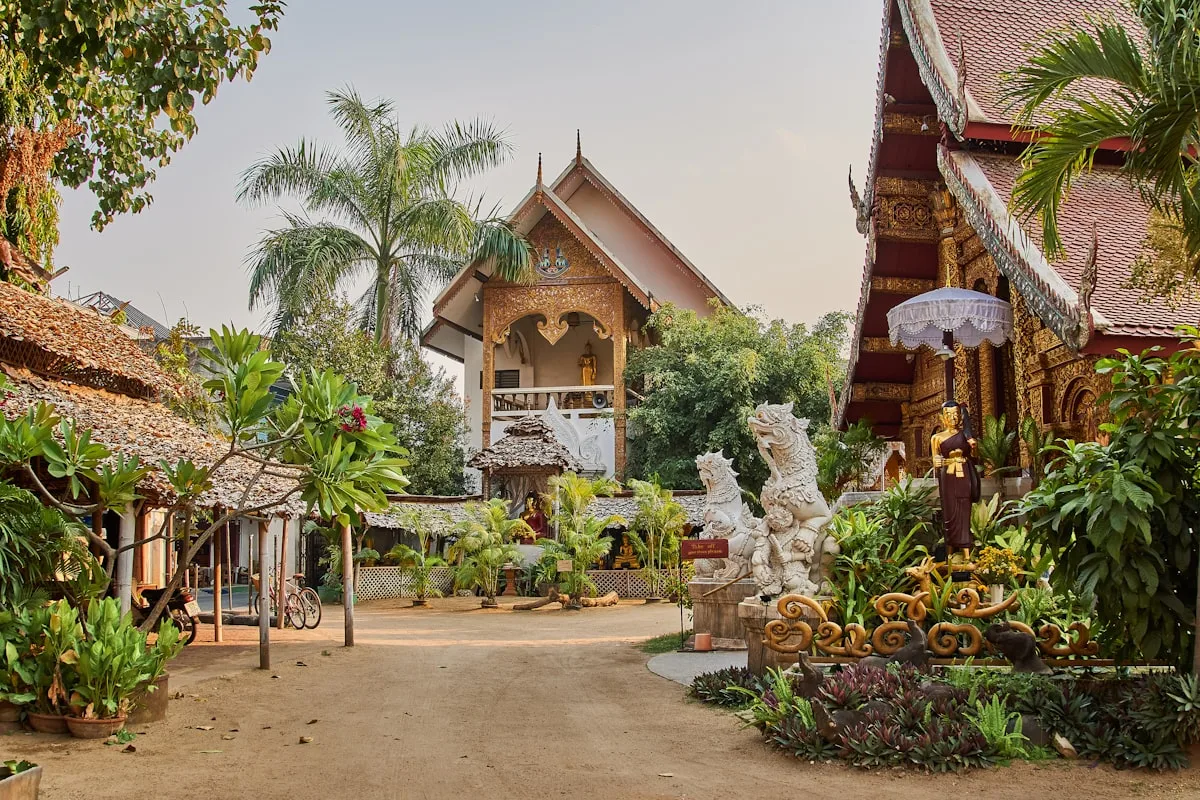
Step through the red-brick arch of Tha Phae Gate onto Ratchadamnoen Road and before you have walked two minutes, a golden-gabled monastery on your left catches your eye: Wat Muen Lan. On weekday mornings, incense curls gently out of its tranquil wooden hall; on Sunday evenings, its courtyard blooms with handicraft stalls as part of Chiang Mai’s grand Walking Street.
Most visitors smile at its modern English nickname—"The Temple of Ten-Million Wealth"—and step inside to wish for good fortune. Yet Uncle Kham wants you to hear the older story behind those two words before you light your incense, because its origins speak more of compassion than commerce.
Founded by Nobleman Muen Lan Under King Tilokaraj
Between 1459 and 1462, during the golden reign of Lanna’s King Tilokaraj, one of the kingdom’s foremost commanders—titled Muen Lok Sam Lan (often remembered as Muen Lan or Muen Dong)—built this monastery just inside the eastern city gate. Historical chronicles record a remarkable motive: he dedicated the merit not only to fallen Lanna commanders, but also to the souls of rival Ayutthaya soldiers killed in battle.
Locals initially called it Wat Muen Sam Lan after his noble title, which softened over centuries into Wat Muen Lan. Because those syllables sound identical to "ten million" in modern Thai, business owners and travelers alike now treat it as a fortunate stop for prosperity. Admission is free every day.
Inside the Gilded Viharn: Peacock Gables & Burmese-Lanna Craft
Despite standing right on the Old City’s busiest promenade, crossing Wat Muen Lan’s threshold brings sudden stillness.
- The Ornate Gilded Viharn: Look up before climbing the steps—the wooden pediment features a shimmering peacock-and-scrollwork carving inlaid with colored mirror glass, a hallmark of 19th-century Burmese-influenced Lanna restoration.
- Chiang Saen Seated Buddha: Inside the dim, lacquer-and-gold-columned hall rests a serene bronze-toned Buddha seated in the rare vajrasana diamond posture.
- Golden Bell Chedi: Behind the viharn rises a slender, golden Burmese-style bell stupa catching the morning sun above quiet courtyard trees.
"Make your wish for good business if you like, then pause a moment for the general who built this hall for his enemies’ souls too. That kind of generosity outlasts every coin." — Uncle Kham
Planning Your Chiang Mai Trip? Book Early for Lower Rates
Check real-time rates and secret deals on Agoda, our official travel partner. Enjoy 100% free cancellation, pay at check-in, and earn Agoda Cash rewards.
Sunday Walking Street Courtyard & Easy Walking Routes
If you are staying at hotels near Tha Phae Gate, Wat Muen Lan sits three minutes on foot and makes the cleanest opening stop along our Chiang Mai Old City walking route toward Wat Chedi Luang and Wat Phra Singh.
Come back on Sunday after 17:30 during Sunday Walking Street: the temple courtyard opens up into an unhurried craft, snack, and foot-massage enclave just off the dense main road, a short stroll from the historic brick ramparts detailed in our Chiang Mai moat and city walls guide.
Best Light, Dress Code & Practical Temple Etiquette
For photographers, the ideal window is 07:30–09:00, when low eastern light illuminates the mirror-inlaid peacock gable straight through Tha Phae Gate without harsh midday shadows. On weekday mornings you may share the garden with only sparrows and wind bells chiming atop the golden Burmese chedi behind the hall. Dress modestly covering shoulders and knees before climbing into the viharn, leave shoes neatly on the wooden rack outside, switch off camera flash, and point your feet away from the Buddha pedestal when seated on the woven floor mats before stepping back out onto Ratchadamnoen’s shaded cafes.
Plan Your Chiang Mai Journey · Verified Booking Partners
Compare real-time rates for stays, curated day tours, flight tickets, and transport with best price guarantee and flexible cancellation: