



























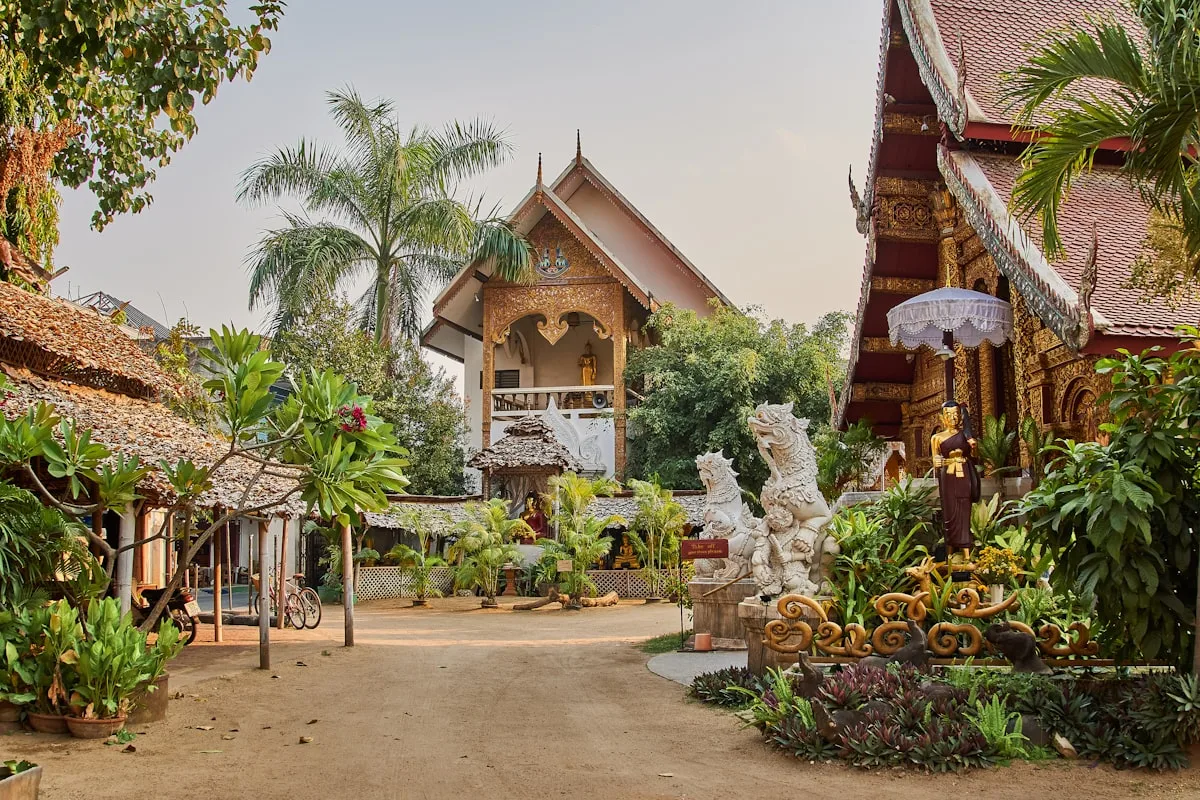
Follow Ratchamankha Road east from Wat Phra Singh past Huen Phen restaurant until you reach the Phra Pokklao corner, and a quiet shower of white frangipani blossoms marks the gateway of Wat Muen Tum. While tour buses crowd the giant stupas nearby, locals quietly slip through this modest brick entrance whenever they seek recovery from illness, steady health, or a fresh spiritual start.
Despite its low wooden roofs and unhurried courtyard, Wat Muen Tum played an indispensable role in royal Lanna statecraft for over five hundred years.
Ratchamankha Heritage & the Royal Healing-Water Sequence
Founded around 1478 under the patronage of nobleman Muen Tum at the dawn of King Muang Kaew’s era, Wat Muen Tum formed the crucial middle station in a sacred three-temple coronation and purification sequence for Mangrai monarchs. First, a new king donned white robes at Wat Pha Khao. Next, he entered Wat Muen Tum for a sado khro ceremony—casting away misfortune, illness, and heavy karma—before crossing the lane to bathe in the sacred lustral pond and well at neighboring Wat Ched Lin.
Uncle Kham likes explaining that exact geography clearly: while the historic royal bathing pond sits directly across Phra Pokklao Road at Wat Ched Lin, Wat Muen Tum remains the quiet healing sanctuary where those protective prayers were spoken. Admission is free daily from 06:00 to 18:00.
Twin 500-Year Buddhas & the Frangipani-Shaded Chedi
Step softly inside the low-eaved timber viharn and look toward the altar—you will notice something found almost nowhere else in Chiang Mai:
- Rare Twin Principal Buddhas: Seated side by side in calm meditation sit two 500-year-old bronze-and-stucco images—Phra Phuttha Chokdi (Good Fortune) and Phra Phuttha Mangmi Si Suk (Auspicious Happiness)—sharing one altar in harmonious balance.
- Brick-and-Lime Chedi Under Frangipani Trees: Behind the hall rises a serene weathered stupa guarded by four corner stone singha lions, framed by gnarled frangipani boughs that drop fragrant white petals across the swept sand.
- Guardian Thao Wessuwan Shrine: A respectful corner courtyard where locals light candles for protection and steady livelihood.
"When your legs grow tired from temple-hopping under the midday sun, sit ten quiet minutes under Wat Muen Tum’s frangipani shade—it clears the mind faster than any cold drink." — Uncle Kham
Planning Your Chiang Mai Trip? Book Early for Lower Rates
Check real-time rates and secret deals on Agoda, our official travel partner. Enjoy 100% free cancellation, pay at check-in, and earn Agoda Cash rewards.
An Effortless Old City Walking Loop
Because Wat Muen Tum stands just a few blocks south of Wat Chedi Luang, it slots effortlessly into our Chiang Mai Old City walking guide. Guests staying in hotels near Tha Phae Gate can stroll here around 08:30 before heat builds, cross the road to admire Wat Ched Lin’s bamboo bridge over the sacred pond, trace the southern ramparts in our Chiang Mai moat and city walls guide, and arrive back on Ratchamankha right in time for an authentic Northern lunch.
Dress Code, Candle Etiquette & Quiet Visiting Hours
Wat Muen Tum opens free every day from 06:00 to 18:00. Because neighborhood monks actively meditate and chant inside the compound, cover shoulders and knees before entering the wooden viharn, remove shoes at the bottom step, keep conversation hushed beneath the frangipani courtyard, and visit between 08:30 and 11:00 if you wish to offer morning alms, light a blessing candle, or receive a quiet holy-water sprinkling.
Uncle Kham’s final pace tip: after leaving the courtyard, step west along Ratchamankha Road for an iced coffee at one of the small wooden shophouse cafes, then continue straight to Huen Phen Old City before noon to claim a quiet table for Northern curry lunch.
Plan Your Chiang Mai Journey · Verified Booking Partners
Compare real-time rates for stays, curated day tours, flight tickets, and transport with best price guarantee and flexible cancellation: