



























A warm northern greeting from Uncle Kham to all explorers, cultural heritage lovers, and visitors from across the globe! Today, I want to guide you along Manee Nopparat Road on the outer northern rim of the historic moat, just opposite the Sri Phum bastion. Rising gracefully above the tree line, you will behold an architectural silhouette unlike any other in the valley: soaring, multi-tiered timber roofs culminating in slender spires. This is Wat Pa Pao, celebrated as Chiang Mai's first Shan (Tai Yai) Buddhist temple. Founded over 140 years ago, it remains the pulsating spiritual and cultural sanctuary for Northern Thailand's vibrant Shan community.
1. Over 140 Years of Heritage: Chiang Mai's First Shan Sanctuary
In the late 19th century, Chiang Mai experienced rapid economic expansion, driven largely by the British colonial timber concessions and regional gemstone trade. Skilled Shan (Tai Yai) foresters, elephant drivers, and merchants crossed the mountain passes from the Shan States and Burma to settle in the fertile Chiang Mai valley under the protection of the Lanna rulers.
In 1883, Chao Inthawichayanon, the 7th monarch of Chiang Mai (and father of Princess Dara Rasmi), demonstrated royal benevolence by donating a spacious forest grove populated by native Pao trees (a resilient indigenous hardwood) outside the northern ramparts to the Shan migrant community. Led by respected community elders and wealthy timber traders, the community erected their beloved sanctuary and christened it Wat Pa Pao. From its inception, the temple served not merely as a place of prayer, but as a Shan language school, a mutual-aid hall, and an enduring cultural bridge preserving the music, dress, and monastic rites of the Shan people.
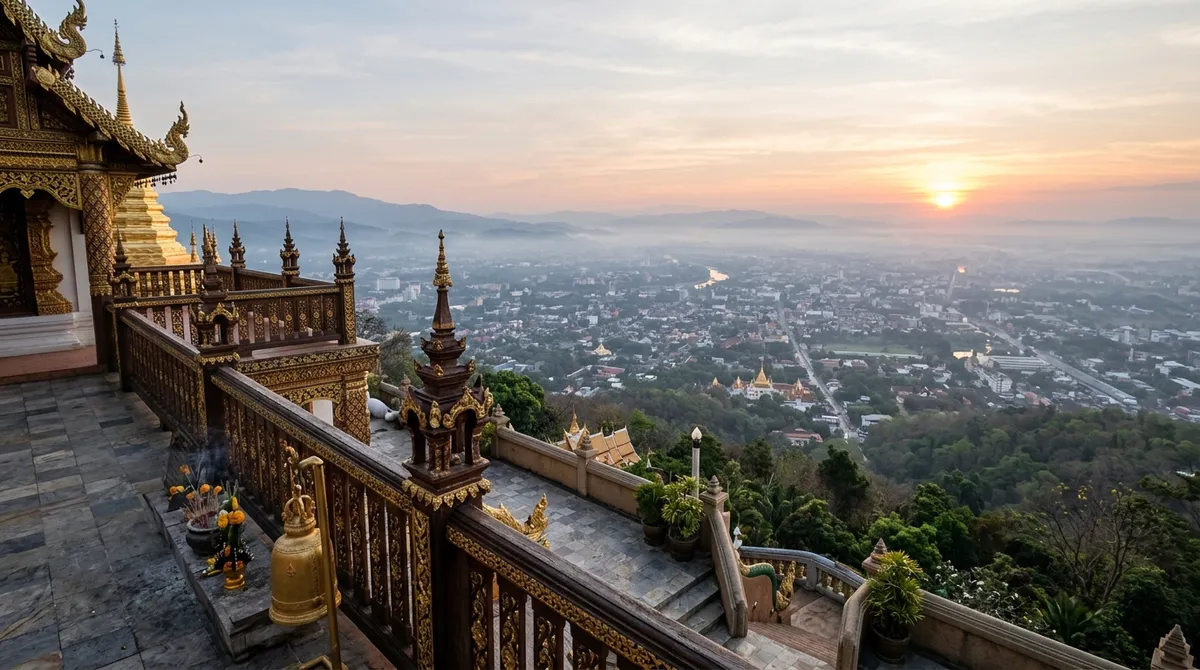
For travelers captivated by contemporary Buddhist murals and scenic hilltop panoramic terraces on the eastern rim of the valley, Uncle Kham recommends reading our visitor guide to wat-doi-saket-guide-chiang-mai-2026 in Doi Saket.
2. Burmese-Shan Teakwood Architecture & Sacred Jade Relics
Unlike classical northern Lanna temples with their sweeping curved rafters, Wat Pa Pao is an authentic masterpiece of Burmese-Shan architectural traditions. Uncle Kham invites you to admire its intricate craftsmanship:
- The Pyatthat Tiered Teak Viharn: Constructed entirely from seasoned golden teakwood, the assembly hall features a magnificent seven-tiered wooden tower known as a Pyatthat. This soaring spire represents the cosmic levels of Mount Meru in Buddhist cosmology. The eaves are adorned with perforated metal filigree (intricately punched zinc and tin sheeting) that shimmers brilliantly under the tropical sun.
- Mandalay-Style Principal Buddha: Enshrined upon a carved wooden throne inlaid with glass mosaics, the presiding bronze Buddha reflects refined Mandalay sculpture. With delicate facial features, a soft smile, and flowing alabaster robes lined with colored glass jewels, the statue radiates serenity and spiritual dignity.
- Sacred Relics and White Jade Buddha: Within the prayer hall, devotees venerate consecrated relics of the historical Buddha alongside a sacred white jade Buddha statue gifted from Myanmar, believed to bestow protective blessings and inner peace.
- Burmese-Style Reliquary Stupa: Standing behind the viharn is a graceful whitewashed stupa topped with a multi-tiered golden brass umbrella (Hti). Small wind bells chime softly in the breeze, evoking the meditative ambiance of ancient temples in Taunggyi or Yangon.
After your morning visit to Wat Pa Pao, if you are looking to shop for organic northern fruits, local breakfast delicacies, and fresh vegetables at a lively local market, take a ride out to ruamchok-market-guide-chiang-mai-2026 in San Sai.
Planning Your Chiang Mai Trip? Book Early for Lower Rates
Check real-time rates and secret deals on Agoda, our official travel partner. Enjoy 100% free cancellation, pay at check-in, and earn Agoda Cash rewards.
3. Poy Sang Long: The Dazzling Novice Ordination Festival
Wat Pa Pao is celebrated worldwide as the primary stage for Chiang Mai's annual Poy Sang Long Festival, one of the most colorful and joyful Buddhist ceremonies on earth. Uncle Kham loves to explain the cultural beauty of this festival to visiting friends:
- The Princely Novices (Sang Long): In late March or early April, young Shan boys prepare to ordain as novice monks. Commemorating Prince Siddhartha's life in the palace prior to his spiritual renunciation, the young boys are dressed in dazzling princely garments of embroidered silk, adorned with elaborate headdresses adorned with orchids, and given delicate cosmetics with brightly blushed cheeks.
- The Joyful Procession: Over three days of celebration, the young princes never let their feet touch the ground; they are carried high on the shoulders of adult guardians known as 'steeds' (Ma Khi). Accompanied by the thunderous rhythm of Shan long drums (Kong Kon Yao), clashing brass gongs, and whirling dancers, the lively parade winds through the city gates in ecstatic celebration.
- Cultural Preservation: On weekends throughout the year, Wat Pa Pao continues to host free community classes for youth in Shan script, traditional Kinnari and peacock bird dancing, and drum percussion, keeping ancient traditions vibrant and alive.
"True community is built on hospitality and mutual respect. Wat Pa Pao stands as living proof of Chiang Mai's generous heart, embracing diverse ethnic cultures into a harmonious tapestry of spiritual peace."
If you are passionate about traditional northern decorative handicrafts, silver repousse bowls, and antique lacquerware, explore the master craftsman workshops detailed in km8-silverware-lacquerware-workshops-guide-chiang-mai-2026 along the San Kamphaeng craft road.
4. Directions, Map Logistics & Practical Visiting Tips
Wat Pa Pao is situated at 177 Manee Nopparat Road, Tambon Si Phum, Mueang Chiang Mai District. It lies directly on the outer moat road, immediately across from the northeastern Sri Phum bastion.
| Transit Mode | Directions & Estimated Times | Uncle Kham's Insider Recommendations |
|---|---|---|
| Walking from Chang Phuak Gate | Head east along Manee Nopparat Road for 600 meters (approx. 7 mins). | Comfortable sidewalk stroll with clear views of the moat and ancient bastions. |
| Red Songthaew (Shared Taxi) | Tell the driver 'Wat Pa Pao outer moat' (standard 30 THB city fare). | Songthaews circle the moat continuously; you can disembark right in front of the footbridge. |
| Bicycle or Scooter | Cross the bridge into the temple's private courtyard parking. | Spacious, shaded parking available free of charge inside the temple gates. |
| Private Rental Car | Courtyard parking space for 15-20 vehicles. | Drive carefully when turning off the fast-flowing outer moat ring road. |
The temple welcomes visitors daily from 06:00 AM to 06:00 PM with zero admission fees. Please dress with respectful modesty (shoulders and knees covered) and take off your shoes before ascending the wooden steps into the viharn.
5. High-Altitude Highland Adventures Across Chiang Mai
Once you have savored the rich cultural tapestry of the city, why not venture into Chiang Mai's spectacular highland nature? For breathtaking 360-degree sunrises above an endless sea of morning mist, read Uncle Kham's mountain travel guide to doi-mon-ngo-sea-of-mist-mae-taeng-guide-2026 in Mae Taeng.
And if you dream of hiking across sweeping golden savanna hillsides and grazing meadows that look just like the highlands of Europe, make sure to add doi-mae-tho-savanna-grassland-hot-chiang-mai-2026 in southern Chiang Mai to your adventure bucket list!
Uncle Kham sends his warmest blessings to all of you: may the serene wisdom of Wat Pa Pao enrich your travels with cultural understanding, grant you joy in every encounter, and keep you safe on all your journeys throughout Northern Thailand!
Plan Your Chiang Mai Journey · Verified Booking Partners
Compare real-time rates for stays, curated day tours, flight tickets, and transport with best price guarantee and flexible cancellation: