



























Teak Merchants and Shan Heritage: The Foundations of Wat Pha Bong
Sawasdee krub, dear friends and mindful travelers! Uncle Kham warmly welcomes you to explore Singharaj Road in the tranquil western quarter of Chiang Mai Old City. Tucked quietly between Wat Phra Singh and Wat Dap Phai stands a remarkable historical sanctuary blending Shan, Burmese, and classical Lanna architectural traditions: Wat Pha Bong (officially known as Wat Pha Bong Mangkalaram).
The origins of Wat Pha Bong date back to the late 19th century, during northern Thailand's golden teak logging boom. British timber firms employed hundreds of skilled Shan (Tai Yai) and Burmese traders, forest managers, and mahouts who migrated from Mae Hong Son and Myanmar's Shan State to Chiang Mai. Desiring a spiritual sanctuary to practice their Theravada Buddhist customs, wealthy teak merchants pooled their resources to establish this monastery. The name "Pha Bong" pays tribute to Ban Pha Bong in Mae Hong Son, the ancestral hometown of the temple's founding patrons.
Reaching this serene oasis is completely stress-free. You can hop aboard one of Chiang Mai's classic red Songthaew pickup trucks along Singharaj Road, or enjoy an easy 4-minute stroll northward from the sacred grounds of Wat Phra Singh.
Pyatthat Architecture: Multi-Tiered Shan Timber Roofs
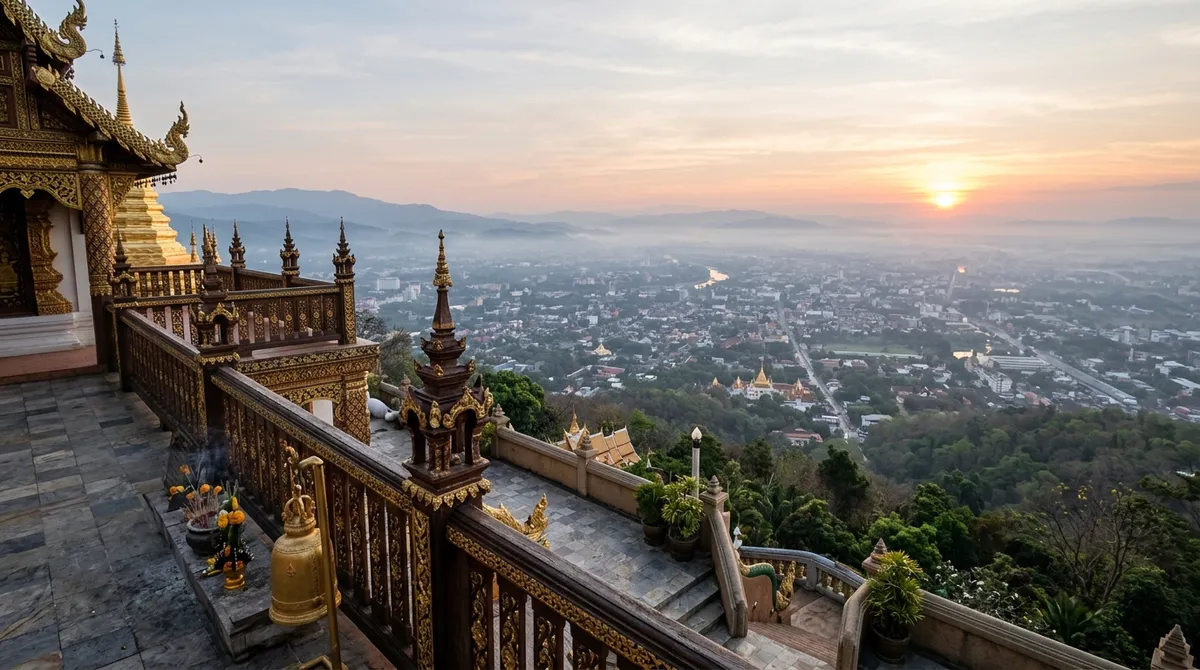
Stepping inside the leafy monastery gates, visitors are greeted by the magnificent Shan-Burmese Teak Viharn, characterized by its soaring multi-tiered roofline known as a Pyatthat (castle spire). Handcrafted from solid teak timber, the roof overhangs are trimmed with intricate perforated metal lace and filigree zinc eaves (known as Burmese lace work) that flutter delicately against the sky.
Enshrined inside is a serene, Mandalay-style alabaster Buddha statue sculpted from polished white marble. The Buddha's gentle facial expression is accentuated by realistic glass eyes and sweeping, lifelike robe folds that drape gracefully over his frame. The hall's primary teak pillars are coated with rich cinnabar lacquer and embellished with Angwa colored mirrored mosaic tiles, creating an environment of profound quietude ideal for mindfulness and contemplative meditation.
"Burmese-Shan sacred architecture uses tiered spires to symbolize the ascending heavens of Mount Meru, reminding the traveler to elevate the heart above mundane attachments." — Uncle Kham's cultural reflections
This exquisite tradition of hand-cut filigree work shares deep aesthetic kinship with northern paper and parasol artisans, whom you can observe firsthand along the Bo Sang handicraft umbrella painting workshops in San Kamphaeng.
Planning Your Chiang Mai Trip? Book Early for Lower Rates
Check real-time rates and secret deals on Agoda, our official travel partner. Enjoy 100% free cancellation, pay at check-in, and earn Agoda Cash rewards.
The Sacred Holy Spring: Ancient Lustral Waters of Royalty
Beside the teak viharn stands the ancient Wat Pha Bong Holy Well (Nam Thip). Enclosed by weathered laterite stone and antique brickwork, this natural subterranean spring produces crystal-clear holy water throughout the entire year. Historically, this was recognized as one of Chiang Mai's nine sacred royal water sources.
In classical Lanna times, water drawn from this well was used during the state oath of allegiance ceremonies and the annual ceremonial bathing of Wat Phra That Doi Suthep mountain stupa. Locals hold that sprinkling this consecrated water across one's brow clears negative karma, invites wholesome auspiciousness, and refreshes the spirit.
The Traditional Herbal Steam Baths: Lanna Wellness Sanctuary
Beyond its monastic heritage, Wat Pha Bong is celebrated internationally for its authentic Wat Pha Bong Traditional Herbal Steam Sauna & Massage Center. Operated for decades by resident monks and community herbal practitioners, this wellness sanctuary provides authentic restorative therapies at very affordable local prices.
The steam rooms utilize massive boiling cauldrons infused with over 20 wild and homegrown northern medicinal herbs—including cassumunar ginger (Plai), yellow turmeric, lemongrass, kaffir lime leaf and peel, camphor, tamarind leaves, and wild blumea (Bai Naad). As warm aromatic steam envelops your body, your skin pores open, muscle knots loosen, toxins sweat away, and respiratory pathways clear up completely.
Following an invigorating mountain hike—such as completing the alpine ridge at Kew Mae Pan winter mist nature trail on Doi Inthanon—spending 30 to 45 minutes in Wat Pha Bong's herbal steam room provides profound, restorative relief for sore muscles, joint stiffness, and travel fatigue.
This ancient marriage of faith and communal medicine also connects to the fascinating historical legacy of early Lanna brick architecture, such as the whitewashed ruins at Wat That Khao in the lost city of Wiang Kum Kam, demonstrating the rich multi-layered heritage of our region.
Visitor Summary & Practical Information Guide for 2026
| Visitor Category | Details & Practical Guidance | Uncle Kham's Insider Advice |
|---|---|---|
| Temple Opening Hours | 06:00 AM – 06:00 PM (Daily all year) | Morning visits offer tranquil prayer settings before the sauna opens. |
| Herbal Sauna Hours | 09:00 AM – 06:00 PM (Daily) | Allow at least 1 hour after a heavy meal before entering the sauna. |
| Sauna Admission Cost | Approximately 100 – 150 THB per person | Sarongs and fresh towels are available for rent on site for a nominal fee. |
| Key Highlights | Pyatthat teak viharn, sacred holy spring, medicinal herbal sauna | Drink warm herbal tea provided outside the sauna to stay hydrated between cycles. |
Recommended Guidelines and Safety for the Herbal Steam Experience
To maximize the therapeutic health benefits of Wat Pha Bong's herbal steam rooms, Uncle Kham recommends adhering to these simple, practical steps:
- Proper Attire: Change into a clean cotton sarong or wrap provided by the center. Remove all metallic jewelry, watches, contact lenses, and spectacles before entering.
- Paced Sessions: Avoid staying inside continuously for too long. Sit comfortably in the steam for 10 to 15 minutes, step outside into the open shaded courtyard to sip warm herbal water for 5 minutes, then repeat for 2 to 3 cycles.
- Health Precautions: Individuals with severe cardiovascular conditions, active asthma, severe hypertension, or pregnant travelers should consult the attending staff before entering to ensure comfort and safety.
- Cool Down Gradually: Once your sauna session concludes, allow your skin to dry naturally and let your body core temperature normalize for 15 to 20 minutes before taking a cool shower.
Wat Pha Bong is a rare sanctuary where sacred Burmese-Shan heritage and restorative traditional medicine harmonize effortlessly. May your visit refresh your physical stamina and bring serene joy to your Lanna travels!
Plan Your Chiang Mai Journey · Verified Booking Partners
Compare real-time rates for stays, curated day tours, flight tickets, and transport with best price guarantee and flexible cancellation: