



























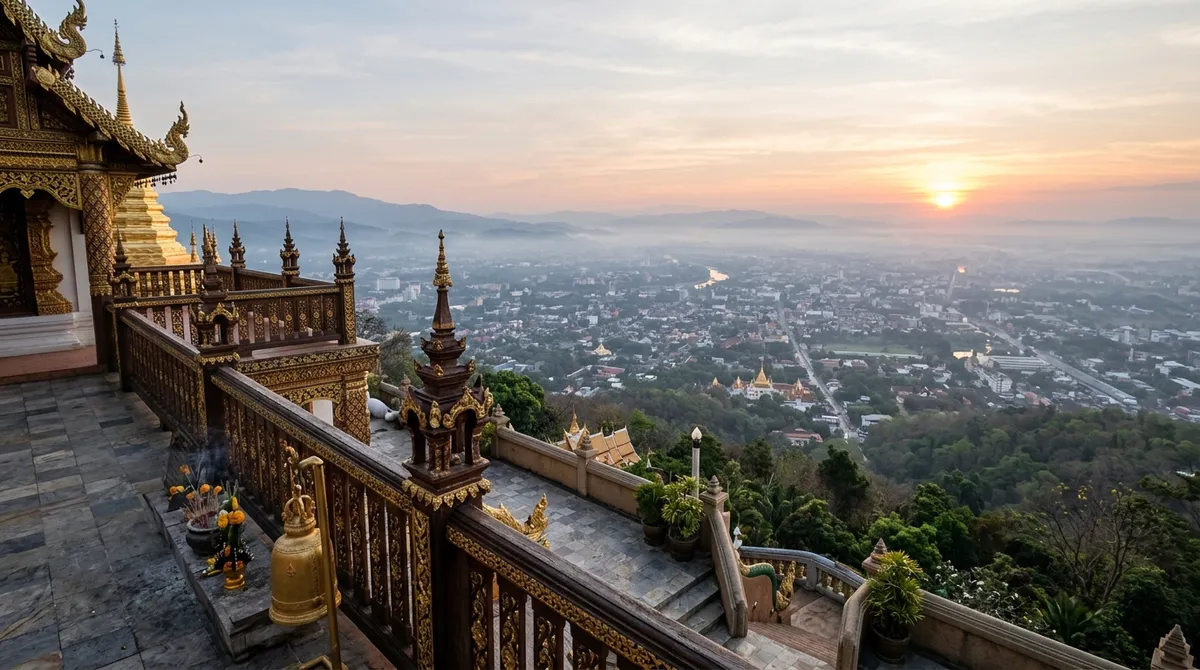
A warm welcome and peace to all faithful travelers and explorers. Today, Uncle Kham invites you across the Nan River to the historic district of Phu Phiang to pay homage at Wat Phra That Chae Haeng Royal Monastery. Revered for more than six centuries as the paramount spiritual sanctuary of Nan Province, this resplendent golden shrine embodies the enduring piety of eastern Lanna. Standing before this monument recalls the awe inspired by Wat Chedi Luang in Chiang Mai, and in northern Thai cosmology, Chae Haeng is universally celebrated as the Sacred Zodiac Reliquary of the Year of the Rabbit (Pi Tho).
Historical Genesis & The Rabbit Zodiac Reliquary
The origins of Wat Phra That Chae Haeng date back to between 1353 and 1358 AD during the reign of Phraya Kan Mueang, the sixth ruler of Nan. The monarch received seven sacred Buddhist relics—principally the holy hair and left wrist relic of the Lord Buddha—from the venerable Mahathera Chantrathera of Sukhothai. Recognizing their divine significance, Phraya Kan Mueang enshrined the relics atop Doi Phu Phiang Chae Haeng and established his temporary royal capital on the adjacent plateau before his successor relocated the city across the river to modern Nan.
The stupa rises to an impressive height of 55.5 meters from a broad 22.5-meter square foundation. Its bell-shaped form reflects classical Chiang Saen design imbued with graceful Sukhothai verticality. The entire exterior is sheathed in Thong Changko (heavy brass and copper alloy plates chased with relief motifs and leaf-gilded with pure gold). When sunlight strikes the facade, the stupa radiates a deep, warm golden glow visible from miles away across the surrounding valley.
In Lanna astrological belief, individuals born in the Year of the Rabbit possess gentle dispositions, intuitive sensitivity, and peaceful temperaments, but may occasionally encounter periods of vulnerability. Undertaking a pilgrimage to Wat Phra That Chae Haeng is believed to steady the spirit, fortify inner resolve, and attract compassionate mentors throughout life's journey.
Majestic Naga Balustrades & Royal Viharn Architecture
Approaching the sacred enclosure, pilgrims encounter the monumental Ancient Naga Staircase. Two colossal stucco Nagas with crested heads flank the stairway, their muscular serpentine bodies undulating gracefully along the earthen ramparts. Art historians revere this balustrade as one of the finest surviving examples of Nan royal court craftsmanship.
Passing through the ornate arched portal (Sum Pratu Khong), visitors discover an array of masterfully preserved monastic structures:
- The Royal Viharn (Viharn Luang): Positioned east of the stupa, this grand assembly hall features multi-tiered terracotta-tiled gables adorned with intricately carved teak lintels depicting intertwined Nagas and floral foliage. Enshrined inside sits the principal Buddha image in deep meditation, radiating profound serenity.
- Viharn Phra Chao Than Jai: A dedicated shrine housing the "Instant Buddha", consecrated within a single day. Devotees offer fresh flowers, woven ribbons, and prayers for swift breakthroughs in family affairs and professional ventures.
- The Outer Wall & Stucco Arches: Featuring fine low-relief mythical Himavanta creatures and intricate geometric motifs that illustrate the sophisticated syncretism between animist folklore and Theravada Buddhist devotion.
The exquisite architectural detail found here rivals the artistic sophistication praised in contemporary lifestyle hubs such as One Nimman Boutique Complex, yet at Chae Haeng, every carving is consecrated to timeless spiritual transcendence.
Planning Your Chiang Mai Trip? Book Early for Lower Rates
Check real-time rates and secret deals on Agoda, our official travel partner. Enjoy 100% free cancellation, pay at check-in, and earn Agoda Cash rewards.
The Hok Peng Lunar Festival & Merit Rituals
The temple’s grandest annual gathering is the Hok Peng Festival, celebrated on the full moon of the sixth northern lunar month (typically late February or March). Multitudes of pilgrims from rural districts assemble in traditional handwoven attire, carrying ceremonial banners (Tung) and merit offerings (Khrua Than). The festivities feature classical drum contests, sacred water-pouring ceremonies, and traditional skyrocket launches seeking timely seasonal rains.
When worshiping at Wat Phra That Chae Haeng, Uncle Kham advises preparing a simple Suay Dok Mai (banana-leaf floral cone with incense and beeswax candles). Perform the traditional Pradaksina by walking clockwise three times around the golden reliquary, holding pure and grateful thoughts. For Rabbit-year pilgrims, silent prayers for tranquility, mindfulness, and loving-kindness are traditionally recited.
Practical Pilgrimage Advice & Travel Planning by Uncle Kham
Wat Phra That Chae Haeng sits merely 3 kilometers southeast of Nan town center across the Northern Development Bridge (Saphan Phatthana Phak Nuea). Access is quick and straightforward. Uncle Kham offers these practical insights for your excursion:
- Transport Options: You can reach the temple in under 10 minutes via rental car, bicycle, or hired scooter. If renting a motorbike to explore Nan’s scenic mountain routes, be sure to consult our guide on Motorbike Rentals, License Rules and Checkpoints to ensure compliance and road safety.
- Visiting Hours & Optimal Lighting: Open daily from 06:00 AM to 06:00 PM. Early mornings before 08:30 AM offer crisp, cool breezes and gentle ambient light, while late afternoons around 04:30 PM bathe the gilded Thong Changko cladding in spectacular fiery orange hues.
- Respectful Conduct: Modest dress covering shoulders and knees is strictly requested. Shoes must be removed before stepping onto the polished tiled courtyard surrounding the stupa and entering the Viharn Luang.
After your pilgrimage, explore the riverside restaurants in Phu Phiang or central Nan. Indulge in slow-simmered pork belly stews flavored with pickled garlic and ginger, prepared following the culinary secrets in our guide to Authentic Lanna Kaeng Hung Lay. For home cooks and fresh food enthusiasts, browsing local market stalls around Nan evokes the colorful bounty of artisan produce markets like Kad Mae Hia Artisan Produce Market in Chiang Mai.
Wat Phra That Chae Haeng stands as an immovable lighthouse of faith and cultural continuity. Uncle Kham hopes your visit brings enduring peace, radiant joy, and protective blessings for years to come!
Plan Your Chiang Mai Journey · Verified Booking Partners
Compare real-time rates for stays, curated day tours, flight tickets, and transport with best price guarantee and flexible cancellation: