



























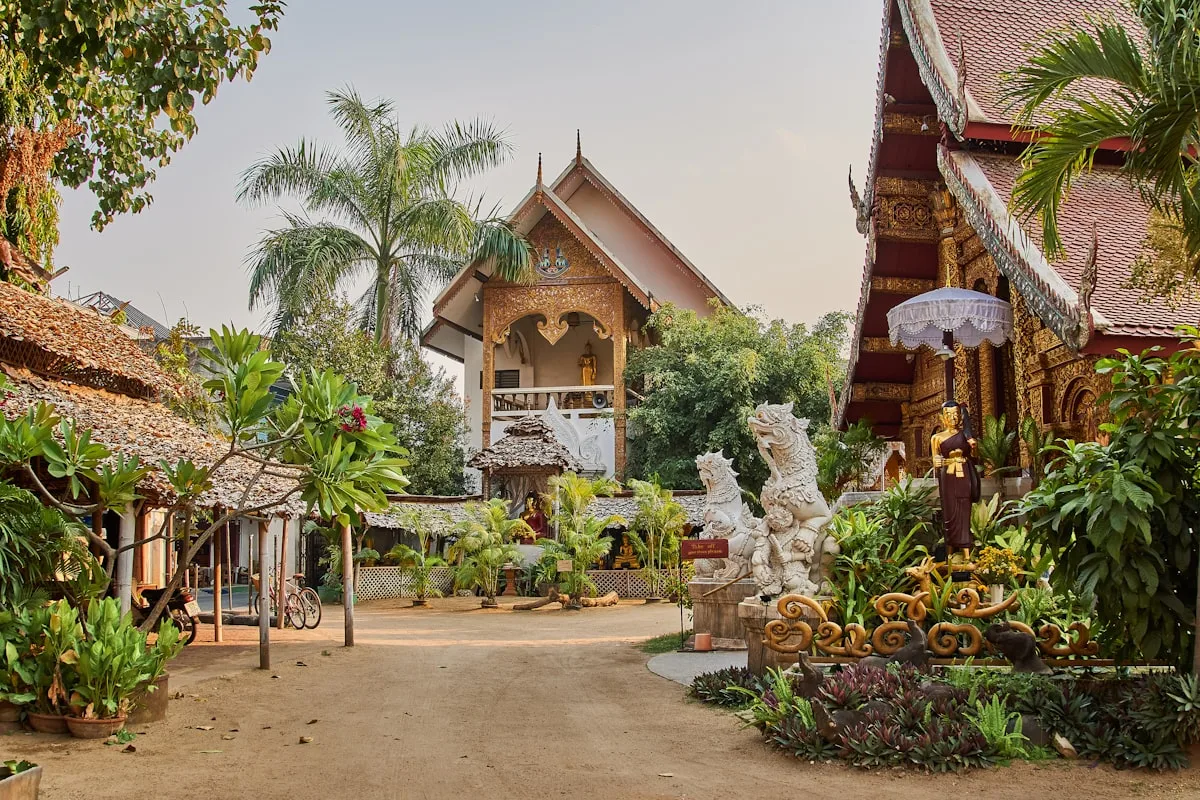
The Truth Behind the Name: Phin Pia Lute Makers & Brass Guild Neighbors
Walk around Chiang Mai’s southern and southwestern moat corners and you will notice several temples prefixed with "Puak"—Wat Puak Chang, Wat Puak Hong, Wat Puak Taem, and Wat Puak Pia. In old Lanna usage, puak designated an official royal artisan guild quarter. Though many guidebooks tie Wat Puak Pia loosely to brass casting near Pratu Suan Prung, local historians clarify its original name was Wat Puak Pia—named for craftsmen who built and played the Phin Pia, the delicate northern chest-resonated stick lute, when the monastery rose around 1497 CE (BE 2040).
So where does the brass connection come in? Right next door in the same Suan Prung–Bamrung Buri–Haiya artisan belt worked neighboring brass guilds—such as nearby Wat Puak Taem’s masters of khua tong hammered brass ornamentation—alongside metalworkers supplying brass pegs, bridge fittings, and ritual vessels for instruments and temples. Later waves of Mon and Shan settlers resettled under King Kawila added distinctive stucco touches across the neighborhood, giving this small monastery layered craft heritage.
Stepping Inside the Viharn: The Rare Chedi Hidden Behind the Buddha
Look closely at your map first: Wat Puak Pia sits along Thipanet Road just outside Pratu Suan Prung (near Bamrung Buri Road), not inside the inner moat itself. From the curb it appears modest, yet remove your shoes at the main assembly hall and step inside—you will spot an architectural quirk rarely seen anywhere else in Chiang Mai.
- An Indoor Golden Chedi: Rather than standing outdoors in an open courtyard, Wat Puak Pia’s gilded stupa rises directly inside the viharn behind the main Buddha altar, framed by stucco guardian deities (Thepphanom) and fading wall paintings. At the base of the main Buddha rests a venerated Phra Chao Than Chai image.
- 1903 Royal Restoration Details: Look up at the two-tiered Lanna timber roofline and bright blue-glass floral mosaic gable; this hall was faithfully rebuilt in 1903 CE (BE 2446) under Chiang Mai’s seventh ruler, Chao Inthawarorot Suriyawong.
- Naga & Lion Stairways: Before leaving the courtyard, trace the expressive Lanna-Mon stucco naga balustrades and guardian lions flanking both the assembly hall and ordination hall steps.
Planning Your Chiang Mai Trip? Book Early for Lower Rates
Check real-time rates and secret deals on Agoda, our official travel partner. Enjoy 100% free cancellation, pay at check-in, and earn Agoda Cash rewards.
Location, Hours & Reaching Thipanet Road Without Confusion (2026)
Traffic around Suan Prung Hospital junction moves fast, so arriving on foot from the moat or stepping out right at the gate saves unnecessary circling.
- Address & Hours: Thipanet Road, Haiya Subdistrict, moments south of Pratu Suan Prung and Bamrung Buri Road. Open daily roughly 06:00 to 18:00 with free admission.
- Walking & Transit Fares: From the southwestern moat corner along our Chiang Mai Old City walking guide, cross the moat bridge at Pratu Suan Prung and walk 5–7 minutes down Thipanet Road. Coming from hotels near Tha Phae Gate, hop a red songthaew to Suan Prung Gate for 30–40 THB or take a GrabCar for roughly 60–90 THB.
- Temple Etiquette: Cover shoulders and knees, remove shoes before ascending the viharn steps, and keep voices quiet—monks and novices maintain calm daily routines inside this compact residential compound.
Walking the Artisan Quarter: From Thipanet to Wualai & Old City
Wat Puak Pia makes a rewarding anchor for a craft-focused afternoon walk. Cut eastward through residential lanes for under ten minutes and you emerge straight onto Wualai Road beside Wat Muen San and Wat Sri Suphan, connecting ancient lute makers, brass beaters, and silversmiths in one continuous trail.
Prefer heading back inside the old brick walls afterward? Walk north along Bamrung Buri toward Wat Chedi Luang and settle into a comforting northern meal from our Huen Phen northern Thai dining guide, just 15 minutes away on foot. That compact triangle holds more living craft history per block than almost anywhere else in the city.
Uncle Kham’s Final Word
Wat Puak Pia seeks no tour-bus spotlight, which is precisely why walking into its quiet hall feels like discovering a secret left behind by old guild masters. Pause beneath that blue-glass gable, take in the golden stupa sheltered right behind the altar, and listen to how softly five centuries rest along Thipanet Road.
Plan Your Chiang Mai Journey · Verified Booking Partners
Compare real-time rates for stays, curated day tours, flight tickets, and transport with best price guarantee and flexible cancellation: