



























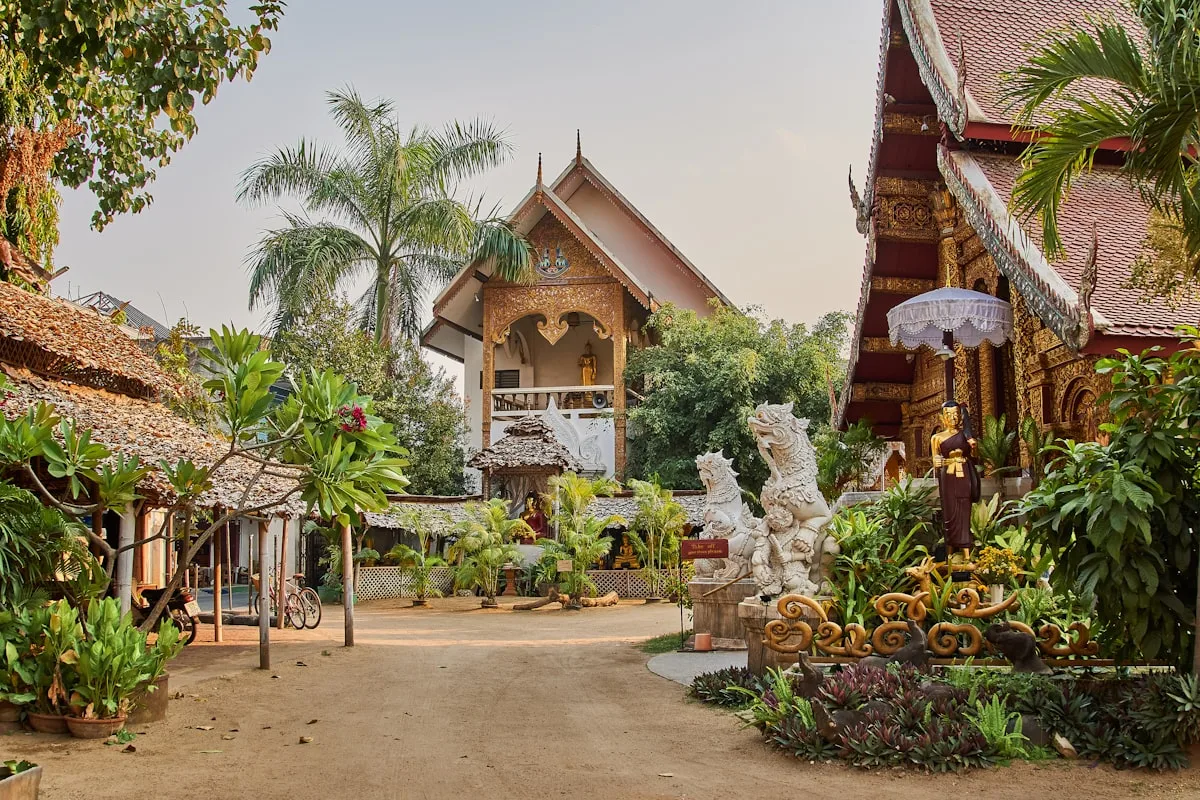
Type "Wat Saen Mueang Ma Luang" into certain travel directories and you might see vague mentions of the Siri Mangkalajarn, Huay Kaew, or Hua Lin corner—leaving travelers circling modern coffee streets west of the moat while searching for a 14th-century royal stupa. Uncle Kham wants to save you that detour before you step into a cab: Wat Saen Mueang Ma Luang is known across Chiang Mai today as Wat Hua Khuang, and its real historical grounds sit inside the northern Old City at the junction of Ratvithi and Phra Pokklao Roads, steps from North (Chang Phuak) Gate.
Pin "Wat Hua Khuang" on your map and you will land straight in front of one of Chiang Mai’s noblest early-Mangrai royal stupas—no wasted rides, no guesswork.
King Saen Mueang Ma, Queen Tilokajuda & the Meaning of "Hua Khuang"
In Lanna Thai, a khuang (ข่วง) was the broad ceremonial plaza fronting a royal palace. When King Saen Mueang Ma—the seventh ruler of the Mangrai Dynasty (r. 1385–1401)—founded this monastery during the era shared with his consort Queen Tilokajuda, it bore the Pali name Wat Lakkhapurakamaram ("Temple of the King of a Hundred Cities"). Because its grounds anchored the open royal muster field at the northern head of the city center, locals affectionately renamed it Wat Hua Khuang.
Later, in 1520, King Muang Kaew and the Queen Mother enlarged the royal stupa and added a scripture hall to honor King Saen Mueang Ma’s memory. Entry today remains free daily from roughly 06:00 to 18:00.
The 12-Sided Royal Chedi & Ancient Stucco Reliefs
Step quietly off Ratvithi Road into the broad courtyard and the royal scale of the monument comes clearly into view:
- Rare 12-Sided Lanna-Sukhothai Stupa: Registered as a national historic monument, the brick-and-stucco main chedi blends classic northern proportions with slender Sukhothai elegance—an architectural hybrid surviving in only a handful of sites across Chiang Mai.
- Weathered Stucco Carvings: Walk slowly around the upper terraces to admire crisp antique relief details framing the niches and cornices.
- Viharn Luang & Ordination Hall: Inside the main hall sits the stately Phra Phuttha Rattanaburi Sali Saen Mueang Ma, while the neighboring ubosot shelters historic bronze images cherished by Old City elders.
"Just a couple of blocks off the northern moat, Wat Hua Khuang feels untouched by hurry. Come at nine in the morning when low sunlight catches the twelve faces of the stucco chedi." — Uncle Kham
Planning Your Chiang Mai Trip? Book Early for Lower Rates
Check real-time rates and secret deals on Agoda, our official travel partner. Enjoy 100% free cancellation, pay at check-in, and earn Agoda Cash rewards.
Connecting Northern Old City With Nimman & Chang Phuak
From Wat Hua Khuang’s gate on Ratvithi Road, walk five minutes east to Chiang Mai’s oldest monastery in our Wat Chiang Man guide, stroll straight south down Phra Pokklao toward Wat Chedi Luang using our Old City walking guide, or trace the nearby North Gate fortifications in our Chiang Mai moat and city walls guide.
Guests staying west around Siri Mangkalajarn, Huay Kaew, or Nimman hotels can reach the temple in ten minutes via the Hua Lin corner—just check our Chiang Mai Songthaew and Grab guide for the quickest route across the moat.
Pinning Tips, Morning Photography & Chang Phuak Night Eats
When booking a ride, always set your drop-off pin to "Wat Hua Khuang" at Ratvithi and Phra Pokklao Roads so drivers never drop you outside the moat near Siri Mangkalajarn. Morning light between 08:30 and 10:00 brings out the crisp stucco ridges across all twelve faces of the royal stupa. Cover shoulders and knees inside the Viharn Luang, and if you return near dusk, North Gate’s famous Chang Phuak street-food carts wait just a five-minute walk north outside the moat.
Plan Your Chiang Mai Journey · Verified Booking Partners
Compare real-time rates for stays, curated day tours, flight tickets, and transport with best price guarantee and flexible cancellation: