



























Subterranean Devotion: Lanna's First 700-Year Forest Tunnel Temple
Nestled beneath the verdant forested foothills of Doi Suthep on the western edge of Chiang Mai lies a monastery unlike any other in Southeast Asia: Wat Umong Suan Phutthatham (The Tunnel Temple & Forest Hermitage). Rather than elevating gleaming gilded roofs high into the tropical sky, this ancient forest cloister turns gently inward, guiding Buddhist pilgrims into subterranean brick tunnels burrowed directly beneath natural forest mounds to cultivate quiet mindfulness.
Uncle Kham loves to recount the storied origins of this sacred sanctuary dating back to roughly 1297 during the reign of King Mangrai the Great, the founder of Chiang Mai. King Mangrai held immense reverence for a scholarly forest elder named Phra Maha Thera Chan. While deeply learned in Buddhist scriptures, the venerable monk suffered mental restlessness amidst crowded urban courts and longed for secluded mountain solitude. King Mangrai ordered royal craftsmen to excavate and construct vaulted earthen brick tunnels under the forested hillocks near Doi Suthep, planting thousands of herbal and flowering trees. Within these cool, silent chambers, the venerable monk could meditate undisturbed, giving birth to this singular architectural monument.
Atmospheric Tunnels, Ancient Bell Stupa, and the Buddha Head Gallery
Exploring Wat Umong is a journey across multiple levels of sensory and contemplative discovery. Uncle Kham suggests taking unhurried steps across these primary zones:
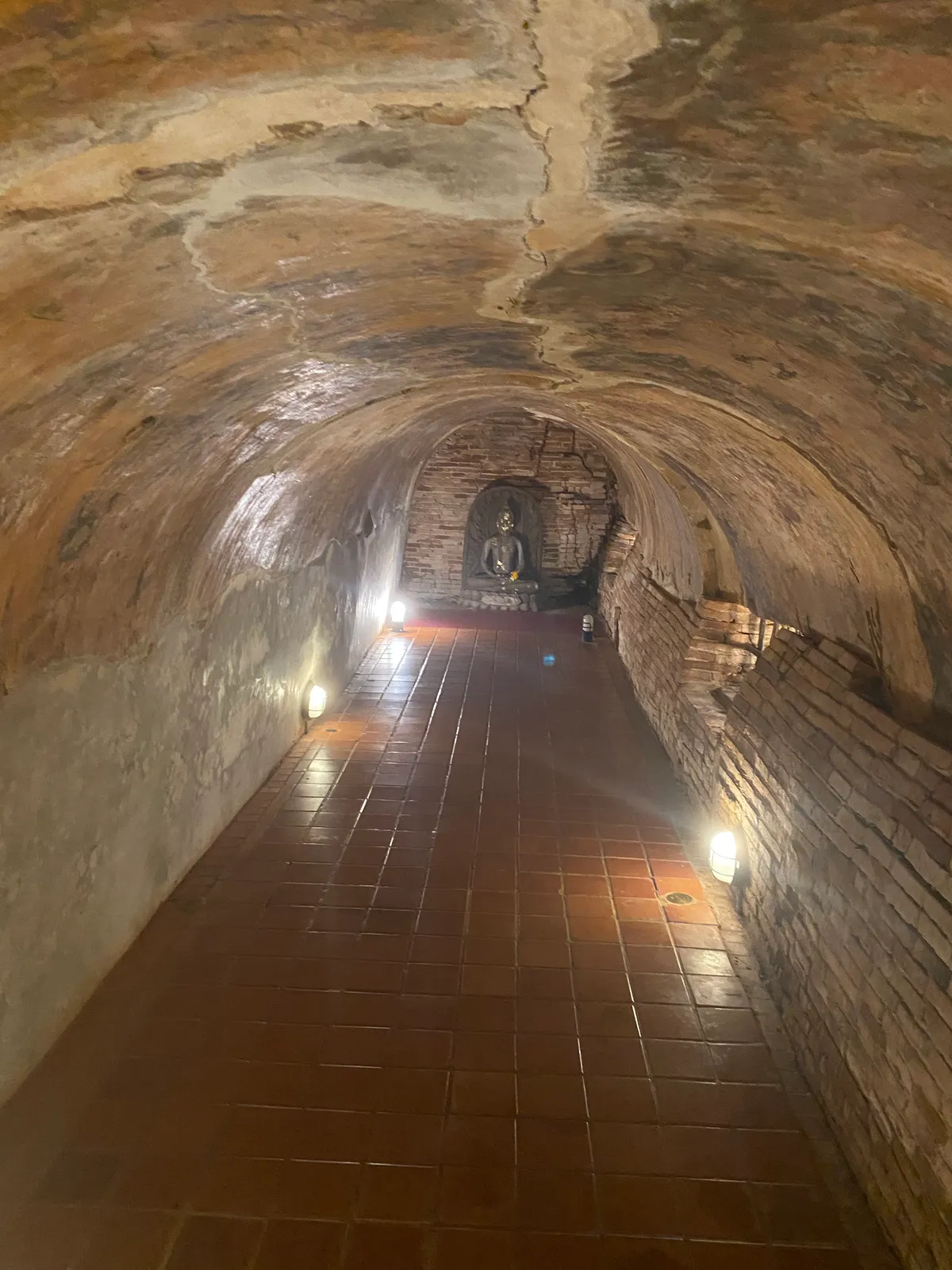
- The 700-Year Brick Tunnels: The underground complex comprises several interconnected vaulted passageways built from reddish-brown earthenware bricks. Recessed niches carved into the curved tunnel walls house centuries-old Buddha images draped in fresh jasmine garlands and oil lamps. The ambient temperature inside remains naturally refreshing year-round. Faint remnants of original Lanna tempera frescoes depicting celestial lotuses, waterfowl, and climbing vines can still be glimpsed along the vaulted ceilings.
- The Bell-Shaped Reliquary Stupa: Ascending the rustic stone staircase atop the earthen mound brings visitors to a majestic bell-shaped brick stupa. Influenced by early Pagan and Sukhothai styles, its weathered terracotta tiers are embraced by lush green mosses and ancient bodhi trees, creating an idyllic site for mindful circumambulation (Pradaksina).
- Gallery of Damaged Relics: In an open-air forested courtyard beside the tunnels lies a moving collection of antique sandstone Buddha heads, torsos, and pediments recovered from abandoned and looted temple ruins across Northern Thailand. Arranged peacefully beneath swaying bamboo, they serve as a powerful visual discourse on Anicca—the Buddhist truth of impermanence.
- Asoka Pillar Replica & Sacred Lake: The grounds feature a faithful replica of the Emperor Asoka pillar topped with four roaring lions, symbolizing the spread of Dhamma. Further back, an expansive woodland pond shelters thriving populations of catfish, softshell turtles, and doves where visitors can make merit through gentle feeding.
Planning Your Chiang Mai Trip? Book Early for Lower Rates
Check real-time rates and secret deals on Agoda, our official travel partner. Enjoy 100% free cancellation, pay at check-in, and earn Agoda Cash rewards.
Suan Phutthatham: Mindfulness in the Living Forest
One of Uncle Kham's favorite aspects of Wat Umong is the collection of proverb signs suspended from towering ironwood and dipterocarp trees along shaded forest lanes. Rendered in both Thai and English, these pithy Buddhist aphorisms urge passersby to let go of anger, practice gratitude, and observe the fleeting nature of emotional states.
Today, Wat Umong remains an internationally recognized Vipassana meditation center. Monks, nuns, and foreign lay practitioners reside in modest forest huts (kuti) scattered through the groves. Travelers overwhelmed by modern digital stress often find that sitting in quiet meditation inside the cool brick tunnels for even fifteen minutes washes away accumulated fatigue, replacing it with deep mental stillness.
Visitor Etiquette, Respectful Conduct, and City Itineraries
To preserve the spiritual sanctity of Wat Umong, Uncle Kham asks travelers to keep these mindful guidelines in mind:
- Remove Footwear: Shoe racks are provided beside every tunnel portal. Please remove your shoes and socks before entering the brick tunnels to honor the sacred grounds.
- Silence and Stillness: Mute smartphones, speak in soft whispers, and avoid running or causing acoustic echoes inside the vaulted passages.
- Respectful Attire: Ensure shoulders and knees are completely covered. Flowing cotton trousers and modest shirts will keep you comfortable while honoring monastic discipline.
After your contemplative morning at Wat Umong, extend your mountain exploration to the cascading ravines of Wat Pha Lat Hidden Jungle Waterfall Temple on Doi Suthep, savor authentic local noodles at our recommended Best Legendary Khao Soi Shops in Chiang Mai, enjoy a refreshing specialty roast at Top Artisanal Cafes in Nimman Chiang Mai, and secure high-value accommodations via our curated list of Best Budget Hotels in Chiang Mai Under 1000 Baht for a memorable Northern Thailand escape.
Plan Your Chiang Mai Journey · Verified Booking Partners
Compare real-time rates for stays, curated day tours, flight tickets, and transport with best price guarantee and flexible cancellation: