



Step beyond Chiang Mai Gate—the southern portal of the historic moated old city—cross Chang Lor Road, and turn into the gentle curve of Wua Lai Road. The first sensation that greets you is not the frantic drone of modern city traffic, but an ancient, resonant cadence drifting through the morning air: 'Tok... Tok... Tok...' It is the hypnotic metallic rhythm of steel chisels kissing silver plates, echoing out from open-front timber workshops scented with melting pine resin and beeswax. This is Wua Lai Village, Chiang Mai's storied silversmith enclave where Northern Thai metallurgical mastery has flourished for over two centuries. In an era dominated by automated mass fabrication, Wua Lai remains an enchanting sanctuary where time slows down, and ancestral traditions are still lovingly forged by hand.
Two Centuries of Craft: From Kengtung Artisans to Chiang Mai's Living Quarter
To truly appreciate Wua Lai's soul, one must look back to the late 18th century, a pivotal turning point in Northern Thai history. Following two long centuries of Burmese suzerainty that had left the walled city of Chiang Mai deserted and overgrown, King Kawila—the visionary first monarch of the Chao Chet Ton dynasty—successfully liberated the kingdom in 1796. To revive the capital's population and economic foundations, the king instituted a legendary policy known poetically as 'Kep Phak Sai Sa, Kep Kha Sai Mueang' ('Gather vegetables into the basket, gather people into the city').
As part of this cultural renaissance, skilled Tai Khuen metalworkers, lacquerware masters, and jewelers from Ban Wua Lai near Kengtung (Shan State) and the Salween River basins were invited and relocated to Chiang Mai. They were granted lands immediately south of Chiang Mai Gate, serving as both a protective civilian quarter and the chief royal guild producing sacred Buddhist silverware, ceremonial betel boxes, and regalia for the Lanna court. Honoring their ancestral Shan homeland, these resettled artisans named their new enclave 'Wua Lai', establishing an unbroken lineage of repoussé metalcraft that endures to this very day.
The Architectural Miracle: Wat Sri Suphan's World-First Silver Ubosot
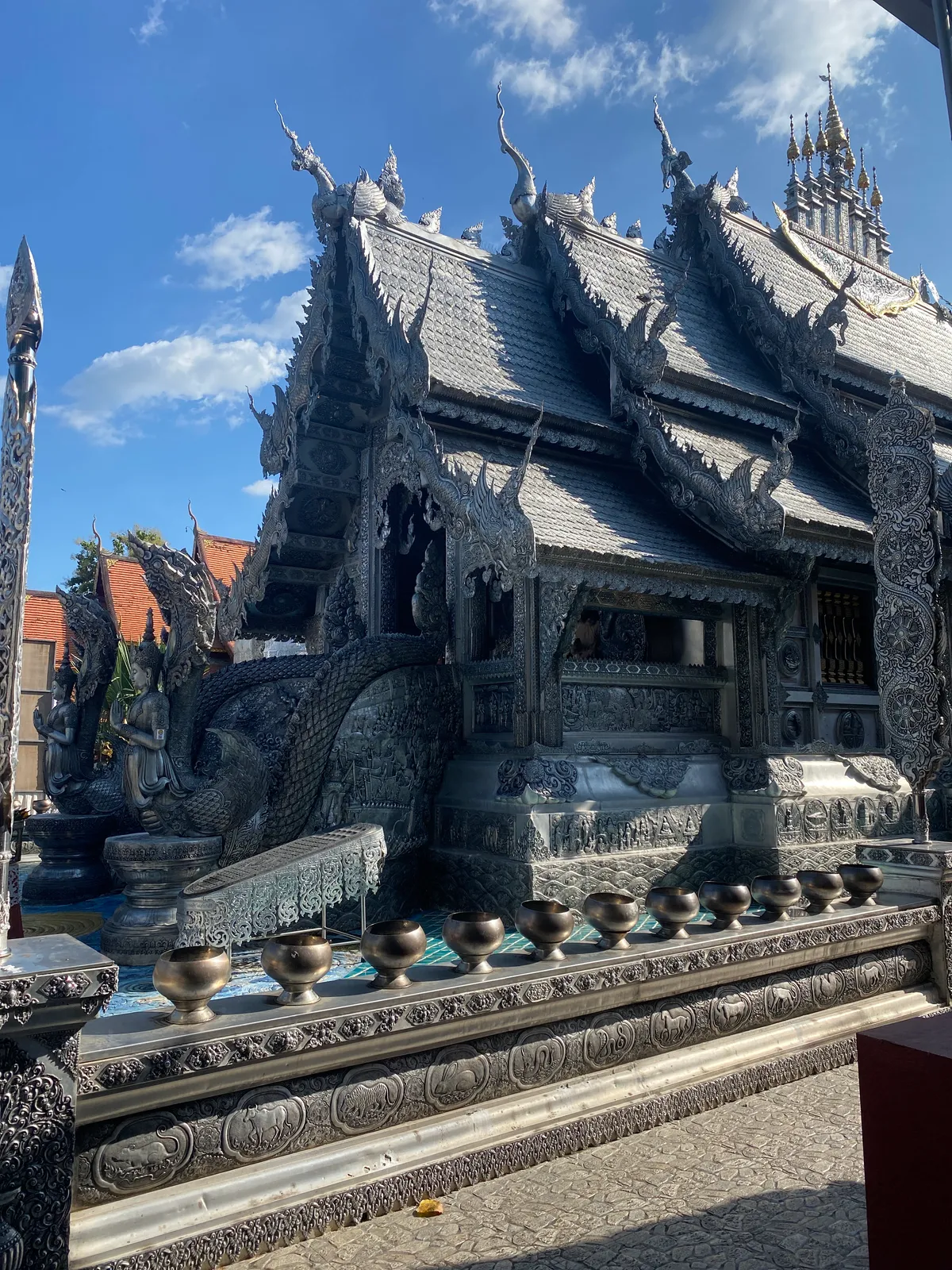
The spiritual and artistic epicenter of Wua Lai is Wat Sri Suphan. Originally established in the year 1500 during the reign of King Phaya Kaew of the Mangrai dynasty, this ancient temple achieved international renown with the consecration of the world's first and only Silver Ubosot (ordination hall). Initiated in 2004 to replace a decaying teak wood sanctuary, the project united more than thirty master silversmiths and community elders, who dedicated over a decade of meticulous manual labor to transform sacred metal into an architectural masterpiece.
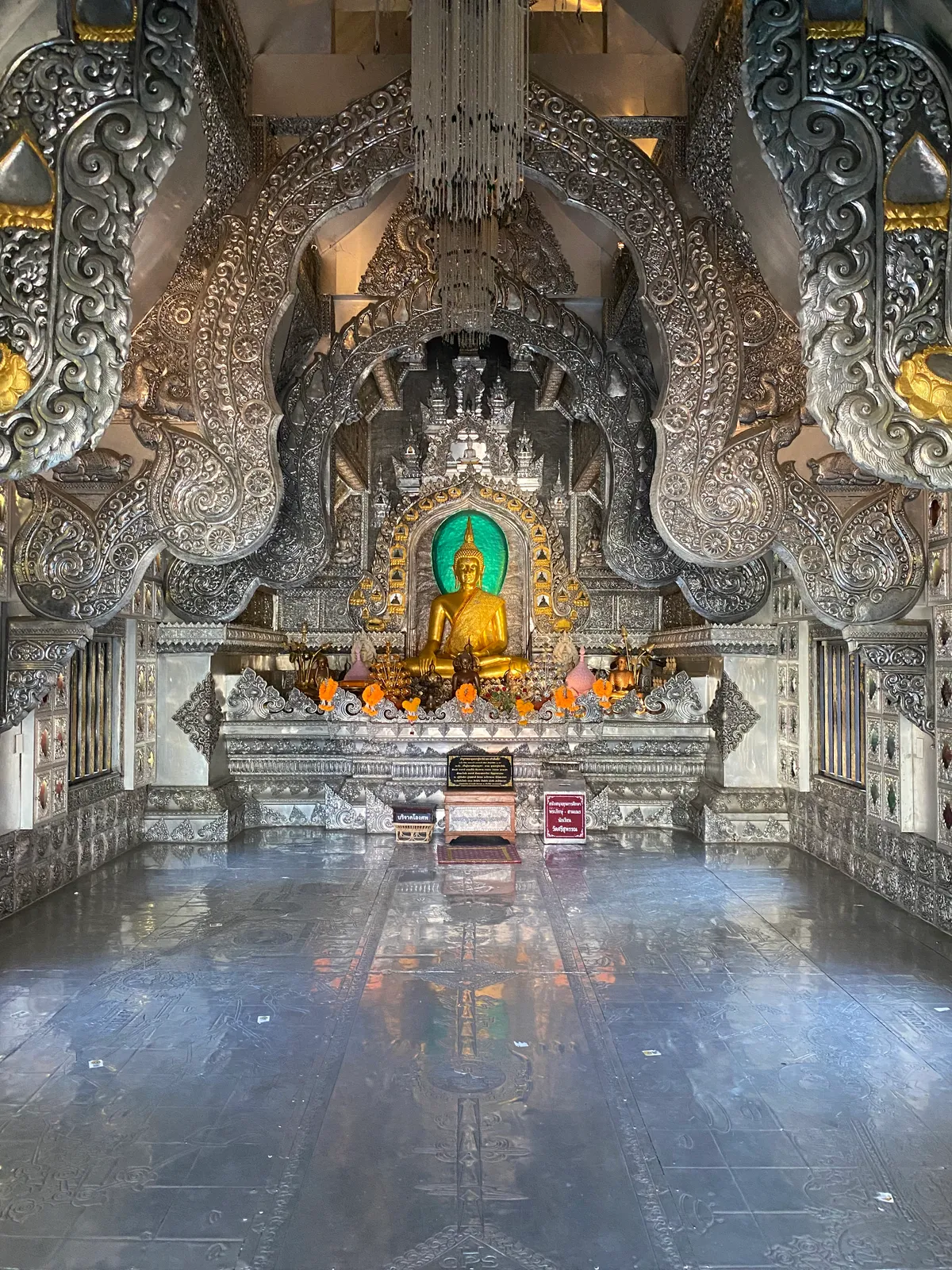
Built upon a reinforced structural core, every square inch of the temple's interior and exterior walls is clad in repoussé panels crafted from pure silver, zinc, and high-grade aluminum. The panels depict profound Buddhist Jataka tales, the twelve zodiac signs, and celestial guardian deities. With witty creative license, the master carvers also subtly embedded modern global motifs into the reliefs—including planetary maps, space exploration satellites, and technological breakthroughs—representing humanity's cosmic journey. Inside the radiant sanctum sits the revered bronze Buddha image, 'Phra Buddha Pathihan' (Chao Ming Mueang), its dark golden glow shimmering brilliantly against the silver sanctuary walls.
Essential Cultural Protocol: Signs at the threshold indicate that women are requested not to enter the interior sanctum. Under five-century-old Lanna Buddhist customs, ancient protective talismans, relics, and potent esoteric spells are interred directly beneath the consecrated ordination precinct (Khandhasima). Preserving this sacred boundary is a cherished local tradition rather than social exclusion. Female travelers can marvel at the magnificent exterior reliefs around the entire 360-degree perimeter, which are every bit as detailed and visually staggering. On Saturday evenings, dynamic color illumination bathes the silver facade in shifting hues of indigo, amber, and violet, creating an ethereal spectacle.
The Art of Metal Repoussé: Master Silversmiths & Wat Muen Sarn Galleries
The core technique behind Wua Lai's renown is repoussé and chasing (locally termed 'Dun Lai'). This delicate art requires immense patience and rhythmic physical mastery. The craftsman first anchors a pliable metal sheet onto a warm tar bed ('Bao Chan')—a specialized shock-absorbing mixture of pine resin, beeswax, and brick dust. Using an assortment of specialized round-tipped steel punches and light hammers, the artisan works from the reverse side to push the metal outward into high three-dimensional relief (repoussé), before flipping the plate to refine fine lines, scales, and facial contours from the front (chasing).
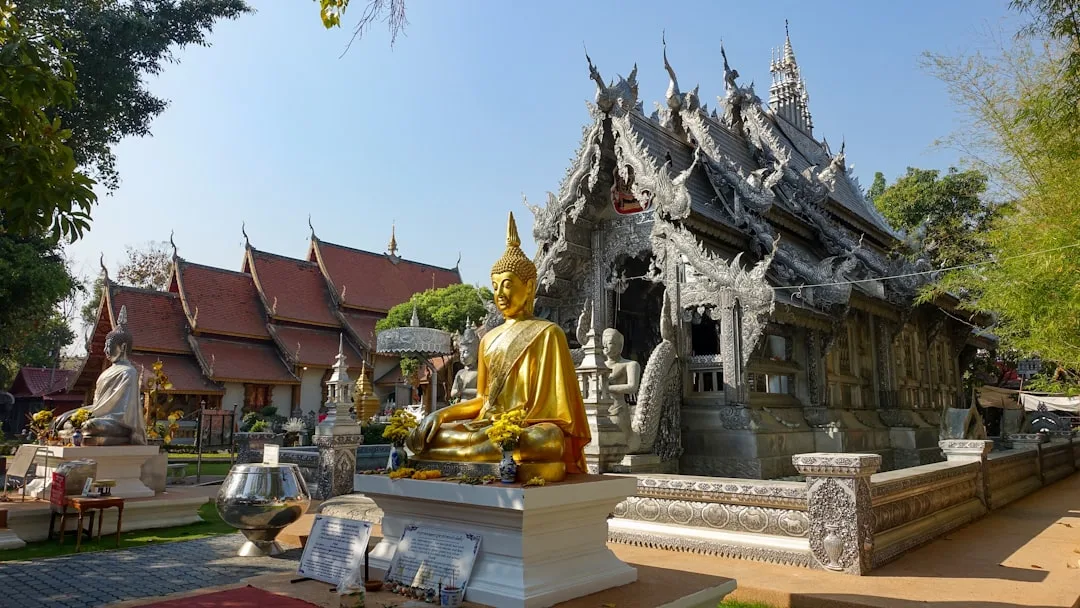
A short stroll further into Soi Wua Lai 3 brings you to Wat Muen Sarn, a tranquil temple home to the exceptional Lanna Silver Art Gallery. This two-story traditional wooden pavilion showcases monumental repoussé murals commemorating the life and agricultural royal projects of King Rama IX, alongside an extraordinary collection of antique betel-nut containers, silver repoussé bowls (Salung), and centuries-old ceremonial jewelry that demonstrate the pinnacle of Tai Khuen craftsmanship.
Saturday Walking Street: Nighttime Magic, Artisans & Street Food Delights
Every Saturday evening at 5:00 PM, tranquil Wua Lai Road undergoes an electrifying transformation, closing its entire 1.1-kilometer stretch to vehicular traffic to host the famed Saturday Walking Street. Unlike the vast, general merchandise of Sunday's Tha Phae market, Wua Lai retains an intimate artisan emphasis. Street stalls glow under warm lanterns, showcasing hallmarked sterling silver rings, engraved bangles, tribal hill-tribe adornments, handwoven northern textiles, and bespoke brass sculptures sold directly by the artisans who created them.
The culinary offerings along the route are equally unforgettable. Follow the mouthwatering aromas to sizzling charcoal grills serving Sai Oua (herbal Northern Thai lemongrass sausage), steaming cauldrons of tangy Khanom Jeen Nam Ngiao (rice noodles in pork and dried red cotton flower broth), and freshly crisped pork cracklings. For an authentic sweet treat, look for Khao Nuk Nga—steaming sticky rice hand-pounded with roasted perilla seeds and sea salt, offering an earthy, fragrant flavor found nowhere else. Traditional Salo-So-Sueng folk musicians and acoustic buskers serenade visitors throughout the evening, immersing your senses in authentic northern warmth.
Where to Stay: Handpicked Boutique Hotels Near Wua Lai & Chiang Mai Gate
Staying in the Wua Lai and Chiang Mai Gate district places you in one of Chiang Mai's most strategic locations: just ten minutes from Chiang Mai International Airport, seconds away from the moated Old City, and steps from the Saturday market. Uncle Kham's handpicked accommodations in this creative quarter include:
• Hotel De Wualai ↗: A stylish contemporary boutique hotel beautifully integrating raw industrial steel with handcrafted silver metal reliefs, featuring an outdoor pool and chic ambiance.
• iWualai Hotel ↗: A serene modern-minimalist hotel set around a central courtyard pool, offering restful tranquility right off the main artisan strip.
• iSilver Hotel ↗: A silversmith-inspired boutique property showcasing shimmering metallic design accents, located just a three-minute stroll from the Saturday Walking Street.
• Chiang Mai Gate House ↗: An inviting Lanna-style guesthouse situated conveniently close to the famous Chiang Mai Gate morning food bazaar.
Explore rates and secure your stay via Find & Book Wua Lai & Chiang Mai Gate Hotels on Agoda ↗ All reservations feature Agoda's best-price guarantee, book now and pay later flexibility, and 100% free cancellation* on eligible rooms.
In a world increasingly driven by fleeting convenience, Wua Lai stands as living proof that true heritage and human artistry cannot be hurried. Uncle Kham warmly encourages every traveler to wander these historic lanes, pause to watch a silversmith coax elegance from raw metal, and listen to the rhythmic heartbeat of Lanna craftsmanship. The deepest treasures of Chiang Mai are not found behind museum glass—they live within the warm smiles and skilled hands of the artisans who refuse to let the traditions of their ancestors fade away.
📌 Related Chiang Mai Guides on Terra Lanna:
• Tok Sen Lanna Hammer Massage & Ancient Folk Healing: Rhythmic Vibration Therapy for Chronic Tension ↗
• Unique Chiang Mai Artisan Souvenirs Shopping Guide: Woven Rattan, Handloom Cotton & Modern Crafts ↗
• Baan Mueang Kung Pottery Village (Hang Dong): Ancient Lanna Earthenware, Water Jugs & Wood-Fired Kilns ↗
💡 Looking for more accommodation choices? Explore our comprehensive directory of 1,280 Curated Chiang Mai Hotels & Stays ↗