



























Exploring 8+ Artisan Zones & Song Fang Khlong Center
Drive fifteen kilometers southwest out of Chiang Mai along Route 108 into Khun Khong sub-district, Hang Dong, and the traffic hum yields to the warm scent of freshly planed teak and sawdust. Baan Tawai Woodcarving Village operates daily from roughly 09:00 to 17:30 with free entry across a sprawling network of workshops, showrooms, and export warehouses.
First-time visitors often make one mistake: they park by the front boulevard, gaze at towering carved elephants and giant tree roots, and think they have seen the village. In reality, Baan Tawai spans more than eight distinct artisan zones flanking the irrigation canal and winding back alleys:
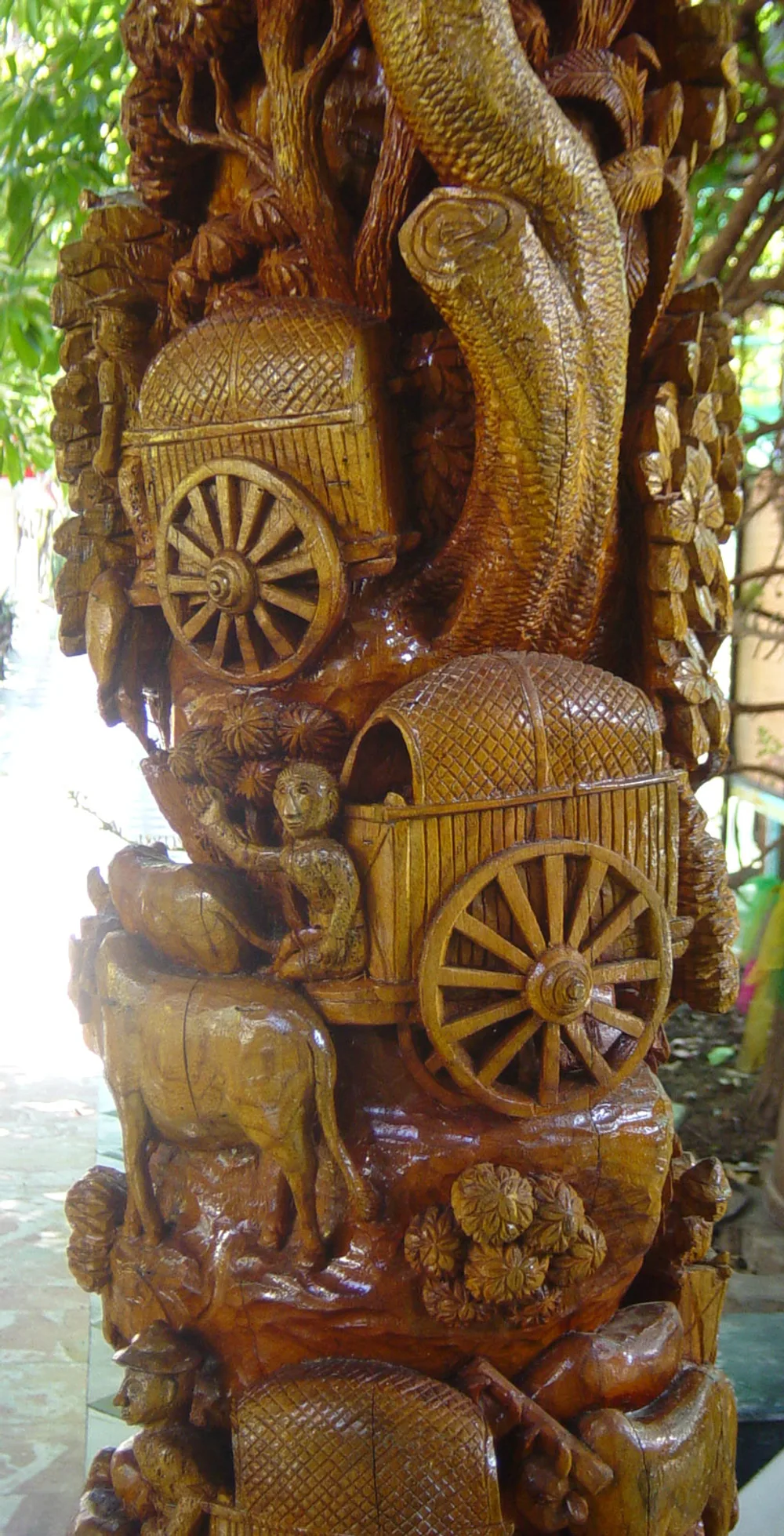
- Main Entrance & Boulevard Zones: Monumental outdoor carvings, single-slab dining tables, and architectural timber panels designed for resorts and restaurants.
- Song Fang Khlong Center: Meaning "Two Sides of the Canal," this curated gallery cluster gathers higher-end showrooms displaying fine teak furniture, antique-style gilded cabinets, lacquerware, and contemporary woodwork. Walk here first to benchmark craftsmanship and pricing.
- Back-Alley Family Sheds: Follow the narrower side lanes across the canal to hear wooden mallets tapping chisels, smell lacquer primer, and watch carvers hand-finish rain tree (chamchuri), mango wood, and plantation teak pieces right beside their homes.
Because you are already in Hang Dong, pair your morning stroll with the exquisite carved Lanna timber roof of nearby Wat Ton Kwen or explore the excavated brick ruins of Wiang Kum Kam Ancient City just north up the valley.
How to Judge Wood Quality Like a Local Carpenter
Not every glossy timber sculpture deserves a spot in your living room. Before negotiating prices, check three practical details Uncle Kham always inspects:
- Know Your Timber Species: Plantation teak carries dense straight grain, natural oils, and higher prices; rain tree (chamchuri) offers dramatic dark-and-light swirled grain ideal for chunky tables and sculptures; light mango wood suits bowls, trays, and smaller decor. Ask directly which timber was used.
- Kiln-Dried vs. Green Wood: Examine undersides and joints for wide hairline splits. Freshly cut wood warps or cracks rapidly once placed inside air-conditioned apartments or dry winter climates abroad—insist on kiln-dried furniture for anything substantial.
- Gilding vs. Metallic Spray: Traditional rak-thong finishing applies real gold leaf over dark lacquer primer, yielding a deep warm glow that settles softly into carved recesses rather than a harsh metallic spray shine.
Planning Your Chiang Mai Trip? Book Early for Lower Rates
Check real-time rates and secret deals on Agoda, our official travel partner. Enjoy 100% free cancellation, pay at check-in, and earn Agoda Cash rewards.
Crucial Buyer Logistics: Airline Baggage, Crating & Thai Export Customs
Tucking carved salad servers, coasters, or small mango-wood bowls into your suitcase is easy. Shipping larger furniture or religious artwork home, however, demands attention to three hard rules:
- Airline Baggage Limits: Check your carrier's size and weight thresholds before buying mid-sized wall panels or stools—excess luggage fees at Chiang Mai Airport can easily exceed the purchase price. For heavy pieces, step directly into one of Baan Tawai's on-site packing and freight forwarders (prominent around Song Fang Khlong) offering shared container (LCL) sea freight or door-to-door air courier quotes.
- ISPM-15 Heat-Treated Crates: If shipping overseas, confirm your freight agent builds crates with stamped IPPC heat-treated timber (ISPM-15) so customs quarantine officers do not reject your shipment at destination ports.
- Thai Export Permits for Buddha Images & Antiques: Do not simply pack a carved Buddha statue or antique-style religious figure into checked baggage. Under Thai law, exporting Buddha images, sacred religious artifacts, or genuine antiques requires an official permit from Thailand's Fine Arts Department, and protected timber species such as Siamese rosewood (phayung) are strictly prohibited. Established Baan Tawai export galleries can help file legal permits, which takes extra processing days.
Getting There & Pairing With Other Chiang Mai Craft Stops
Baan Tawai sits roughly 25–30 minutes southwest of Chiang Mai's Old City along Route 108. Driving a rental car or booking a half-day private vehicle makes hauling purchases effortless; while Grab drops off easily from town, hailing a return car from deeper inner zones late in the afternoon can take longer—compare transit choices in our Chiang Mai transportation guide.
If small-batch studio ceramics or textiles suit your suitcase better than heavy teak tables, browse Baan Kang Wat Artist Village or pick up lightweight gifts at Warorot Market, and choose a spacious riverside base from our best riverside hotels along the Ping River.
Plan Your Chiang Mai Journey · Verified Booking Partners
Compare real-time rates for stays, curated day tours, flight tickets, and transport with best price guarantee and flexible cancellation: