



























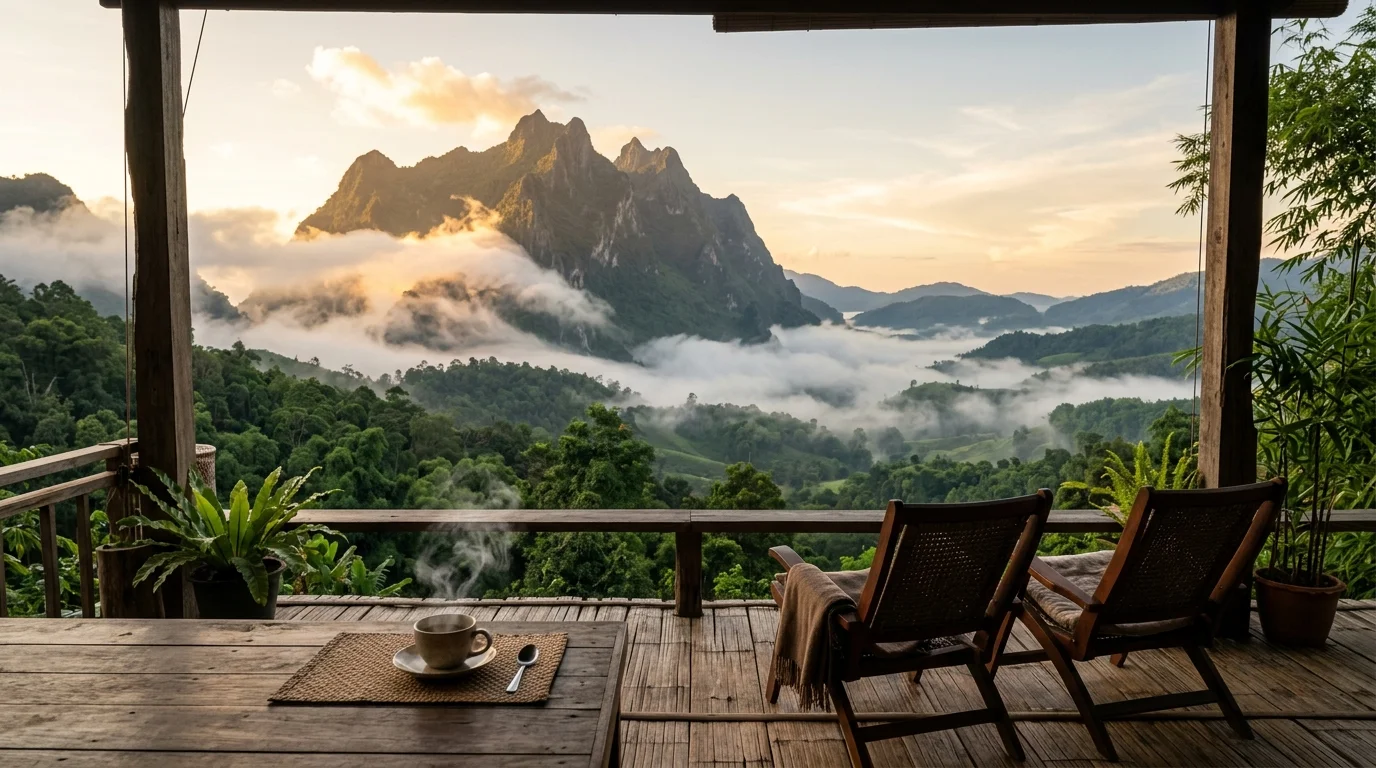
The Sacred Shadow of Doi Chiang Dao's Ancient Limestone
Driving north from downtown Chiang Mai along Highway 107 through Mae Taeng toward the tranquil valley of Chiang Dao, the horizon is suddenly dominated by a colossal, jagged limestone pyramid: Doi Chiang Dao, Thailand's third-highest peak. Embedded deep within the subterranean footings of this 250-million-year-old Permian karst formation lies Wat Tham Chiang Dao (Chiang Dao Cave Temple), one of northern Thailand's most revered sanctuaries. Having journeyed up this valley since my teenage years long before paved tarmac tamed the route, I can assure you that the refreshing, cool subterranean drafts breathing from the cavern's mouth remain as magical today as they were six decades ago.
For modern wayfarers exploring our catalog of Chiang Mai outdoor nature and adventure activities, a pilgrimage to Chiang Dao Cave is far more than casual sightseeing—it is an immersion into living geological history. While travelers frequently embark on Doi Suthep and Old City temple hopping tours to admire gilded wood and mosaic glass, Chiang Dao Cave offers a profound contrast: a quiet, shadowy subterranean temple infused with animist mountain reverence and legends of Jao Luang Kham Daeng, the mythical spirit guardian of the northern heights.
Cavern Topography: Illuminated Galleries vs. Gas-Lantern Enclaves
At the cave entrance, a spring-fed basin of crystal-clear emerald water teems with carp and indigenous mountain fish, fed directly by natural limestone filtration percolating down through Doi Chiang Dao's porous bedrock. Beyond the tiled gateway pavilions, the subterranean complex diverges into two markedly different exploration experiences:
- The Reclining Buddha Gallery (Illuminated Circuit): Extending approximately 360 meters along smoothly paved concrete pathways with overhead electric illumination. This accessible route accommodates visitors of all fitness levels. Flanking the natural stone walls are historical Burmese and Tai Yai Buddha images crafted during centuries of cross-border trade, headlined by a serene reclining Buddha and ancient marble footprints (Buddhapada) adorned with merit coins left by regional pilgrims.
- Tham Maa, Tham Kaew & Tham Nam (The Dark Subterranean Labyrinth): Spanning more than 700 meters into deep, pitch-black mountain chambers devoid of electric wiring. Entering this unlit realm is forbidden without a licensed local villager guide equipped with an authentic pressurized petromax kerosene or gas lantern.
Following the rhythmic hiss and golden radiance of the guide's swinging lantern transports you into an ethereal underworld. The soft warm flame illuminates living speleothems—active stalactites and flowstones encrusted with shimmering calcite crystals that sparkle like constellations of diamond dust. Your elder guide, often a matriarch from the nearby village, narrates geological folklore pointing out natural stone formations resembling Erawan elephants, meditating sages, and sacred celestial horses (Tham Maa). Certain sections require ducking beneath low rocky lintels and stepping carefully across natural limestone pools while chilled condensation droplets tap gently upon the stone floor.
Planning Your Chiang Mai Trip? Book Early for Lower Rates
Check real-time rates and secret deals on Agoda, our official travel partner. Enjoy 100% free cancellation, pay at check-in, and earn Agoda Cash rewards.
Preservation Ethics and Cavern Etiquette
Uncle Kham must share an earnest plea regarding subterranean conservation: limestone formations are delicate ecosystems that require centuries of undisturbed dripping mineral water to deposit a single millimeter of stone. Never touch active stalactites or cave walls with bare hands. Natural skin oils, lotions, and perspiration coat the crystalline surface, creating an impermeable layer that repels carbonate mineral deposition, permanently killing the living rock and turning it into a lifeless, dull brown stub.
Because the cave network functions as an active Buddhist monastery, modest temple attire is required—shoulders and knees must remain respectfully covered. The subterranean floor is naturally humid and periodically slippery; sturdy walking shoes with rubberized tread are essential, while smooth sandals or heels pose severe slip hazards. Visitors experiencing respiratory distress, cardiovascular conditions, or acute claustrophobia should restrict their tour to the airy, illuminated Reclining Buddha gallery and refrain from crawling into the deep unlit passages.
Hiring a local lantern guide costs a modest 150 to 200 THB per small group. This modest fee represents invaluable community support that directly sustains elderly village families who have guarded and maintained the cave's natural pathways for generations.
Crafting Your Chiang Dao Itinerary
Located roughly 75 kilometers north of Chiang Mai city, the scenic drive to Chiang Dao takes approximately 90 minutes along smooth valley roads, making it an idyllic anchor for an extended 3-day Chiang Mai sightseeing itinerary. On your return south toward the city, stop off to scramble up the calcified limestone waterfalls of Bua Tong Sticky Falls to cool off after your caving adventure.
To determine the most picturesque months for crisp mountain vistas and rolling sea-of-mist panoramas around Doi Chiang Dao, consult our local guide on the best seasons to visit Chiang Mai. Winter mornings from November through February yield breathtaking vistas that will linger in your memory for a lifetime.
Plan Your Chiang Mai Journey · Verified Booking Partners
Compare real-time rates for stays, curated day tours, flight tickets, and transport with best price guarantee and flexible cancellation: