



























Dawn Over the Moat: The Spiritual Magic of Chiang Mai Gate
If you ask Uncle Kham what time of day Chiang Mai reveals its truest soul, I will tell you without hesitation: it is at the crack of dawn, between 5:30 AM and 7:00 AM. When a gentle cool mist descends from Doi Suthep, the morning breeze ripples across the ancient moat waters, and the plaza before Chiang Mai Gate (the South Gate or Pratu Tai Wiang) awakens. The scent of freshly steamed sticky rice rises from handwoven bamboo steamers, temple bells chime in the distance, and saffron-robed Buddhist monks walk in quiet mindfulness along the centuries-old terracotta brick walls.
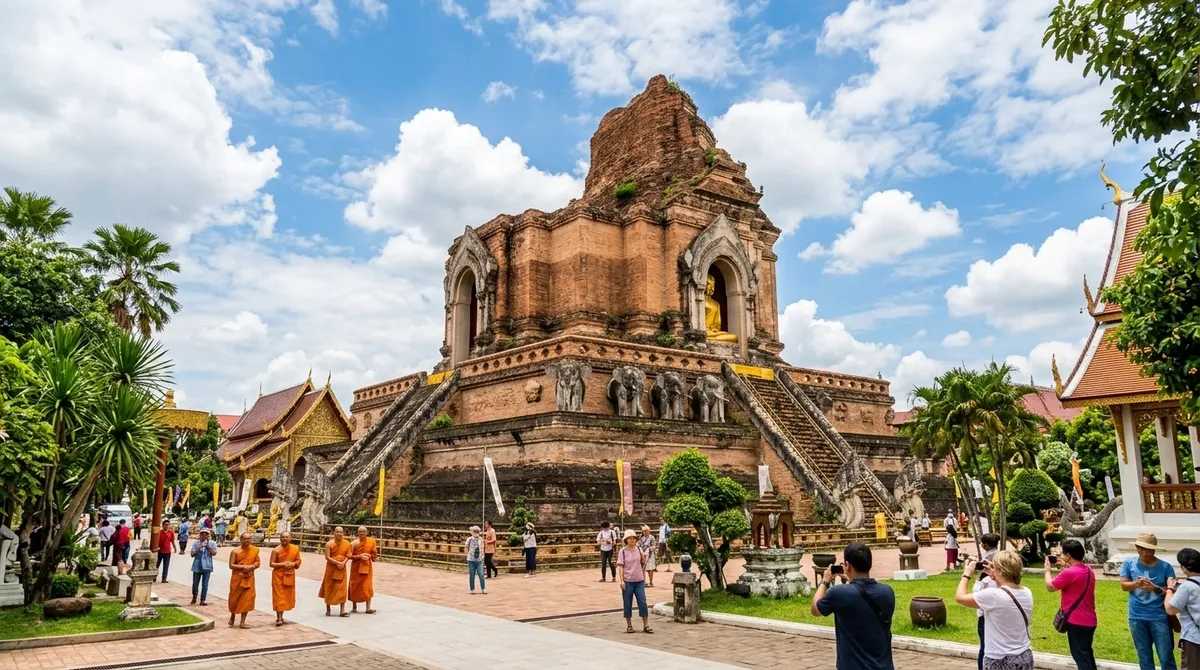
Giving morning alms (Tak Bat) here is not a staged theatrical show for tourists. It is an authentic living tradition practiced continuously by Lanna communities across generations. Located at the historic threshold connecting inner monastic quarters with ancient trading villages, this gate receives monks and novices from sacred sanctuaries like Wat Chedi Luang, Wat Pan Tao, and Wat Fon Soi. Travelers interested in historical walking routes will find valuable context in our Chiang Mai Old City walking guide, which illustrates how these historic fortifications and living temples unite.
While many visitors from abroad or southern Thailand are accustomed to offering plain white boiled rice in sealed plastic containers, northern Lanna tradition honors the sacred practice of sticky rice offering. Offering warm, hand-rolled sticky rice entails unique etiquette, cultural depth, and spiritual beauty. Allow Uncle Kham to guide you step-by-step so your merit-making is culturally respectful, peaceful, and deeply fulfilling.
Step-by-Step Sticky Rice Offering Etiquette
In Lanna heritage, glutinous sticky rice (Khao Niao) sustains daily life. Offering fresh rice to monks symbolizes gratitude toward Mae Phosop (the Rice Goddess) and pure spiritual generosity toward the monastic Sangha. As you approach Chiang Mai Gate plaza, local vendors assemble neat offering sets. Here is how to perform the ritual correctly:
- Securing Warm Sticky Rice: Your alms set should consist of steaming white or purple sticky rice packed in a traditional small woven bamboo basket (Kratip) or banana leaf parcel, typically costing 20 to 30 THB per set.
- Pinching and Rolling the Rice: In strict local tradition, devotees wash their hands thoroughly before the ritual. When a monk pauses with his alms bowl open, remove the basket lid, pinch a golf-ball-sized portion of warm sticky rice using your clean right hand, gently roll it into an oval, and place it directly into the brass bowl without plastic wrapping.
- Modern Hygenic Alternatives: Today, many local market vendors pre-portion bite-sized sticky rice balls inside clean food-grade wrappers. If you feel hesitant about bare-hand pinching, you may simply drop these wrapped rice portions into the bowl. The monastery kitchen redistributes all collected food fairly during morning communal meals.
- Handling Side Dishes and Water: Pre-cooked curries, bottled water, fruits, and lotus flowers must never be forced down into the monk's bowl atop delicate rice. Instead, place packaged side dishes and flowers into the cloth shoulder satchel carried by the monk or into the woven collection baskets of accompanying monastery temple boys (Dek Wat).
- Receiving the Pali Blessing and Pouring Water: Once you have placed your offerings, step back slightly, kneel or bow your head with hands pressed together in a prayer gesture (Wai). The monk will chant a solemn Pali blessing (Yatha Vari Vaha...). Focus your mind on loving-kindness and dedication of merit. If you have a small ceremonial water vial (Kruat Nam), slowly pour water onto the earth or base of a tree to consecrate your merit to ancestral spirits.
Planning Your Chiang Mai Trip? Book Early for Lower Rates
Check real-time rates and secret deals on Agoda, our official travel partner. Enjoy 100% free cancellation, pay at check-in, and earn Agoda Cash rewards.
Crucial Cultural Rules and Modesty Standards
To ensure respect for Theravada Buddhist monastic rules (Vinaya) and local northern customs, Uncle Kham asks you to remember four fundamental rules:
- Always Remove Your Shoes: Devotees must remove their footwear before offering alms. Standing on shoes while offering food to barefoot monks is considered spiritually disrespectful in Thai tradition, symbolizing elevated ego over humble monks who walk barefoot on cold pavement.
- Modest Attire is Mandatory: Wear clothes that cover shoulders and knees. Avoid sleeveless tank tops, beachwear, plunging necklines, or micro-shorts. Wearing lightweight white cotton shirts or local Lanna indigo-dyed fabrics harmonizes beautifully with local customs.
- Women Must Never Touch a Monk: Theravada monastic vows forbid monks from physical contact with women. Female devotees should take extra care not to touch the monk's saffron robe or alms bowl while placing food inside. Keep a mindful two-foot distance.
- Mindful Photography: Taking pictures is permitted, but please turn off shutter sounds, disable all flash, and maintain a respectful distance. Never step directly in front of walking monks or intrude with camera lenses into devotees' prayer spaces.
For a comprehensive overview of cultural activities within the ancient walls, consult our guide to top things to do in Chiang Mai Old City to plan your temple visits and cultural workshops effortlessly.
Exploring the Bustling Morning Market at Chiang Mai Gate
Once your spiritual offerings are complete and your heart is filled with morning tranquility, step right across the lane into Morning Market at Pratu Chiang Mai. Operating from 5:00 AM, the market hums with neighborhood residents bargaining over organic mountain herbs, handwoven bamboo baskets, fresh flowers, and aromatic street breakfasts.
Uncle Kham recommends trying these authentic local morning delicacies:
- Fresh Soy Milk and Crispy Dough Twists: Watch masters knead dough and flash-fry crispy golden Pa Tong Go. Dip them in creamy pandan custard alongside warm, freshly pressed soy milk with reduced sugar.
- Silky Pork Congee (Jok): Slow-simmered broken jasmine rice porridge topped with succulent minced pork balls, soft poached eggs, fresh ginger slivers, and fragrant cilantro.
- Charcoal-Grilled Pork Skewers & Sai Oua: Savor tender pork marinated in garlic and coriander root, roasted over glowing embers, alongside aromatic northern lemongrass sausages wrapped in banana leaves.
- Traditional Coconut Hotcakes (Khanom Krok): Crisp custard-filled coconut puddings cooked in cast-iron dimpled pans, offering sweet-savory perfection with spring onions or sweet corn.
If you enjoy walking, take a pleasant 10-minute stroll south along Suriyawong Road toward Kad Kom Market, an unpretentious historic trading corner where local life thrives untouched by mass commercialism. And when mid-morning hunger strikes, you are just around the corner from the legendary Michelin-recognized soup masters at Khao Soi Lung Prakit Kad Kom, famous for their velvety rich coconut curry broth.
Summary Guide: Chiang Mai Gate Morning Alms
| Factor | Uncle Kham's Insider Advice |
|---|---|
| Optimal Arrival Time | 5:45 AM – 7:00 AM (Monks start walking around 6:00 AM) |
| Activity Location | Open plaza in front of Chiang Mai Gate (inner moat, Bamrung Buri Rd) |
| Alms Set Price | 30 – 60 THB per complete set (sticky rice, curry, water, flowers) |
| Transport Options | Walking from Old City hotels or taking a red songthaew truck |
| Key Etiquette | Barefoot offering, modest dress (shoulders & knees covered), no camera flash |
Starting your day with wholesome generosity, peaceful mindfulness, and warm neighborhood greetings is the most treasured experience you can give yourself in Chiang Mai. May your morning journey bring you happiness and peace!
Plan Your Chiang Mai Journey · Verified Booking Partners
Compare real-time rates for stays, curated day tours, flight tickets, and transport with best price guarantee and flexible cancellation: