



























1. Retracing Ancient Pilgrimages: The Sacred History of the Monk's Trail
Long before Kruba Srivichai, the revered Buddhist saint of Northern Thailand, inspired thousands of faithful local volunteers to hand-carve the winding asphalt highway up Doi Suthep in 1935, reaching the holy mountain summit required an austere physical journey. Monks, hermits, and devout pilgrims walked barefoot for hours through untamed mountain rainforest along a sacred ridgeline footpath. Known globally today as the Monk's Trail, this historic route remains one of Chiang Mai's most spiritually grounding jungle hikes.
As you hike beneath the cool, multi-tiered forest canopy, your journey is guided by saffron monastic robes wrapped securely around ancient hardwood trunks. These fabric markers serve a dual purpose: they guide hikers along the correct mountain spine while functioning as a Buddhist forest blessing ("Ordaining the Forest"), a sacred cultural barrier that protects old-growth trees from deforestation. Walking the identical stony path where generations of meditating monks trod in silent contemplation introduces a sense of timeless peace, offering a meditative counterbalance to the urban heritage walks featured in our Chiang Mai Old City walking guide.
2. Section 1: From the Base Foothills to Enigmatic Wat Pha Lat
The Monk's Trail is divided into two distinct sections, with the lower trail being widely celebrated as an accessible nature walk for travelers of all experience levels. The trailhead begins at the western termination of Suthep Road, directly behind Chiang Mai University's meteorological radar base (near Wat Umong's rear gate). This lower section spans approximately 1.8 kilometers, requiring an easy 40 to 50 minutes of steady uphill walking.
The dirt path tracks alongside the bubbling Mae Hla creek, where clear mountain water trickles over granite boulders draped in emerald moss. Emerging from the forest, you are suddenly greeted by the serene vision of Wat Pha Lat (Monastery of the Sloping Rock). Commissioned in the 14th century under King Kue Na as a resting hermitage during the sacred elephant procession that selected Doi Suthep's summit shrine, this hidden sanctuary feels untouched by modern commerce.
Instead of souvenir stalls and loudspeakers, Wat Pha Lat offers weathered Burmese-style stupas overgrown with wild ferns, carved stone nagas emerging from rock crevices, and open teak viharns perched directly above a sweeping natural waterfall. The stone balconies provide a breathtaking panorama over the morning haze blanketing Chiang Mai city below. For deeper historical and spiritual context on this jungle monastery, explore our dedicated feature on Wat Pha Lat hidden jungle waterfall temple on Doi Suthep.
Planning Your Chiang Mai Trip? Book Early for Lower Rates
Check real-time rates and secret deals on Agoda, our official travel partner. Enjoy 100% free cancellation, pay at check-in, and earn Agoda Cash rewards.
3. Section 2: Ascending from Wat Pha Lat to Doi Suthep's Naga Staircase
For fit hikers seeking a true physical pilgrimage, Section 2 provides a strenuous, rewarding challenge. Crossing the paved mountain road above Wat Pha Lat, the upper trail plunges directly into steep highland forest on the right. Spanning 2.2 kilometers, this segment climbs sharply at pitches between 30 and 45 degrees, gaining over 400 vertical meters.
Unlike the gentle lower path, Section 2 is an unpaved wilderness scramble. You will navigate natural staircases formed by interlaced tree roots, loose gravel, and steep laterite gullies. Heavy ropes are strung across demanding rock steps to help hikers steady their footing. Uncle Kham advises maintaining a steady rhythmic breathing pattern, taking small controlled steps, and keeping your eyes focused on footing stability.
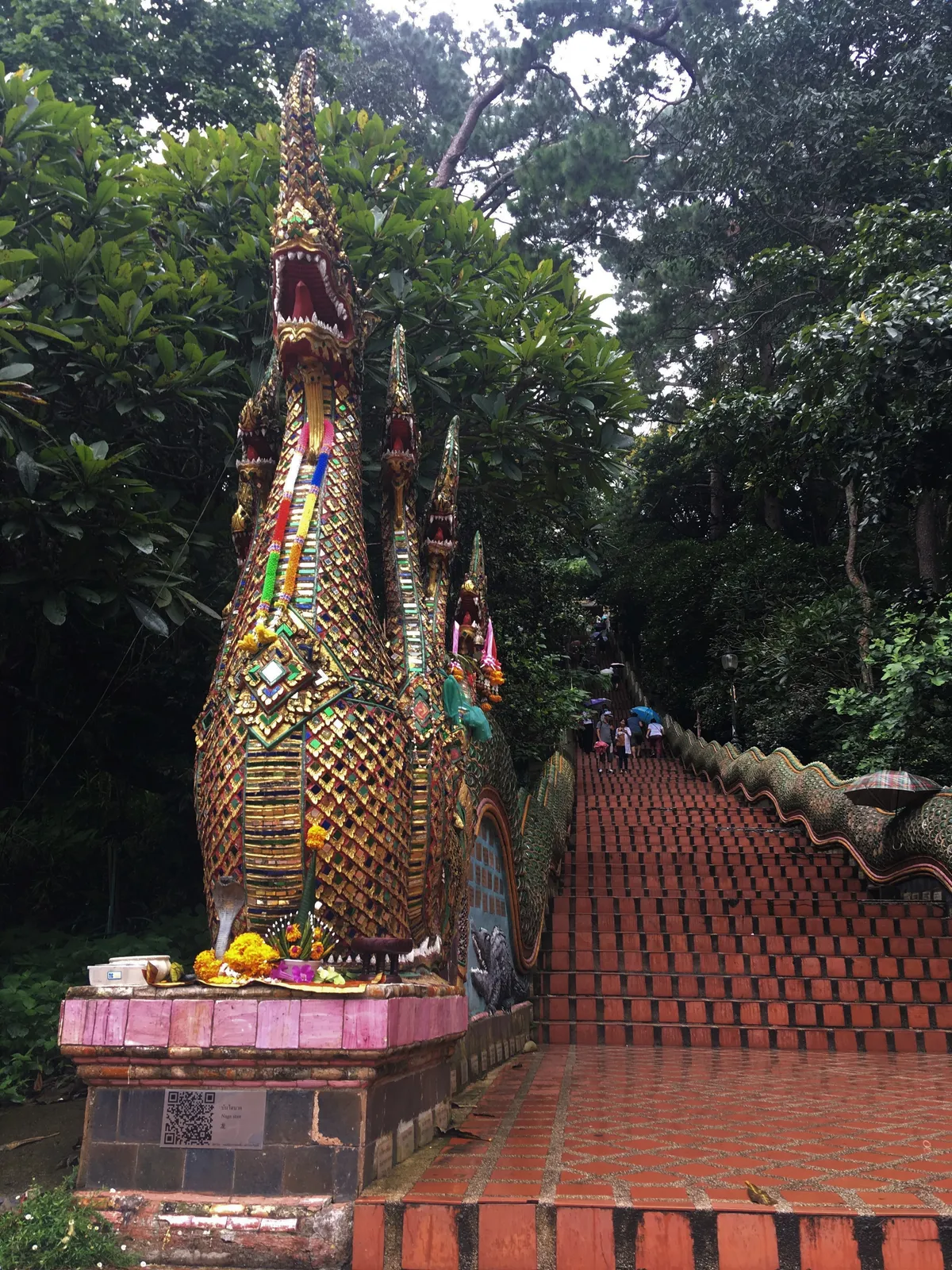
Breaking through the pine ridge at the top, you emerge onto the bustling lower plaza of Wat Phra That Doi Suthep. From here, you ascend the legendary 306 Naga balustrade steps to reach the golden Chedi, glowing resplendent beneath the northern sky. Circling the gilded relic amid ringing temple bells and fragrant lotus incense washes away all physical fatigue, completing one of the most spiritually satisfying top things to do in Chiang Mai Old City and its surrounding mountainous periphery.
4. Monastic Etiquette, Essential Gear, and Return Descent Logistics
To ensure your trek up Doi Suthep is respectful, physically safe, and thoroughly rewarding, keep these essential practical rules close at hand:
- Sacred Dress Code Requirements: Although tropical hiking inevitably induces perspiration, remember that the trail passes directly through active monastic grounds. Hikers must dress modestly: wear breathable, quick-drying hiking trousers and shirts that comfortably cover shoulders and knees. Sleeveless athletic tops, sports bras, and high shorts are strictly inappropriate on temple grounds.
- Footwear and Trekking Gear: Wear trail running shoes or hiking sneakers with pronounced rubber lugs; smooth road running shoes slip easily on damp roots and dusty slopes. A lightweight trekking pole significantly relieves knee impact during Section 2. Pack at least 1.5 liters of drinking water, natural insect repellent, and a small towel.
- Optimal Departure Timing: Hit the trail between 6:30 AM and 7:30 AM. Early starts avoid the intense mid-morning heat, provide dramatic sunbeams through morning forest mist, and ensure you arrive at Wat Pha Lat during tranquil morning prayer hours.
- Descent Transport: Hiking down Section 2 is hard on knees and poses slipping risks on steep slopes. Uncle Kham strongly suggests taking a shared red songthaew (truck taxi) from Doi Suthep's upper lot back down to Chiang Mai Zoo or the university base for roughly 40 to 50 THB. From there, you can spend a restorative afternoon rehydrating and recovering in the air-conditioned charm of best cafes in Nimman Chiang Mai.
Plan Your Chiang Mai Journey · Verified Booking Partners
Compare real-time rates for stays, curated day tours, flight tickets, and transport with best price guarantee and flexible cancellation: