



























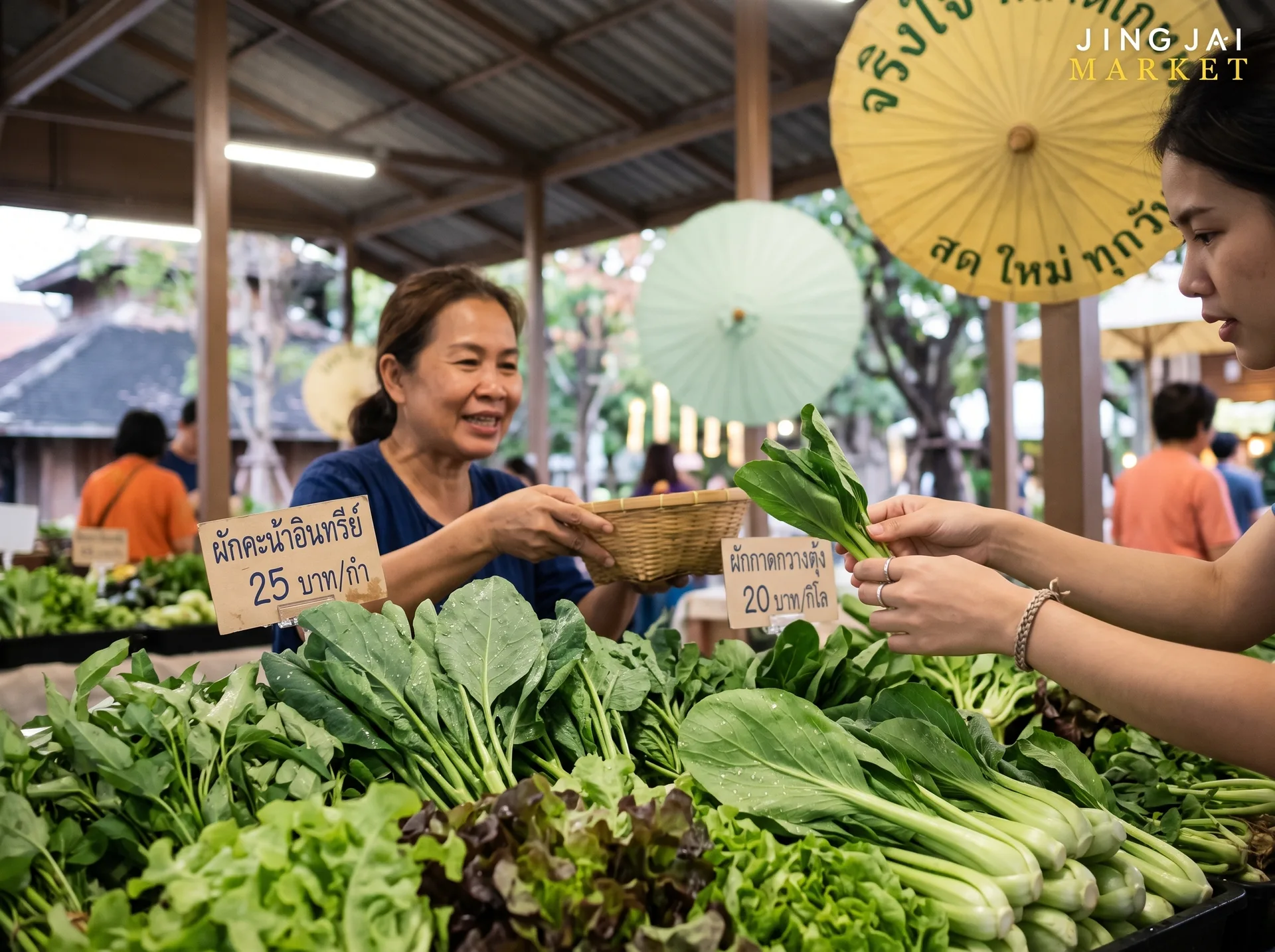
Morning Dew, Ancient Banyan Trees, and Honest Farm Smiles
Greetings, travelers and wholesome food lovers. On Saturday and Sunday mornings in Chiang Mai, Uncle Kham always encourages friends to awaken with the dawn chorus, slip into breathable cotton garments, and immerse their senses in one of the happiest community sanctuaries in northern Thailand: Jing Jai (JJ) Market. Situated on Asadathorn Road in the Pa Tan subdistrict, just moments north of the ancient moat, this vibrant eco-friendly gathering has been thoughtfully nurtured by the Central Group alongside local agrarian communities into Thailand's premier model of sustainable weekend commerce.
The Thai word "Jing Jai" translates directly to "sincere" or "from the heart," and this authenticity resonates across every vendor stall. Farmers offering heirloom vegetables, mountain avocados, wild mushrooms, and medicinal herbs must undergo rigorous organic certification compliance, adhering to both Organic Thailand standards and participatory community guarantee systems. Strolling beneath the vast, sun-dappled canopy of ancient rain trees, you are greeted with melodic northern greetings from grandmother farmers who harvested their crop mere hours before dawn. It represents the living soul of Chiang Mai’s culinary heritage.
Artisan Breakfast Heaven: Traditional Flavors and Forgotten Recipes
The first mandatory ritual upon arriving at Jing Jai Market is securing a seat in the open-air Cooked Food Pavilion. The enticing aromas of charcoal grills, steaming bamboo baskets of sticky rice, and simmering herbaceous broths fill the morning air. Here, generational village cooks present time-honored recipes crafted exclusively from certified chemical-free ingredients. You can savor steaming bowls of fragrant fish congee, rich pork-rib noodle soups, and Chiang Mai's legendary herbal grilled sausages fragrant with wild kaffir lime and lemongrass.
Do not miss the traditional southern Thai herbal rice salad (Khao Yam) adorned with edible butterfly pea flowers and fresh torch ginger shreds, or sweet banana parcels roasted gently over coconut husks. These delicacies stand as stellar examples within our definitive guide to must-try northern Thai cuisine, offering an organic culinary journey comparable to the authenticity found at Pratu Chiang Mai morning market, yet served within an idyllic garden terrace.
Planning Your Chiang Mai Trip? Book Early for Lower Rates
Check real-time rates and secret deals on Agoda, our official travel partner. Enjoy 100% free cancellation, pay at check-in, and earn Agoda Cash rewards.
Eco-Conscious Crafts, Slow Fashion, and Acoustic Serenades
After satisfying your morning appetite, take a slow, observant stroll through the Craft & Artisan Zone. Over one hundred curated stalls showcase the finest expressions of northern slow design. You will discover hand-loomed natural indigo clothing, hand-woven reed tote bags, botanical skincare infusions, and rough-hewn ceramic cups fired in local wood-burning kilns.
This dedication to closed-loop sustainability mirrors the regenerative ethos practiced at our featured organic farm learning retreats in Lamphun. As you inspect tactile hand-dyed scarves, the breezy courtyard is filled with acoustic fingerstyle guitar melodies played by talented local buskers, infusing the marketplace with a heartwarming, festival-like serenity.
Slow Bar Pour-Overs and the Sustainable Vision of Tops Green
For discerning coffee enthusiasts, Jing Jai Market is an absolute wonderland. Mobile vintage coffee carts and timber slow bars feature master baristas brewing single-origin Arabica beans sourced directly from hill tribe co-operatives in Doi Chang, Mae Wang, and Omkoi. Discussing elevation profiles and anaerobic fermentation processes while watching a delicate pour-over brew embodies the rich coffee lifestyle explored in our Chiang Mai coffee culture guide.
Before completing your morning, step inside the climate-controlled Tops Green pavilion—Central Food Hall's flagship eco-grocery store. Packed with artisanal honeys, chemical-free pantry staples, and fair-trade home goods, it offers a sophisticated contrast to the sensory wholesale energy of historic Warorot Market (Kad Luang), providing visitors with high-quality souvenirs that directly reward northern environmental stewardship.
Uncle Kham's Tips for an Eco-Friendly Market Morning
To ensure your excursion to Jing Jai Market is joyous, comfortable, and ecologically supportive, Uncle Kham suggests following these mindful practices:
- Bring your own shopping totes and containers: Jing Jai strictly enforces a zero single-use plastic bag mandate. Vendors wrap takeaways in fresh banana leaves or sugarcane pulp cartons. Carrying a personal canvas tote or woven basket ensures smooth shopping while keeping the city green.
- Mind the eco-sorting waste stations: Waste disposal stations are staffed by trained community ambassadors who guide visitors in sorting organics, compostable food wraps, and recyclables. Please take a mindful second to separate your discards properly.
- Arrive early for peace and parking: The golden window for market exploration is between 07:00 and 08:30. You will secure shaded on-site parking easily, witness the freshest produce selections, and beat the warmer midday crowds effortlessly.
Plan Your Chiang Mai Journey · Verified Booking Partners
Compare real-time rates for stays, curated day tours, flight tickets, and transport with best price guarantee and flexible cancellation: