



























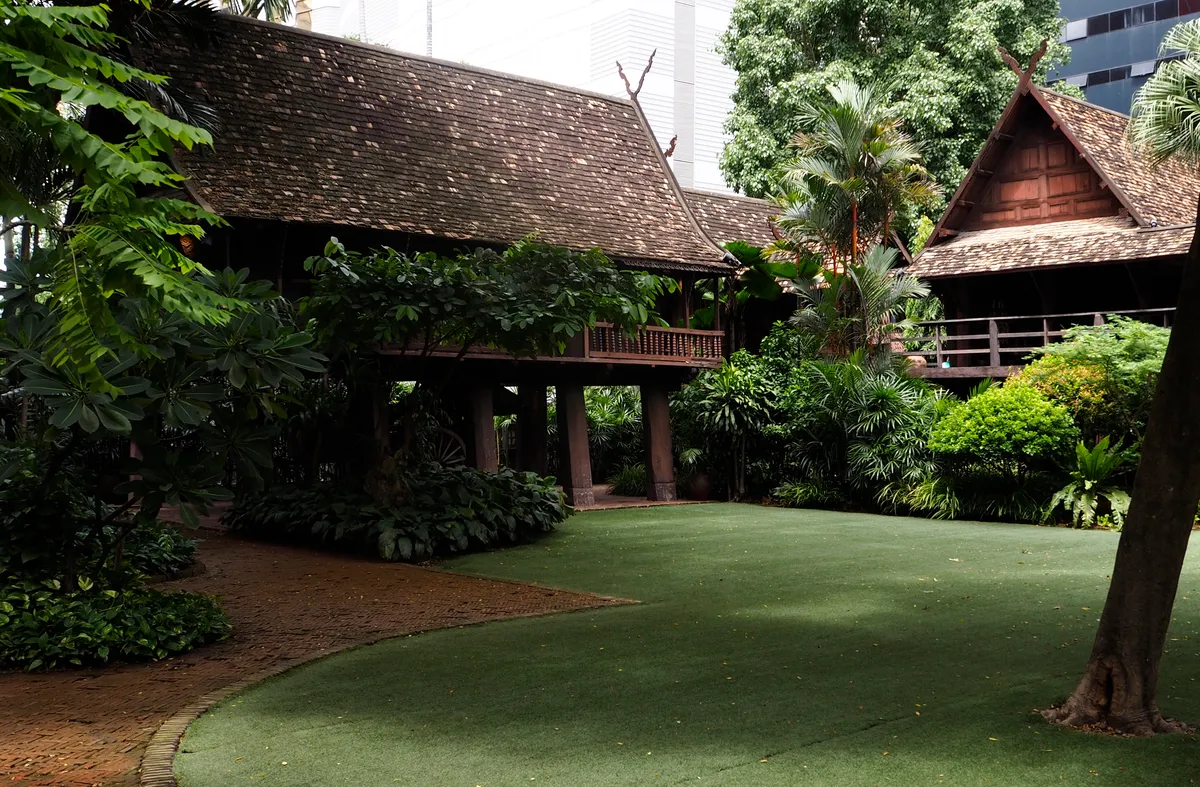
Ten Relocated Century-Old Teak Homes Five Minutes from Nimman
Less than five minutes west of Nimmanhaemin’s espresso bars, tucked at the junction of Suthep Road and Canal Road (Chonprathan Road), lies one of Chiang Mai’s calmest architectural treasures: the Lanna Traditional House Museum, run by Chiang Mai University’s Center for the Promotion of Arts and Culture (ACCL). More than ten authentic historic wooden residences and antique rice barns (long-khao) stand beneath tall shade trees here. None of them are replicas—university preservationists dismantled real family homes across Chiang Mai and Lamphun and carefully reassembled every beam and peg on campus.
What always strikes me when stepping onto these verandas is the cool calm of aged teak beneath bare feet. Walking from house to house lets you physically feel how Lanna builders beat tropical heat without air conditioning—through deep eaves, open covered breezeways (toen), clay water-jar shelves (han nam), and carved wooden lintels (ham yon) guarding bedroom thresholds.
2026 Opening Hours, Closed Days & Admission Fees
Mark your itinerary carefully so you do not arrive at a locked gate:
- Opening Hours: Tuesday to Sunday, 08:30–16:30.
- Closed Days (Critical): CLOSED every Monday and on Thai Public Holidays.
- General Admission: 100 THB per adult—an extraordinary bargain given the depth of preserved architecture inside.
- Free Entry (with ID/proof): CMU alumni, students, teachers/educational staff, seniors aged 60+, Buddhist monks, and visitors with disabilities.
Planning Your Chiang Mai Trip? Book Early for Lower Rates
Check real-time rates and secret deals on Agoda, our official travel partner. Enjoy 100% free cancellation, pay at check-in, and earn Agoda Cash rewards.
Signature Kalae Mansions, Folk Homes & Carved Rice Barns
Allow 60 to 90 unhurried minutes to climb the wooden stairs and read the bilingual storyboards. These landmarks deserve extra attention:
- Kalae Teak Houses (Ruean Oui Paad & Ruean Phaya Wong): Crowned with V-shaped crossing gable horns (kalae), these elevated residences show classic Lanna room hierarchy, open front porches, and carved doorway lintels.
- Ruean Phaya Pong Lang Ka (1896): A noble townsfolk house relocated from inside Chiang Mai’s Old City moat, featuring twin roofs on a shared timber deck without rural kalae horns.
- Ruean Anusarn Sunthorn & Fah Lai House: Transitional early-20th-century colonial-hybrid (pan-ya) dwellings paired with ingenious fah lai sliding wooden louver walls that adjust airflow in seconds.
- Tai-Lue & Tied-Bamboo Homes: Contrast the 1917 Tai-Lue timber house (Ruean Oui Tood) from Doi Saket against the humble Ruean Krueng Phook—a split-bamboo newlywed home bound entirely with rattan rather than iron nails.
- Long-Khao Pasang (Antique Rice Granary): A 150-to-170-year-old teak granary brought from Lamphun, decorated with finely carved wooden peacocks beneath its gable.
Getting Here & Practical Planning Around Nimman and the Old City
From Nimman, a red songthaew or Grab reaches the Canal Road entrance in five minutes, and on-site parking is straightforward for drivers. Check typical local fares in our Chiang Mai transportation guide, or base yourself nearby by browsing the best Nimman hotels in Chiang Mai.
Uncle Kham’s field tips: Aim for 09:00–11:00 when morning light filters sideways across the teak gables, wear easy slip-off shoes since you remove footwear at each staircase, and pack a touch of mosquito repellent for the shady garden paths. Afterward, head east into the moat to pair these domestic houses with monumental temple architecture using our Old City walking guide, Wat Phra Singh guide, and top things to do in Chiang Mai’s Old City—or plan a southern heritage run out to Kad Khua Mung Tha Sing Market in Lamphun.
Plan Your Chiang Mai Journey · Verified Booking Partners
Compare real-time rates for stays, curated day tours, flight tickets, and transport with best price guarantee and flexible cancellation: