



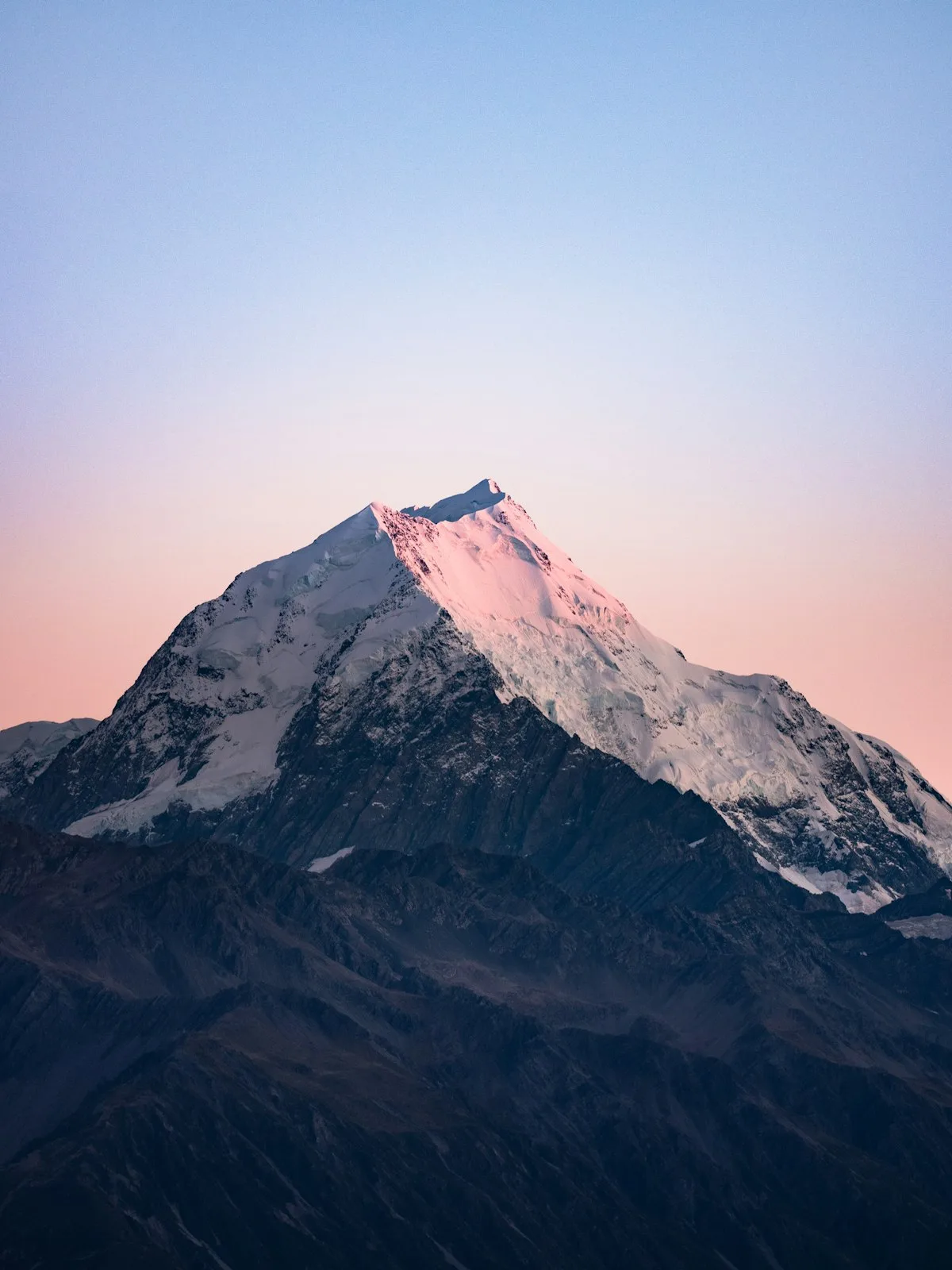

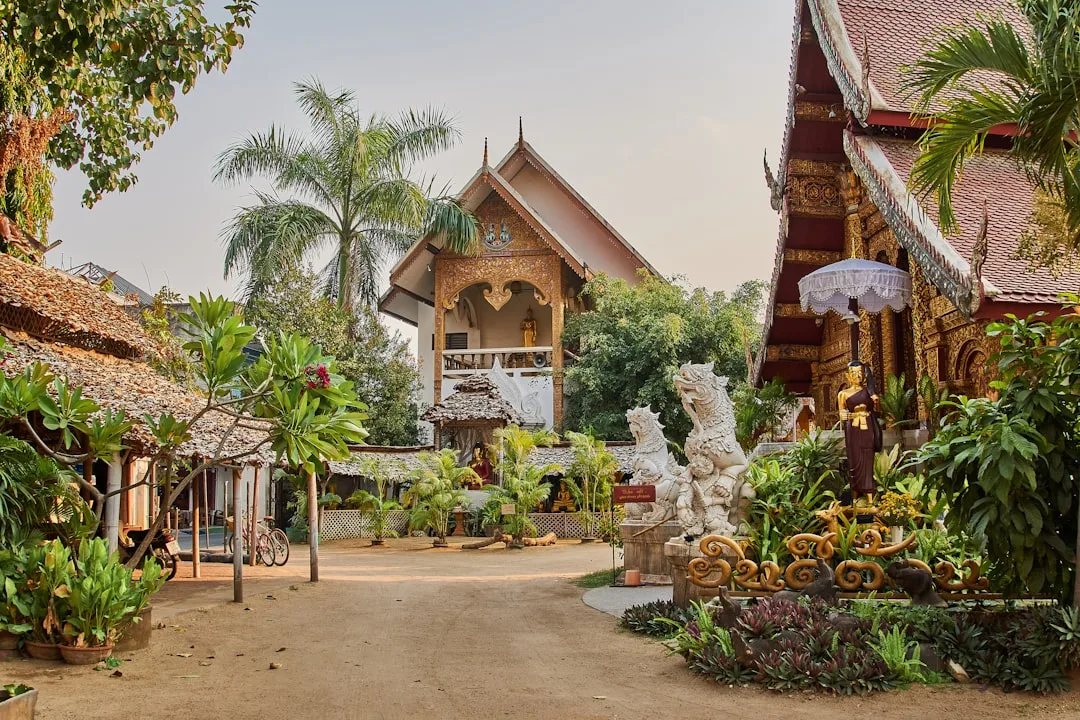







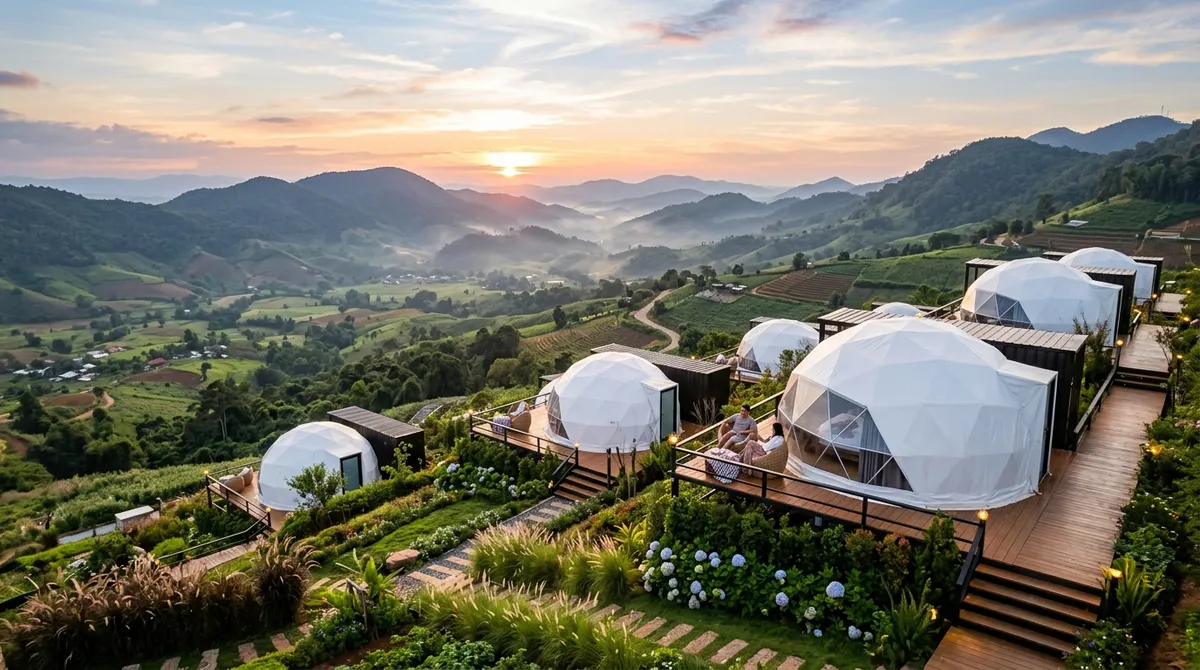
Doi Mon Cham in Chiang Mai (commonly spelled Mon Jam), perched 1,350 meters (4,429 feet) above sea level in the Mae Rim district 40 kilometers northwest of the Old City (a 45- to 60-minute drive), is northern Thailand’s premier agricultural highland retreat. Born out of the Royal Project Nong Hoi to replace historical opium crops with organic temperate farming, Mon Cham features multi-colored stepped flower terraces, traditional Hmong wooden go-kart racing, geodesic glamping domes, and valleys filled with morning mist. It offers brisk weather year-round, with winter night temperatures dropping to 8–15°C (46–59°F).
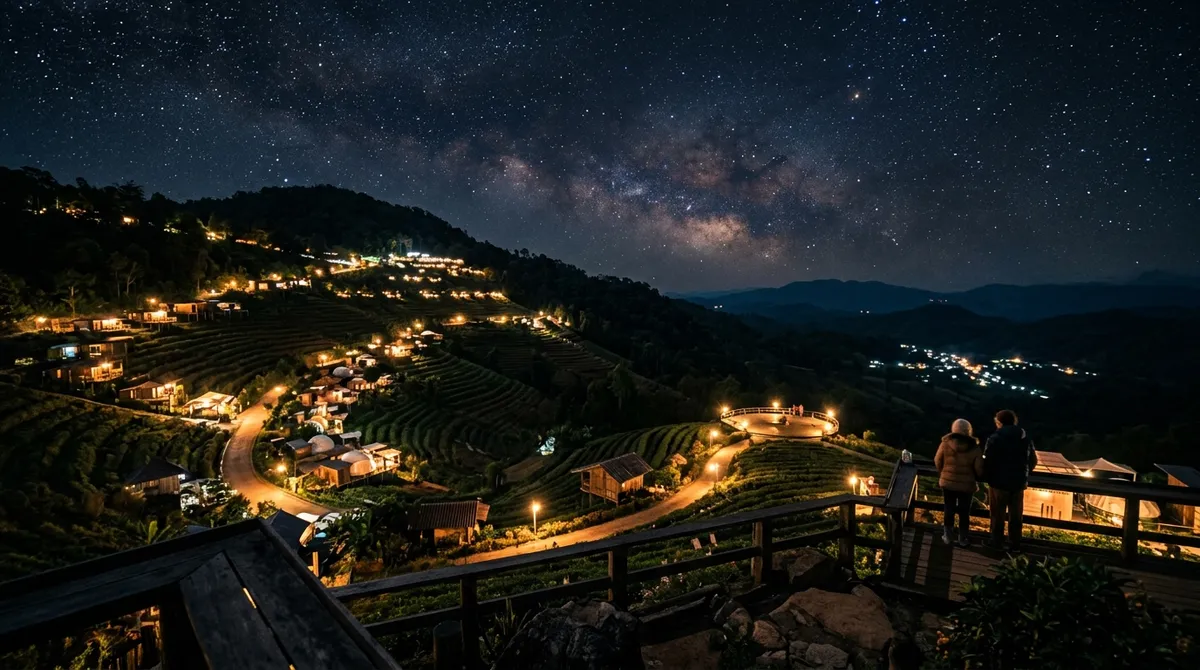
Historical Origins: From Tiger’s Pass to Royal Agrarian Sanctuary
Originally named "Kiew Suea" (The Tiger's Pass) by local mountain settlers, this elevated ridge was historically a dense wilderness frequented by wild Indochinese tigers and heavily cultivated with slash-and-burn opium fields by the indigenous Hmong hill-tribe.
The pivotal transformation arrived in 1984, when His Majesty King Bhumibol Adulyadej (Rama IX) visited the Hmong village of Ban Nong Hoi. Recognizing the community's agricultural potential, he established the Nong Hoi Royal Project Development Center, introducing lucrative cool-climate crops including hydroponic lettuces, heart-shaped cabbages, Japanese persimmons, passionfruit, and royal strawberries. In 2009, the community transformed the panoramic ridge crest into an eco-agricultural destination, rechristening it "Mon Cham" (meaning "The Bright Mountain Hill").
4 Must-Experience Highlights on Doi Mon Cham
[360° Mountain Ridge Views] ➔ [Stepped Flower Fields] ➔ [Formula Hmong Kart Racing] ➔ [Strawberry Picking & Glamping]
1. 360-Degree Panoramic Ridge & Sea of Mist
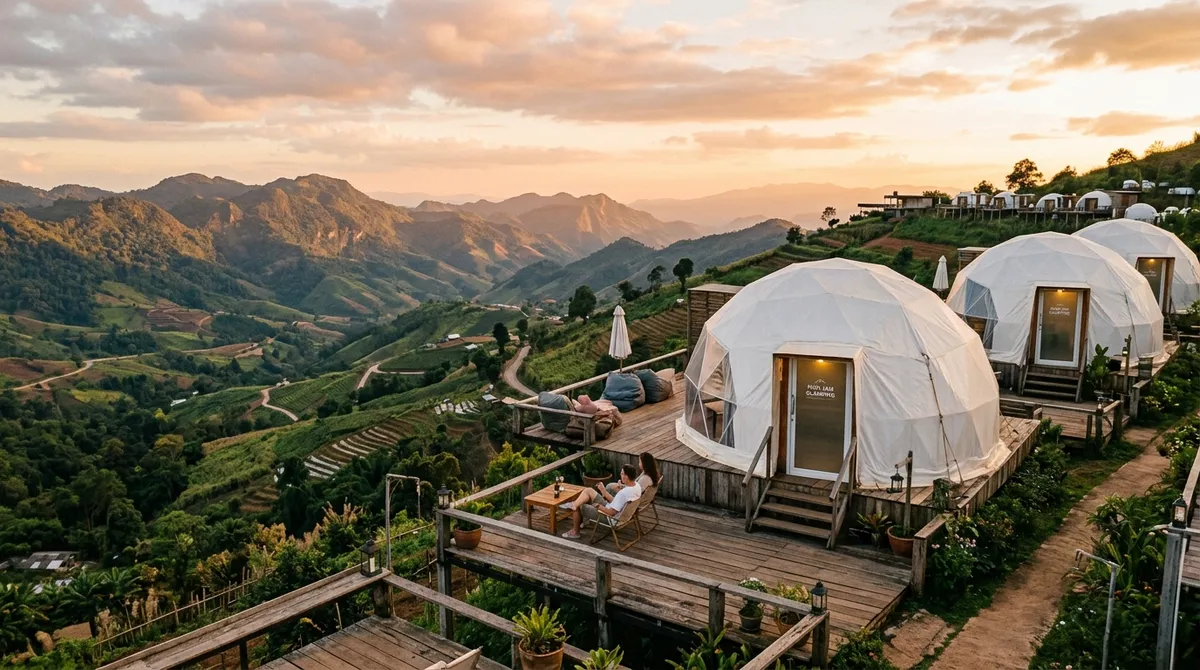
The ridge of Mon Cham commands vistas across the layered folds of the Mae Rim mountain range. During the rainy-to-winter transition (September through February), cool nocturnal breezes trap moisture in the lower ravines, creating a thick, white "Sea of Mist" (Thale Mok) that bathes the valley until mid-morning.
2. Terraced Highland Flower Fields
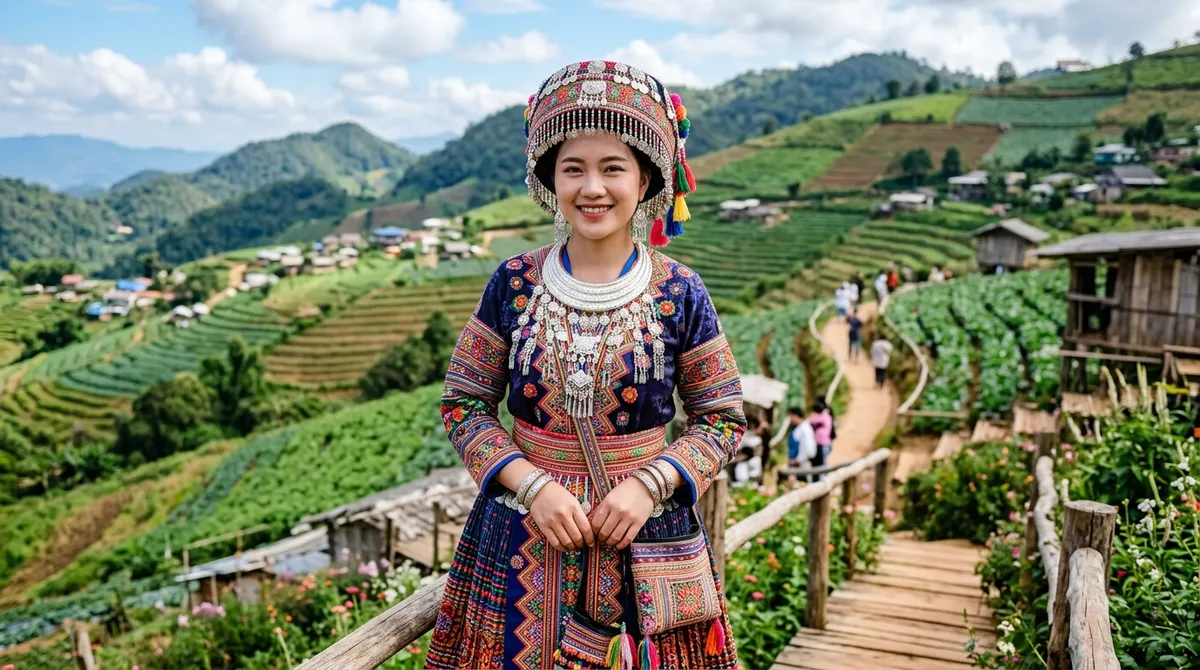
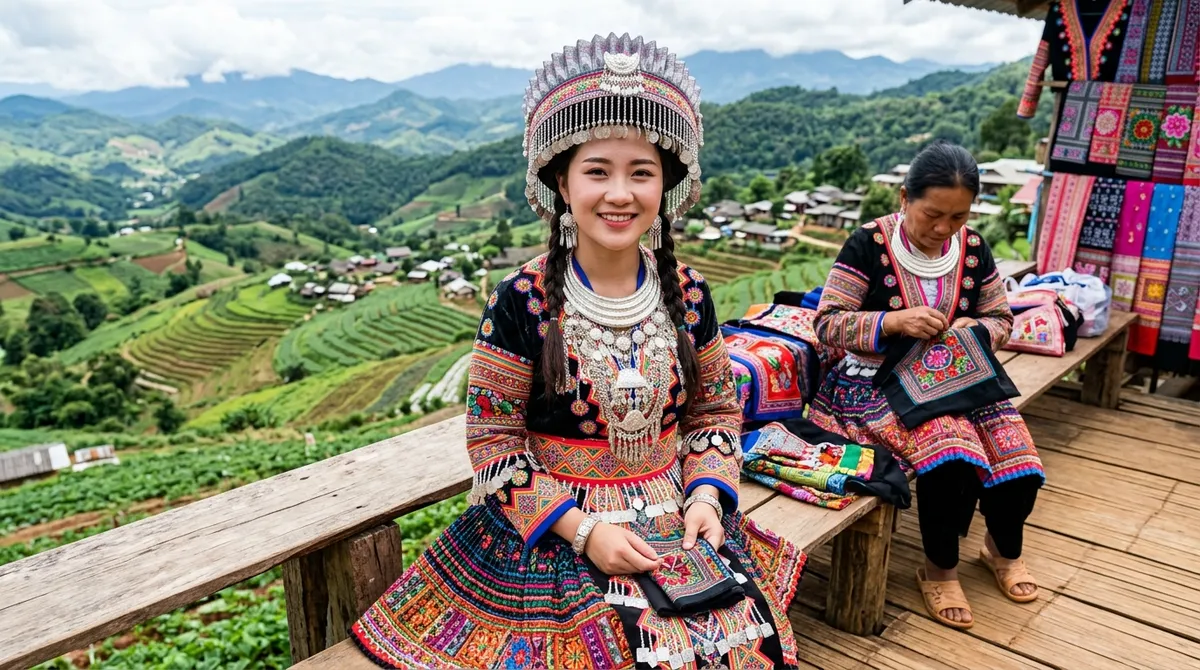
Dozens of family-run flower gardens cascade down the hillsides, rotating crops according to the micro-season. Visitors wander among vibrant carpets of purple Verbena, pink Cosmos, Celosia, and blue Hydrangeas. Acclaimed gardens include Ying Yong Flower Garden and Pang Hwa Garden (entry fees average 40–50 THB). Traditional embroidered Hmong hill-tribe costumes are available to rent on-site for 50–100 THB.
3. Traditional "Formula Hmong" Wooden Kart Racing
One of northern Thailand’s most exhilarating folk activities. Local Hmong craftspeople carve four-wheeled wooden go-karts steered by hand-held foot pegs and braked with a simple wooden hand lever. Thrill-seekers race down dedicated 400-meter dirt or concrete tracks, powered purely by gravity (50–80 THB per run).
4. Royal Strawberries & Mountain Hot Pot (Moo Kata)
Between December and February, visitors can pick fresh Royal Variety 80 strawberries directly from terraced bushes (priced by weight at roughly 300–400 THB/kg). As the evening mountain chill sets in, open-air viewpoints and glamping sites serve traditional Moo Kata (Thai charcoal barbecue and hot pot) alongside fresh chamomile tea.
Seasonal Travel Matrix
- Late Rain / Early Winter (Sep – Nov) — Average 18–25°C (64–77°F): Lush emerald valleys, highest probability for Sea of Mist — Advice: Slippery curves, test vehicle brakes
- Peak Winter (Dec – Feb) — Average 8–18°C (46–64°F): Crisp chilly air, peak flower blooms & ripe strawberries — Advice: High season, book dome glamping early
- Hot Season (Mar – May) — Average 22–30°C (72–86°F): Cooler than the city, active terraced vegetable farming — Advice: Strong midday sun, cool nights
- Green Monsoon (Jun – Aug) — Average 20–26°C (68–79°F): Vibrant green landscapes, rolling clouds, uncrowded — Advice: Pack an umbrella, lower hotel rates
Local Insider Tips
- Mountain Driving Tactics: The route (Route 1096 branching onto Rural Highway 4051) is fully paved, but the final 3 kilometers ascend steep, narrow hairpin inclines through Hmong villages. Shift rental automatic cars into low gear (L or 1–2). If uncomfortable driving steep switchbacks, park at the lower village lot and hire a local Hmong motorcycle taxi to the flower farms (20–40 THB). The same road continues on into our Samoeng Loop road-trip guide for travelers wanting to keep driving the mountains that same day.
- Best Light for Photography: Arrive between 06:30 and 08:30 AM to photograph the Sea of Mist backdropped by rising golden sunlight, or between 16:30 and 17:45 PM to capture the sunset over the western peaks.
- Pack Warm Layers: Even in the warm season, evening temperatures on Mon Cham drop to 18–20°C. In winter, thermal jackets, beanies, and windbreakers are mandatory for comfortable glamping.
Mon Cham sits within the Mae Rim district, easy to combine with nearby sights on the same trip — see our Mae Rim day trip guide.
Elevate Your Mountain Getaway with Terra Lanna
Experience the majesty of Chiang Mai’s highlands in complete serenity. Reserve your stay at our handpicked luxury boutique mountain resorts in Mae Rim or book an exclusive private day trip to Doi Mon Cham and Queen Sirikit Botanic Garden with Terra Lanna.