



























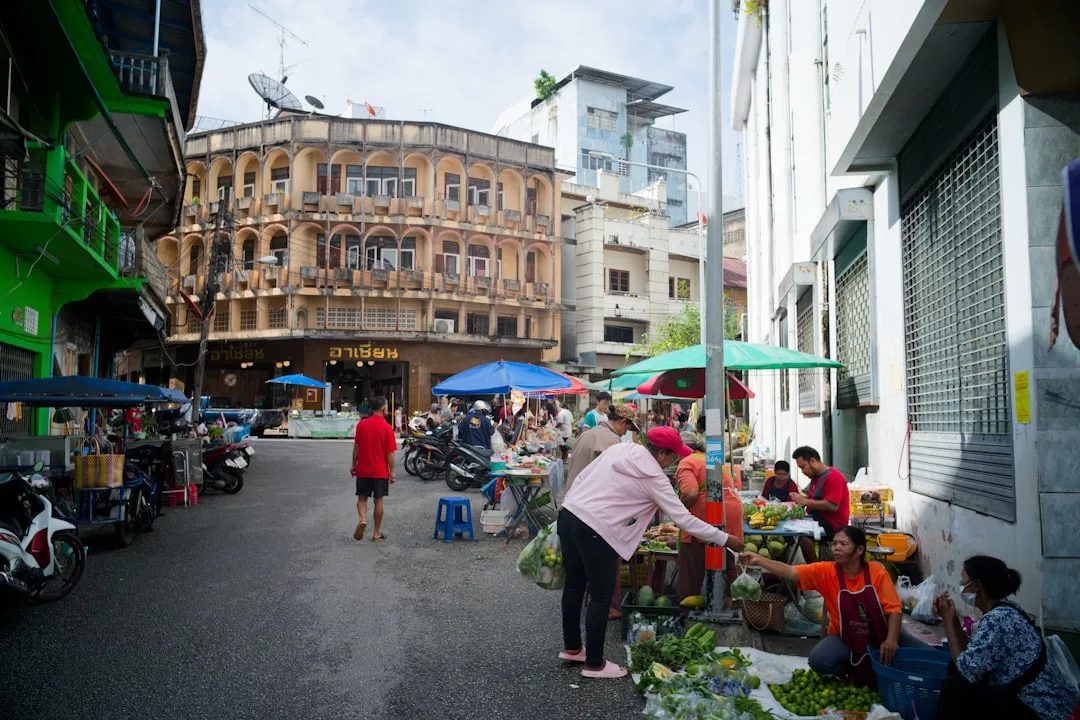
For seasoned Chiang Mai locals like Uncle Kham, scoring prime seasonal fruit—bursting with natural tree-ripened sweetness, completely chemical-free, and shockingly affordable—does not involve navigating shiny supermarket aisles. Instead, we hop onto our scooters and motor toward Muang Mai Wholesale Market (Talat Muang Mai). Sprawling along Wichayanon and Wang Sing Kham roads just north of the municipal municipality on the western banks of the Ping River, this is Northern Thailand’s true agricultural pantry.
The Ping River Wholesale Citadel: Where Highland Orchards Meet the City
Muang Mai was born out of necessity when nearby Warorot Market grew overly congested for massive agrarian bulk trade. Positioned strategically beside Nakhon Ping Bridge and urban bypass arteries, Muang Mai allows heavy wooden-railed pickup trucks arriving directly from Fang, Chom Thong, Mae Chaem, Samoeng, and Chiang Dao to pull in twenty-four hours a day, dumping tons of farm-gate harvests straight onto wholesale loading docks.
Strolling less than a kilometer north from Warorot Market reveals a dramatic shift in energy: polished tourist boutiques dissolve into an authentic, raw, adrenaline-fueled agricultural trading floor. If you haven't yet explored the contrasting historic character of Warorot, browse our detailed orientation at warorot-market-shopping-chiang-mai.
The Seasonal Fruit Calendar: Nature’s Sweetest Clock
The true joy of exploring Muang Mai lies in tuning into Northern Thailand’s natural agrarian calendar. Visiting during peak harvest months rewards you with astonishing flavors at wholesale pennies on the dollar:
- The Mango Flood (March to May): Alleys become a golden sea of ripe Nam Dok Mai, Ok Rong, and Mahachanok mangoes. The intoxicating, perfume-sweet fragrance of tropical fruit blankets entire blocks, retailing for a mere 30 to 50 THB per kilo for export-grade fruit.
- King Durian and Queen Mangosteen (May to August): Enormous mountains of Monthong, Chanee, and Kanyao durians arrive alongside plump purple mangosteens. Sourcing durians by the whole wooden crate provides mind-boggling savings compared to urban retail counters.
- Highland Strawberries and Sub-Tropical Bounty (December to February): Royal Project 80 strawberries from the mist-wrapped valleys of Samoeng, buttery Hass avocados, crisp persimmons, and honey passionfruit. You can trace these mountain orchards firsthand along the breathtaking loop highlighted in our samoeng-loop-road-trip-guide-chiang-mai.
- Longan and Lychee Summits (June to July): Crisp-skinned E-Dor longans with translucent honeyed flesh and bright crimson Hong Huay lychees delivered daily from Lamphun and Chiang Mai orchards.
To align your travels with optimal fruit harvests and pleasant weather, review our comprehensive seasonal climate breakdown at best-time-to-visit-chiang-mai.
Planning Your Chiang Mai Trip? Book Early for Lower Rates
Check real-time rates and secret deals on Agoda, our official travel partner. Enjoy 100% free cancellation, pay at check-in, and earn Agoda Cash rewards.
The Crate-Buying Strategy: How to Shop Like a Veteran Merchant
The magic phrase at Muang Mai is “Yok Kheng” (buying by the bamboo crate or wholesale box, usually 10 to 20 kilograms). For traveling families, groups, or fruit devotees, pooling purchases slashes retail prices by nearly half. Uncle Kham suggests three golden tips:
- Inspect the Bottom Layer: Courteous vendors will happily tip crates slightly so you can verify that bottom layers are just as pristine as top display specimens, with zero crushed skins.
- Specify Your Consumption Date for Durian: Tap sorters possess uncanny acoustic ears. Tap-tap with their bamboo wand: a hollow drum sound signals flesh that has loosened from its internal casing, ready for immediate tonight eating; a denser resonance means it will peak in 48 hours for your return flight home.
- Always Accept Generous Samples: Slicing fresh wedges of mango, pomelo, or sweet orange with nimble pocketknives is customary hospitality here. Savor the sample, smile, and negotiate with friendly warmth.
Practical Hazards and Street-Smart Logistics
Remember that Muang Mai is a working, fast-paced commercial environment. Two-wheeled wooden handcarts stacked high with cabbage sacks and heavy three-wheel motorcycles dart through narrow aisles. Wear sturdy rubber-soled shoes, as floors can be wet from melted ice and washed vegetables.
Do not attempt to drive a rental car directly into the market alleyways. Park instead at the Chiang Mai Municipal Office designated grounds or along Wang Sing Kham Road, walking in on foot for a stress-free expedition.
Integrating Muang Mai into a 3-Day Travel Plan
Stocking up on ripe tropical fruits at Muang Mai provides the ultimate road-trip fuel before embarking on scenic mountain climbs, temple pilgrimages, or elephant sanctuaries. For advice on smoothly weaving market outings into a seamless holiday schedule, consult our master itinerary at chiang-mai-3-day-itinerary-local-guide.
Carrying a bag of sun-warmed, sweet mangoes back to your balcony while watching the Ping River flow by captures the true bounty of the ancient Lanna kingdom at its most generous and delicious.
Plan Your Chiang Mai Journey · Verified Booking Partners
Compare real-time rates for stays, curated day tours, flight tickets, and transport with best price guarantee and flexible cancellation: