



























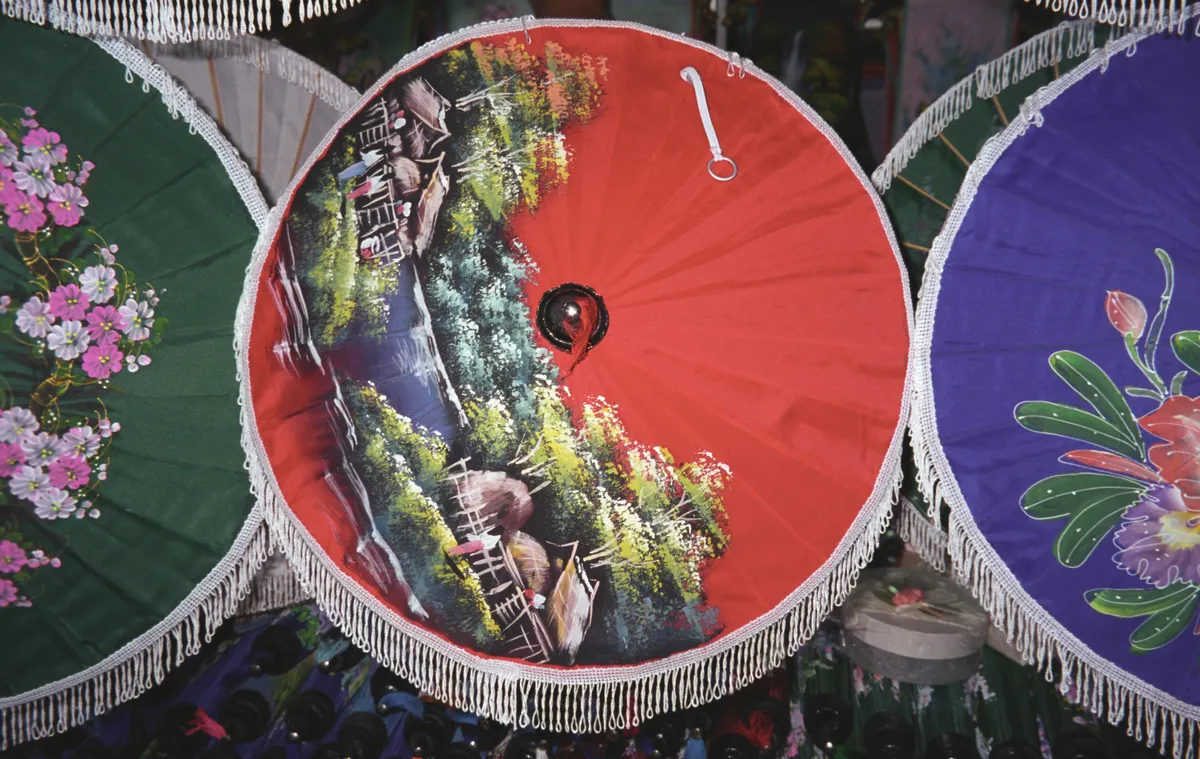
The Origins of Bo Sang: From Buddhist Pilgrimage to World-Famous Parasol Art
When travelers seek the single handicraft that best captures the delicate grace, vivid hues, and pastoral warmth of Chiang Mai, Uncle Kham always directs them to the Bo Sang umbrella craft village in San Kamphaeng district. Local oral tradition recounts that over two centuries ago, a revered Buddhist monk from Bo Sang named Phra Intha traveled on an arduous meditation pilgrimage through the Shan States of Myanmar and Xishuangbanna. There, he observed local villagers fashioning practical water-resistant parasols from mulberry bark paper. Captivated by their technique, he studied the craft and brought the wisdom back to teach his village congregation.
Initially made for temple ceremonies, monks robes, and practical sun shielding during dry seasons, parasol crafting quickly flourished into a vital dry-season livelihood. When Thai statesman Field Marshal Plaek Phibunsongkhram toured the village in the mid-twentieth century and championed rural craft cooperatives, Bo Sang ascended into a world-renowned arts destination, standing alongside the master metal smiths of Wualai Silver Street artisan workshops as twin pillars of living Lanna ingenuity.
The 4-Stage Anatomy of a Sa Paper Parasol: Nature in Every Detail
What distinguishes an authentic Bo Sang parasol is its 100% natural, biodegradable composition, sustained through cooperative cottage labor where separate families master distinct components. Uncle Kham breaks down the four essential production phases:
- Bamboo Frame Carving & Assembly: Mature bamboo stems are cured in mineral baths to deter wood-boring insects, then meticulously split with cleavers into flexible ribs. These are bound with hand-spun cotton cord around a turned soft-wood center hub (Maa Lor), creating an intricate opening and collapsing framework.
- Mulberry Sa Papermaking: Wild mulberry bark (Po Sa) collected from highland forest margins is soaked and boiled in wood-ash water until soft. Artisans pound the fibers with wooden mallets into silky pulp, which is suspended in water troughs, lifted onto fine cloth mesh frames, and sun-dried in the open air into tough, textured parchment.
- Canopy Mounting & Natural Waterproofing: Paper sheets are pasted smoothly over the bamboo ribs using natural tapioca-rice paste. After trimming, the canopy is coated with a waterproof glaze made from boiled wild persimmon sap and resin, rendering the parasol completely impervious to tropical rain showers.
- Freehand Floral Painting: The final breathtaking spectacle. Resident master artists dip natural-hair brushes into vivid oil paints, swirling orchids, cascading plum blossoms, soaring peacocks, and landscape motifs onto the stretched paper in mere minutes without pre-drawn outlines.
Planning Your Chiang Mai Trip? Book Early for Lower Rates
Check real-time rates and secret deals on Agoda, our official travel partner. Enjoy 100% free cancellation, pay at check-in, and earn Agoda Cash rewards.
Hands-On Painting Workshops and San Kamphaeng Silk Heritage
At the open-air Bo Sang Umbrella Handicraft Centre, Uncle Kham favorite recommendation for families and creative travelers is the hands-on umbrella painting studio. Under the patient guidance of smiling village elders, you can sit down with palette in hand, learn traditional brush techniques, and paint your own personalized parasol keepsake to carry home.
Furthermore, the resident painters offer a beloved on-the-spot service: custom freehand painting on personal items. Hand them your smartphone case, canvas tote, denim jacket, or wide-brim hat, and within 10 minutes they will paint a breathtaking dragon or lotus blossom with quick-drying, waterproof acrylic enamel that endures for years.
Beyond parasols, San Kamphaeng Road (Highway 1006) has long been celebrated as Chiang Mai historic silk weaving corridor. Visitors can drop into traditional weaving mills to witness silkworms, silk reel spinning, and rhythmic wooden foot-pedal looms weaving shimmering raw silk yardage and antique-patterned Pha Sin wraps.
Half-Day San Kamphaeng Itinerary and Cultural Pairing
To maximize your excursion into San Kamphaeng craftsmanship, Uncle Kham suggests a seamless morning-to-afternoon itinerary:
Depart downtown Chiang Mai along the tree-lined old highway, stopping first at the architectural masterpiece MAIIAM Contemporary Art Museum in San Kamphaeng, featuring striking mirrored facades and thought-provoking modern Thai art installations. Continue eastward to Bo Sang Umbrella Village to wander the workshops and enjoy your painting workshop.
In the afternoon, head back toward the Ping River to explore preserved woodcarvings and colonial trading shrines at Wat Ket Karam along the Ping River, or stock up on northern seasonings and tea at Warorot Market (Kad Luang). If your trip coincides with the weekend, bring your freshly painted Bo Sang parasol along to photograph during your sunset walk along the Sunday Walking Street at Tha Phae.
Plan Your Chiang Mai Journey · Verified Booking Partners
Compare real-time rates for stays, curated day tours, flight tickets, and transport with best price guarantee and flexible cancellation: