



























Where Chiang Mai’s Precursor Capital Emerged From the Silt
Drive fifteen minutes south of Chiang Mai’s Old City moat down the giant rubber-tree avenue of Highway 106, turn off into Tambon Tha Wang Tan in Saraphi, and red brick ruins suddenly appear between family homes and longan orchards. This is Wiang Kum Kam, King Mangrai’s late-13th-century capital beside the Ping River, eventually abandoned and buried beneath meters of river flood silt before Chiang Mai was founded.
Among roughly twenty excavated sites scattered through the village, Wat Chang Kham—originally called Wat Kan Thom—is the unmistakable place to begin. Not only was it the first ruin excavated when archaeologists broke ground on the lost city, it also sits right beside the Wiang Kum Kam Information Center, making it the natural hub for parking, horse-drawn carriages, and rental bicycles.
Eight Stucco Elephants, Layered Niches & the Sri Maha Bodhi Tree
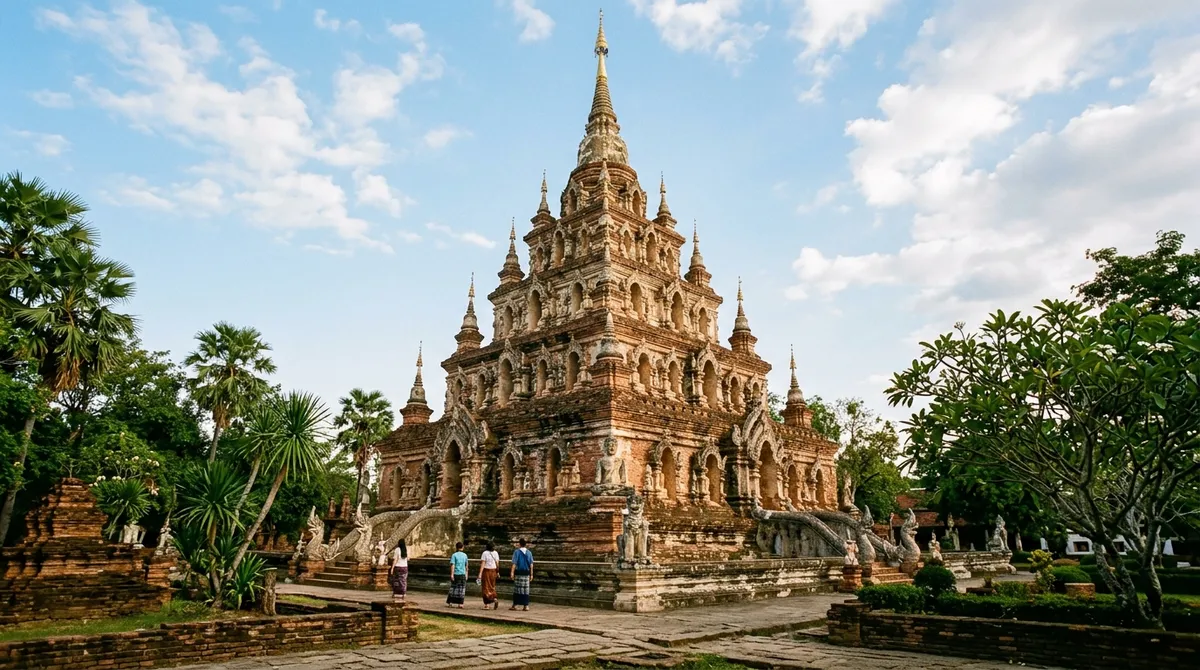
Historical chronicles record King Mangrai establishing Wat Kan Thom around 1290 CE (1833 BE) as a royal monastery at the core of his riverside settlement. Stepping across the grass toward the exposed red brick viharn foundation, your eyes lock onto the square-based principal chedi rising clean and legible above the lawn.
- Eight Elephant Caryatids: Carved around the lower square terrace are eight half-emerging stucco elephants appearing to brace the corners and sides of the stupa—giving the ruin its popular modern name, Wat Chang Kham ("Elephant-Supported Temple").
- Two-Tiered Buddha Niches: Above the elephants sits a mondop-style relic chamber displaying stacked niches of standing and seated Buddha figures, revealing an early transition between Hariphunchai Mon traditions and emerging Lanna style.
- Inscriptions & Bodhi Heritage: Excavations here uncovered early Mon and Sukhothai-script stone inscriptions, terracotta votives, and a sacred Sri Maha Bodhi tree traced to Sri Lankan lineage.
Planning Your Chiang Mai Trip? Book Early for Lower Rates
Check real-time rates and secret deals on Agoda, our official travel partner. Enjoy 100% free cancellation, pay at check-in, and earn Agoda Cash rewards.
2026 Entry Fees, Horse-Drawn Carriages & Bicycle Loops
First-time visitors often walk up to the ruins hunting for a ticket booth. Here is the pleasant surprise: entering Wat Chang Kham and every outdoor Fine Arts ruin across Wiang Kum Kam is completely free. What you pay for—only if you prefer wheels to walking—is local transport linking the village lanes.
- Horse-Drawn Carriage: Carriages wait beside the Information Center and Wat Chang Kham, carrying 2 to 4 passengers at roughly 300–500 THB per carriage depending on loop length and stops. Confirm the exact route and ask specifically before boarding if you want quieter stops included alongside the major chedis.
- Independent Bicycle Rental: Local shops near the center rent simple city bicycles for around 50–100 THB per day. Terrain is dead flat, making slow cycling between shaded orchards far more flexible than riding on a clock. Guided half-day bike tours from Chiang Mai run higher (~1,500–2,300 THB) with hotel transfers included.
- Getting Here From Downtown: A Grab or Bolt ride from Tha Phae Gate or Night Bazaar takes 15–20 minutes (~100–160 THB); see our Chiang Mai transportation guide for return tips.
Hours, Sun Protection & Monument Conduct
Outdoor ruins are accessible throughout daylight, while the Information Center generally runs 08:00 to 17:00. Arrive between 08:00 and 10:00 or after 15:30; exposed brick courtyards throw strong glare at noon, so carry water, a sun hat, and sunglasses.
Treat the sunken masonry with care: never climb onto brick plinths or lean on the stucco elephants for photos, and dress modestly enough for an active Buddhist village where locals still light incense beside the ruins.
Linking Wat Chang Kham Into Chiang Mai & Lamphun
Once you finish orienting yourself at Wat Chang Kham and the Information Center, branch out across the wider buried settlement using our complete Wiang Kum Kam guide. Comparing this 1290 CE brick layout with King Mangrai’s later Old City monuments—such as Wat Chedi Luang and Wat Phra Singh—shows how rapidly Lanna architecture scaled up over the next century.
Driving further south along Highway 106 takes you cleanly into our Lampang and Lamphun heritage tour and riverside snacks at Kad Khua Mung Tha Sing Bridge Market, while heading back north pairs effortlessly with riverside craft heritage at Wat Ket Karam or relaxing stays in our Ping River hotel picks.
Plan Your Chiang Mai Journey · Verified Booking Partners
Compare real-time rates for stays, curated day tours, flight tickets, and transport with best price guarantee and flexible cancellation: