



























A Quiet Ping River Bank That Tour Buses Never Find
Nine out of ten visitors heading south from Chiang Mai Old City cross the bridge straight to Wiang Kum Kam ancient city and turn back before sunset. Few realize that on the western bank of the Ping River in Pa Daet subdistrict sits a peaceful local temple carrying centuries of riverside memory: Wat Koh Klang.
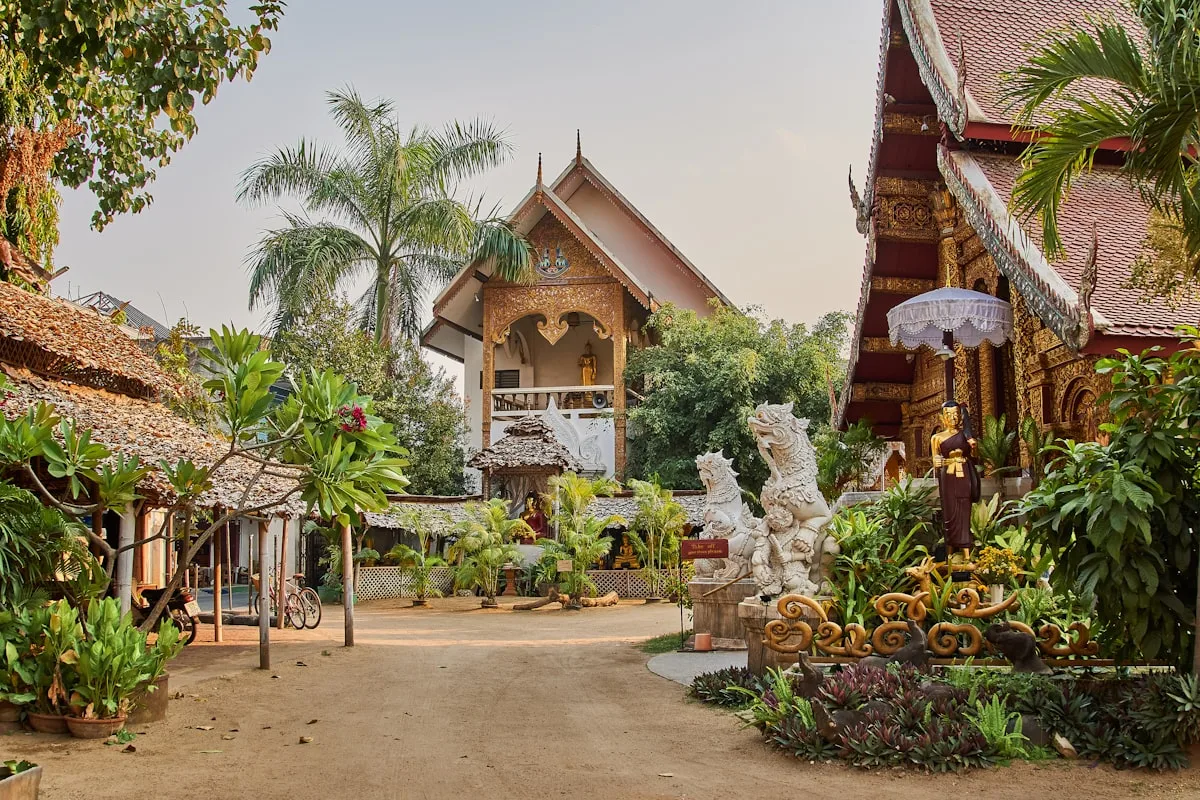
Morning light here feels worlds apart from the walled city. There are no tour-bus megaphones and no souvenir stalls blocking the sanctuary steps—only river breezes drifting off the Ping, egrets calling from tall rain trees, and a blue-and-white Lanna-style viharn trimmed with crisp stucco reliefs. The grounds are open daily with free admission from roughly 06:00 to 17:00, requiring no tickets or prior booking.
Clarifying the Mon Archaeological Story Along the Ping River
Before you fire up your GPS, let me clear up a common bit of historical overlap so you know exactly what stands where. Along the upper Ping River basin, two places share the name Wat Koh Klang, and both tie back to the river’s ancient Mon (Hariphunchai) settlement corridor.
Here in Pa Daet, Chiang Mai—right across the river corridor from Wiang Kum Kam—Wat Koh Klang serves as a living riverside community monastery preserving a Mon-Burmese style pagoda, traditional murals, and links to historic riverbank pottery and brickmaking settlements. Further downstream in Pa Sang district, Lamphun, lies the larger ruined archaeological site of Wiang Koh Klang, where archaeologists excavated monumental Mon laterite temple bases and Hariphunchai-era ceramic remains. Standing beside the water in Pa Daet helps you picture how one continuous river highway once linked Hariphunchai monks, potters, and builders all the way up to Wiang Kum Kam.
Planning Your Chiang Mai Trip? Book Early for Lower Rates
Check real-time rates and secret deals on Agoda, our official travel partner. Enjoy 100% free cancellation, pay at check-in, and earn Agoda Cash rewards.
Details Worth Slowing Down For
- Mon-Influenced Stupa & Stucco Work: Look closely at the tiered spire and corner reliefs on the pagoda, which carry unmistakable Mon-Burmese riverine proportions distinct from classic Chiang Mai bell-shaped chedis.
- Blue-and-White Viharn Murals: When the main hall doors stand open during morning hours, step inside quietly to see folk murals capturing everyday riverside life in Pa Daet.
- Shaded Riverfront Grounds: Between 07:30 and 09:30, the river terrace behind the compound is cool and calm—ideal for a unhurried pause before riding on to larger ruins.
Pairing Wat Koh Klang With Wiang Kum Kam & Southern Temples
Thirty to forty minutes is plenty for Wat Koh Klang on its own, which makes it an effortless opener for a southern Chiang Mai half-day loop. Check our Chiang Mai transportation guide to arrange a scooter, Grab, or chartered songthaew down the river road. After walking the grounds in Pa Daet, hop over to Wiang Kum Kam ten to fifteen minutes away to see the excavated brick foundations of King Mangrai’s earlier capital.
If you want a full day of heritage architecture, continue west toward Wat Ton Kwen in Hang Dong, or push south into Hariphunchai heartland on a Lamphun and Lampang heritage route. Back in town by afternoon, reward yourself with a steaming bowl from our best Khao Soi in Chiang Mai guide before returning to your base around hotels near Tha Phae Gate and the Old City.
GPS & Practical Visitor Tips
Type the full name "Wat Koh Klang Pa Daet Chiang Mai" into your map app so you do not accidentally route 40 kilometers south to the archaeological ruin of the same name in Pa Sang, Lamphun. Parking on the temple grounds is free and spacious, shoulders and knees should be covered before entering prayer halls, and bringing a bottle of water is smart since cafés are sparse right by the gate.
Plan Your Chiang Mai Journey · Verified Booking Partners
Compare real-time rates for stays, curated day tours, flight tickets, and transport with best price guarantee and flexible cancellation: