



























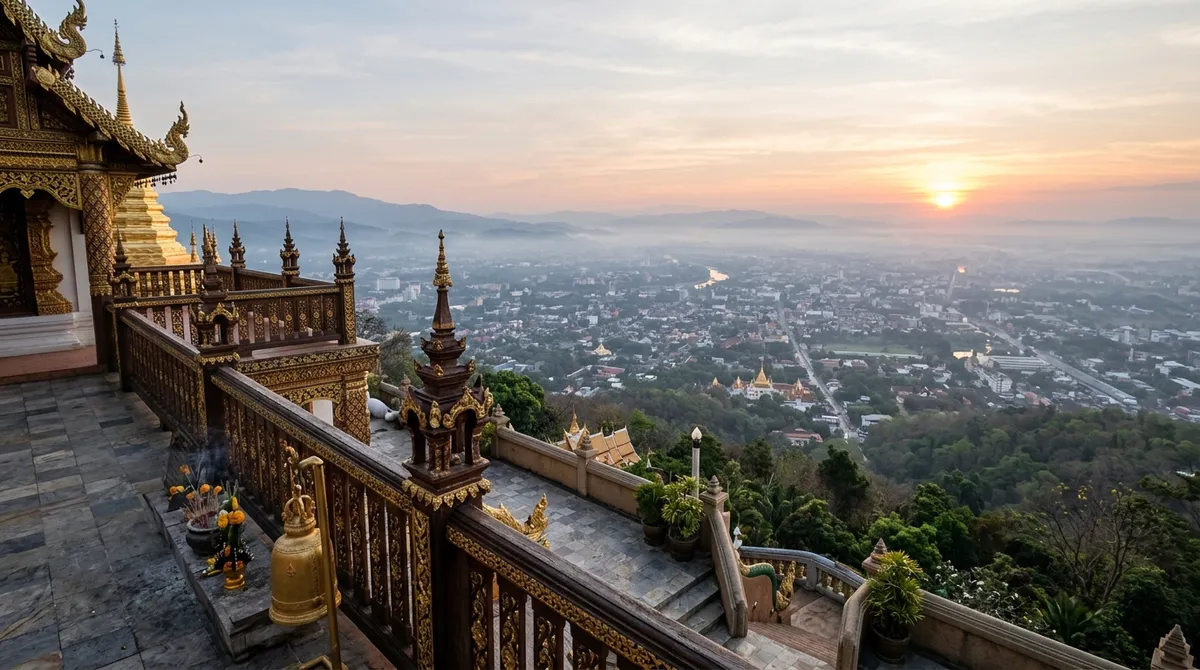
The Founder King's Vow: Casting the Sacred Bronze Buddha of King Mengrai
Sawasdee krub, dear friends and cultural wanderers! Uncle Kham warmly invites you to step away from the bustling thoroughfares of Chiang Mai and venture into the peaceful, leafy lanes of the southwestern Old City. Tucked into Ratchamanka Soi 6 off Sam Lan Road lies a revered monastery holding the most direct, personal bond with Chiang Mai's royal founder: Wat Phra Chao Mengrai (affectionately dubbed Wat Kan Khot by locals).
Following the founding of Chiang Mai in 1296, King Mengrai the Great demonstrated supreme personal devotion to the Buddha Dhamma. Desiring to forge a sacred spiritual palladium for his new realm, he collected purified bronze, copper, and silver from various northern principalities. Remarkably, royal records affirm that King Mengrai oversaw the metal alloy casting and facial tooling with his own hands. This historic image was reverently christened "Phra Chao Mengrai" (Lord Mengrai Buddha) and remains enshrined as an enduring symbol of sovereign wisdom and benevolence.
For adventurous souls discovering northern Thailand on two wheels, touring these historic lanes by moped is an unforgettable joy. Remember to check out our practical handbook on renting scooters in Chiang Mai and complying with local traffic checkpoint rules so your ride remains entirely stress-free and pleasant.
The Legend of "Kan Khot": The Miracle of the Bent Carrying Poles
The colloquial name "Wat Kan Khot" derives from a wondrous oral legend cherished across generations of Chiang Mai folk. Once the monumental bronze statue was cast at a provisional foundry outside the moated perimeter, King Mengrai ordered dozens of seasoned palace guards to construct massive hardwood shoulder yokes (called Kan Hab) to carry the colossal statue in procession to the royal temple sanctuary.
However, during the transport, the sheer metallic mass and miraculous spiritual presence of the Buddha image caused the sturdy wooden yokes to bend, crack, and snap three consecutive times with resonant groans. The royal procession ground to an unexpected halt at this exact location. Interpreting this miraculous event as an unmistakable celestial sign that the Buddha image wished to reside right here, King Mengrai immediately ordered the viharn to be erected over the site. Locals subsequently named the sanctuary "Wat Kan Khot"—with Kan Khot meaning the "curved or bent carrying-yoke."
"Whenever you feel exhausted by life's burdens, sit before Phra Chao Mengrai. Contemplate how even the bent iron yoke found its sacred resting place here, and your heart will regain steadfast courage." — Uncle Kham's temple musings
For travelers who admire the physical strength and flexibility of northern timber and bamboo craftsmanship, Uncle Kham recommends an inspiring visit to Ban Pak Kong traditional bamboo weaving village in Saraphi, where master artisans shape natural fibers into enduring domestic tools.
Planning Your Chiang Mai Trip? Book Early for Lower Rates
Check real-time rates and secret deals on Agoda, our official travel partner. Enjoy 100% free cancellation, pay at check-in, and earn Agoda Cash rewards.
Profound Early Chiang Saen Iconography
Entering the teak-scented assembly hall, visitors encounter the majestic presence of Phra Chao Mengrai. Sculpted in the Maravijaya (Earth-Touching) posture, this 700-year-old bronze sculpture exhibits quintessential early Chiang Saen aesthetics influenced by Pala-Indian and Hariphunchai Buddhist art. The image features a round, serene face, prominent cleft chin, elongated earlobes touching the shoulders, a broad, powerful chest, and a short monastic sash draped across the left breast.
The dark patina of the seven-century-old bronze glows with solemn dignity upon an intricately molded lotus pedestal. Beside the main image sit smaller sandstone and carved teakwood Buddhas preserved through centuries of municipal turmoil. This artistic synthesis connects harmoniously with monumental sites like Wat Chedi Luang's grand earthquake ruins and the subterranean foundations of Wat Pu Bia in the lost city of Wiang Kum Kam, where King Mengrai first established his northern settlements.
Lanna Teak Architecture and Local Wall Murals
Wat Phra Chao Mengrai's assembly viharn embodies traditional Northern Thai woodwork and masonry balance. Sturdy golden teak trusses support tiled roofs, while columns are adorned with shimmering gold stencil-work depicting celestial lotuses and creeping vines. Along the interior walls, delicate folk murals portray episodes from the Jataka tales alongside charming vignettes of 19th-century everyday life around the Suan Prung gate quarter.
The temple courtyard is framed by fragrant frangipani blossoms and towering sacred Bodhi trees, offering shaded stone benches for peaceful contemplation. After a serene morning exploring this historic sanctuary, you can head over to the contemporary western quarter of town to relax and dine at One Nimman dining and shopping district, sampling artisanal coffees and delicious northern fusion fare.
Visitor Summary & Practical Information Guide for 2026
| Visitor Category | Details & Practical Guidance | Uncle Kham's Insider Advice |
|---|---|---|
| Opening Hours | 06:00 AM – 06:00 PM (Daily year-round) | Morning between 07:30 and 09:00 AM provides quiet solitude and warm golden natural light. |
| Admission Fee | Free admission for all local and overseas visitors | Modest contributions to the viharn renovation donation box are gratefully received. |
| Location | Ratchamanka Soi 6, Phra Sing, Chiang Mai Old City | Located 5 minutes walking distance from Wat Phra Singh and Suan Buak Haad Park. |
| Key Highlights | 700-year bronze Buddha, ancient portal arch, peaceful courtyard | Pray for professional resilience, overcoming career obstacles, and clear inner purpose. |
Etiquette and Respectful Practices for Paying Homage
To honor the sanctity of Wat Phra Chao Mengrai and enjoy an authentic Lanna cultural experience, Uncle Kham shares these traditional pointers:
- Preparing Offerings: Flower trays containing fresh lotus buds, incense sticks, and wax tapers are available in the viharn for a voluntary donation. Place white lotus buds at the altar to symbolize purity of thought.
- Mindful Prayer: Kneel respectfully, recite the Namo Tassa homage three times, and dedicate your intentions toward mental resilience, peaceful relations, and perseverance over life's challenges.
- Residential Mindfulness: Because this temple is embraced by a tranquil residential neighborhood, please drive slowly and keep conversational noise subdued when entering the sois.
- Connecting Nearby Attractions: Combine your pilgrimage seamlessly with visits to nearby Wat Phra Singh, Buak Haad Public Park, and the traditional silversmith quarter of Wualai.
Wat Phra Chao Mengrai (Wat Kan Khot) stands as an enduring monument to the spiritual resolve of King Mengrai. May the calm grace of this ancient bronze Buddha inspire fortitude, peace, and delight in your travels across our beloved Chiang Mai!
Plan Your Chiang Mai Journey · Verified Booking Partners
Compare real-time rates for stays, curated day tours, flight tickets, and transport with best price guarantee and flexible cancellation: