



























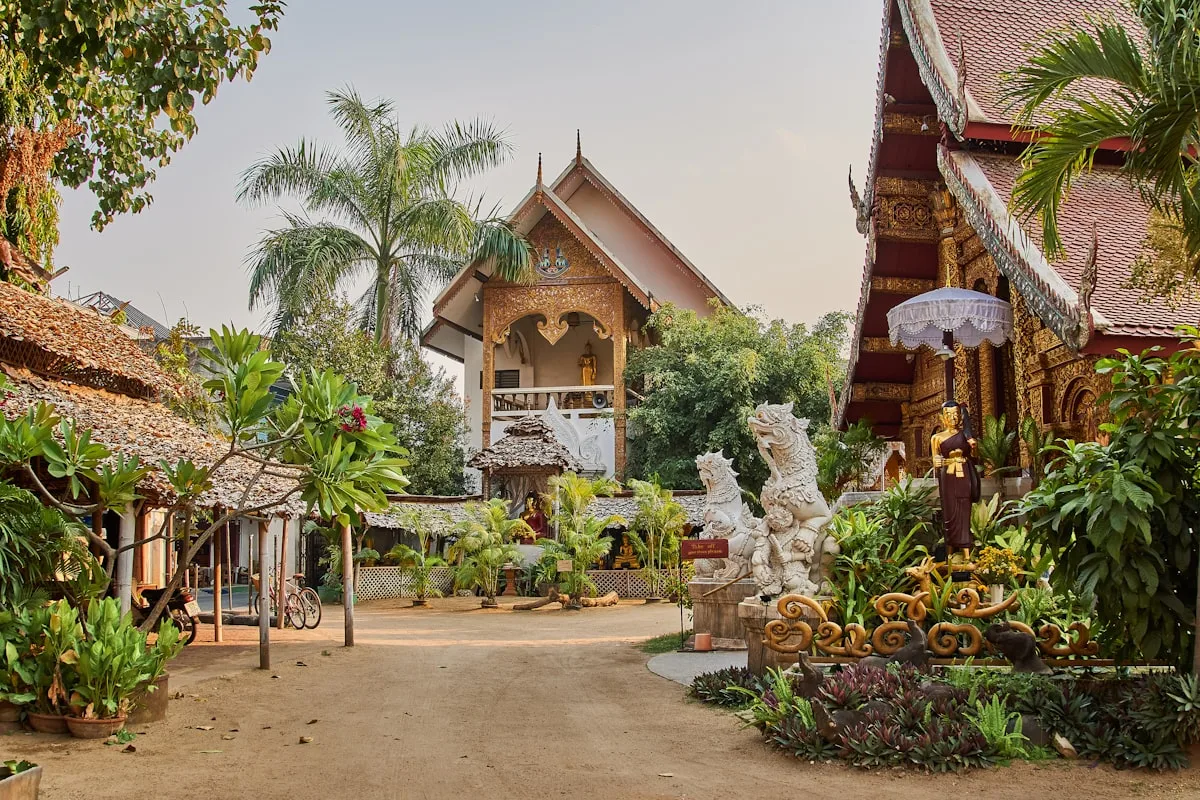
Solve the Grab Driver Confusion First: Mueang vs. Phama
Type “Wat Sai Mun” into a ride-hail app in Chiang Mai and there is a fifty-fifty chance your driver will turn around at a red light and ask which one you mean. Guarding the southeast corner of the Old City moat near Jaeng Katam, two distinct temples share the name “Sai Mun” and stand only a two-to-three-minute walk apart—just on different street faces of the same corner:
- Wat Sai Mun Mueang (วัดทรายมูลเมือง): Sits just inside the moat along Moonmuang Road near the southeast corner curve. This is an ancient Lanna foundation deeply connected with the local Shan (Tai Yai) and neighborhood community.
- Wat Sai Mun Phama / Man (วัดทรายมูลพม่า): Sits directly around the corner along the South Moat on Bumrung Buri Road heading toward Chiang Mai Gate, instantly recognizable by its twin golden Shwedagon-inspired chedis and Burmese pavilion style.
To make sure your Grab or songthaew drops you at the right gate, pin the full name Wat Sai Mun Mueang (Moonmuang Rd) and verify that the map pin rests on the eastern Moonmuang side rather than Bumrung Buri. Even better, visit both back-to-back on foot to see Lanna-Shan and Burmese sacred art side by side.
King Tilokarat Roots, the Pondside Scriptorium & Shan Heritage
Wat Sai Mun Mueang traces its lineage back to roughly 1487 CE (2030 BE) under King Tilokarat. Locals originally called it Aram Ban Pa—the monastery where hillside canals from Doi Suthep met—before renaming it after the sandy earth mounded along the moat excavations.
Step inside the gate and the corner traffic around Jaeng Katam drops to a soft hum. Three details define this peaceful compound:
- Elevated Wooden Ho Trai Over Water: Set on tall timber stilts above a small lotus pond to keep humidity and termites away from palm-leaf Buddhist manuscripts, this traditional scriptorium reflects Lanna craftsmanship at its most practical.
- Shan-Influenced Images & Lanna Viharn: Inside the main prayer hall sit revered bronze images, silver-clad Buddhas, and smooth white Mandalay-style marble statues brought through Shan and northern trade networks.
- Living Shan (Tai Yai) Community Heartbeat: Alongside everyday neighborhood merit-making, this southeast quarter holds long ties to Chiang Mai’s Tai Yai community—especially vibrant during the spring Poi Sang Long novice ordination season in March and April, when ceremonial processions fill nearby streets with drum music and floral headdresses.
Planning Your Chiang Mai Trip? Book Early for Lower Rates
Check real-time rates and secret deals on Agoda, our official travel partner. Enjoy 100% free cancellation, pay at check-in, and earn Agoda Cash rewards.
2026 Hours, Free Entry & Getting There Without Hassle
Wat Sai Mun Mueang opens daily from 06:00 to 18:00 with FREE entry.
- On Foot, Songthaew, or Grab: Walking south from Tha Phae Gate along inner Moonmuang Road takes 12–15 relaxed minutes past bookshops and cafes. A red songthaew anywhere inside the moat runs 30–40 THB per person, while Grab from Tha Phae Gate typically costs 55–80 THB. See fare tips in our Chiang Mai Songthaew & Grab Guide.
- Parking Note: Limited courtyard parking exists inside the Moonmuang gate, though morning market traffic between 07:00 and 09:00 crowds the southeast moat corner. Visiting after 09:30 or around 15:30 keeps arrivals calm.
- Temple Etiquette: Wear covered shoulders and knee-length bottoms, slip off shoes before entering halls, and avoid camera flashes near devotees in prayer.
Linking a Southeast Old City Walk & Evening Eats
Because Wat Sai Mun Mueang anchors the southeast moat corner, it pairs effortlessly with nearby landmarks. Walk two minutes around the corner onto Bumrung Buri Road to contrast its Lanna wooden hall with Burmese golden stupas at Wat Sai Mun Phama, then continue five minutes west to Chiang Mai Gate for twilight street stalls listed in our Chang Phueak & Chiang Mai Gate Night Food Guide.
Earlier in the day, weave this stop into our Chiang Mai Old City Walking Guide or cut inward toward the monumental brick ruins at Wat Chedi Luang and other highlights in Top Things to Do in the Old City.
Where to Stay Nearby & Uncle Kham’s Reminder
Boutique guesthouses and leafy heritage hotels line the streets between Moonmuang and Tha Phae Gate—compare walkable options in Hotels Near Tha Phae Gate & Old City.
Keep the street rule clear in your pocket: Moonmuang Road means Wat Sai Mun Mueang; Bumrung Buri Road around the corner means Wat Sai Mun Phama. Spend twenty quiet minutes beside the pondside wooden library here, and you will never confuse the two again.
Plan Your Chiang Mai Journey · Verified Booking Partners
Compare real-time rates for stays, curated day tours, flight tickets, and transport with best price guarantee and flexible cancellation: