



























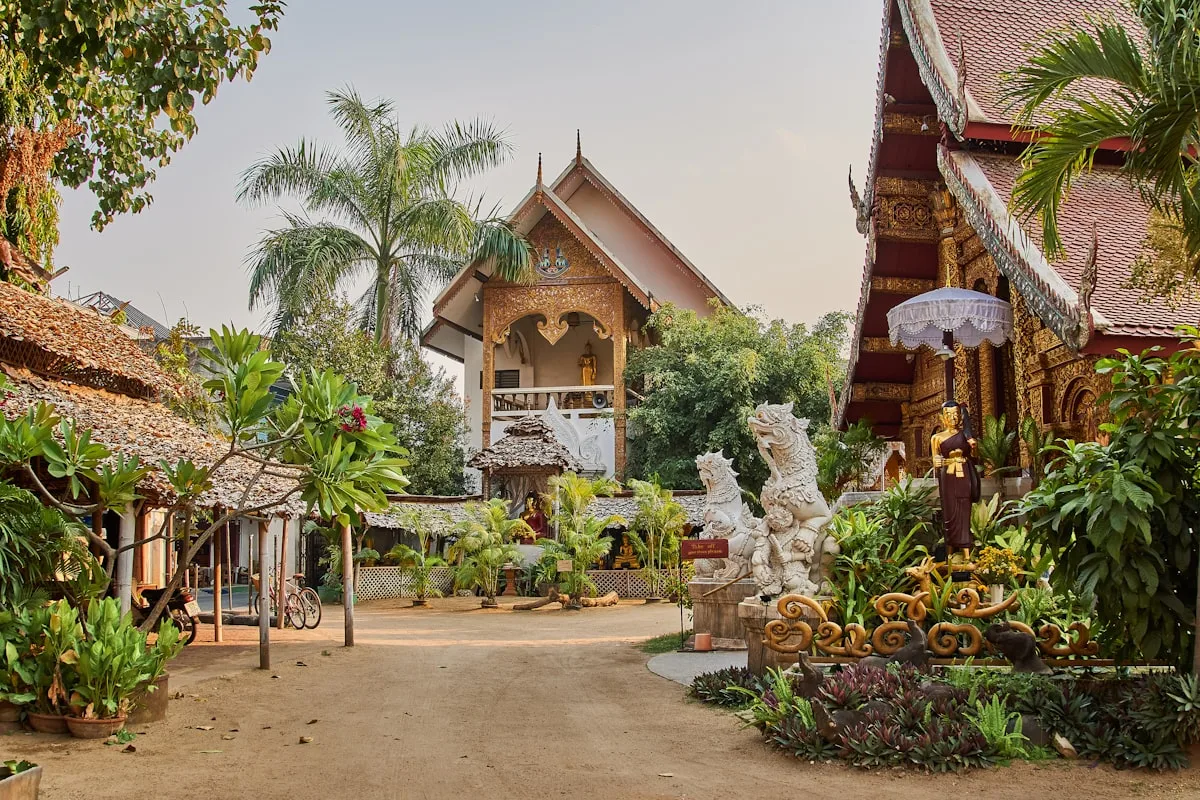
Built on the Teak Boom: Why a Pure Burmese Monastery Guards the Moat
Strolling along Chiang Mai’s Old City moat, many travelers stop abruptly at the southeast corner when golden multi-tiered roofs and delicate metal umbrellas glint above a white wall. In the late nineteenth century, Chiang Mai stood at the center of northern Thailand’s booming teak timber trade, drawing Shan and Burmese merchants, master woodcarvers, and forest contractors into the city alongside foreign trading companies.
Wat Sai Mun Phama (known locally as Wat Sai Mun Man, using the northern term for Burma) stands as a living monument to that cross-border history. While Burmese presence near this corner stretches back centuries, the monastery complex seen today reflects the devotion of Burmese timber merchants and neighborhood families who built an authentic Myanmar Theravada sanctuary right beside the city’s ancient moat.
Golden Shwedagon Chedis, Lacquered Teak & Alabaster Buddhas
Step through the gate and the soundscape shifts gently from Chiang Mai scooters to Burmese prayers and wind chimes. Notice four hallmarks that immediately set this temple apart from neighboring Lanna monasteries:
- Twin Golden Pagodas: Behind the main hall rise two glistening golden stupas, the larger modeled cleanly after Yangon’s Shwedagon Pagoda and crowned with a traditional gilded umbrella (hti) hung with tiny wind bells.
- Multi-Tiered Pyatthat Roofs & Teak Fretwork: Burmese woodcarvers excelled at deeply undercut teak eaves, foliate scroll panels, and shimmering glass-mosaic inlays framing tiered ceremonial roofs that look straight out of Mandalay.
- Alabaster & Gilded Burmese Buddhas: Inside the hall rest serene white marble Buddhas carved with soft facial expressions and flowing monastic robes alongside lacquered gilded wooden images.
- A Living Neighborhood Sanctuary: Rather than feeling like a museum, the courtyard remains active daily with Myanmar residents offering flowers, lighting incense, and pouring water at the eight traditional Burmese planetary weekday shrines (where Wednesday splits into morning and evening).
If this cross-border timber history intrigues you, cross the Ping River afterward to visit the Burmese viharn and historic trading quarter around Wat Ket Karam Riverside Temple.
Planning Your Chiang Mai Trip? Book Early for Lower Rates
Check real-time rates and secret deals on Agoda, our official travel partner. Enjoy 100% free cancellation, pay at check-in, and earn Agoda Cash rewards.
Exact Pin Check: Bumrung Buri vs. Moonmuang Road
To avoid confusing your Grab driver, remember how the corner splits: Wat Sai Mun Mueang stands inside the eastern moat face on Moonmuang Road, whereas Wat Sai Mun Phama sits right around the corner on the southern moat face along Bumrung Buri Road near the Jaeng Katam junction—only 150 meters apart on foot.
Walking south down Moonmuang Road from Tha Phae Gate takes a flat 8–10 minutes before turning right onto Bumrung Buri. If booking a ride-hail car, select Wat Sai Mun Phama (Bumrung Buri Rd) so you land straight in front of the Burmese gate.
2026 Hours, Shoe Etiquette & Old City Walking Loops
- Hours & Admission: Open daily from 06:00 to 18:00 with FREE entry for all visitors.
- Strict Footwear & Dress Etiquette: Cover shoulders and knees cleanly. Burmese monasteries observe strict barefoot zones—watch carefully for signs showing where shoes and socks should be removed before stepping onto tiled shrine terraces and inside the viharn.
- Easy Walking Pairings: From here you can fold directly into our Chiang Mai Old City Walking Guide, continue northwest toward Wat Phra Singh, or pick highlights from Top Things to Do in the Old City. On Sundays, finish your late afternoon here and walk straight north toward the Sunday Walking Street Market.
Best Walkable Stays Nearby — Uncle Kham’s Final Note
Staying along the eastern moat strip lets you reach both Sai Mun temples, Tha Phae Gate, and night markets entirely on foot—browse reliable bases in Hotels Near Tha Phae Gate & Old City.
Wat Sai Mun Phama reminds every visitor that Chiang Mai has always been a crossroads city rather than a closed museum. Arrive around 07:30 when cool morning light hits the golden umbrella bells, listen quietly for five minutes, and appreciate how gracefully two Buddhist traditions share one old city corner.
Plan Your Chiang Mai Journey · Verified Booking Partners
Compare real-time rates for stays, curated day tours, flight tickets, and transport with best price guarantee and flexible cancellation: