






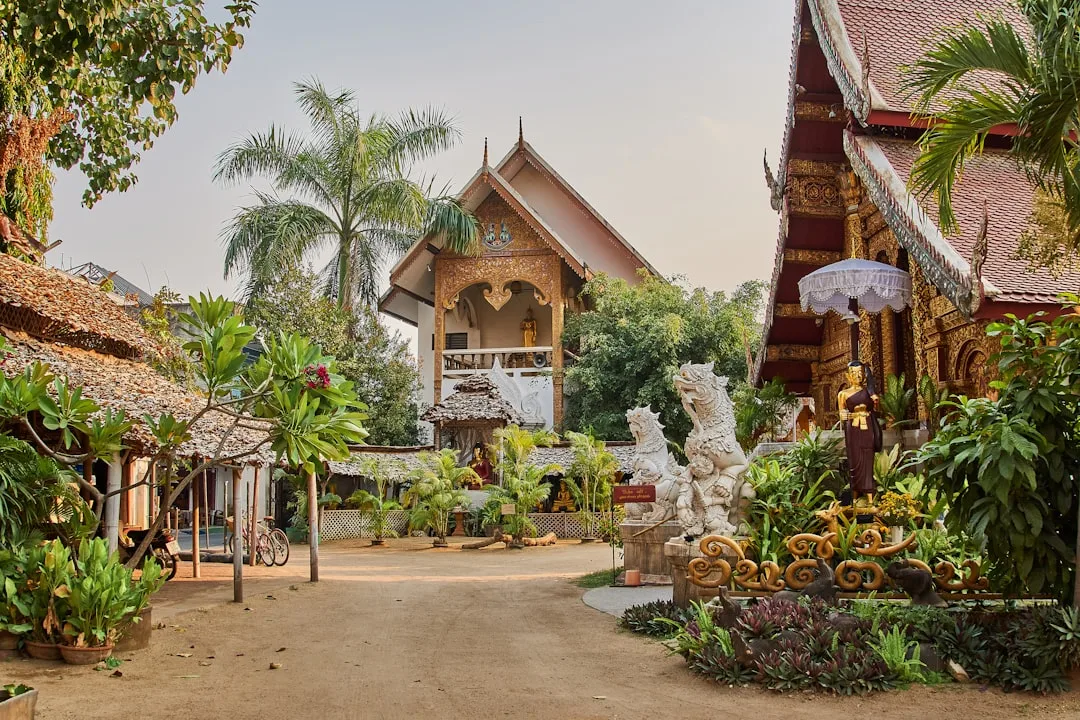







Chapter 7: The Chronicles of Chotikaram: The 2,000-Wah Beacon, the Seven Monosyllabic Abbots, and the Cosmic Mandala of Wat Chedi Luang
Chapter 7: Chronicles of Chotikaram: The 2,000-Wah beacon, the origin of Wat Phan Tao, the seven monosyllabic abbots, and Kruba Panya's Nagas.
The Riddle of "Chotikaram": The Beacon Visible Across 2,000 Wah
Long before the populace designated the sanctuary as "Wat Chedi Luang" in tribute to the immensity of its central stupa (Luang meaning "Great"), the imperial monastery was consecrated under the historic Pali title "Wat Chotikaram" (The Monastery of Radiant Splendor) or "Raja-Kutakara", founded in 1391 CE by King Saen Mueang Ma, the seventh monarch of the Mangrai Dynasty. Classical annals preserve two poetic etymologies:
- The Prophecy of the 120-Year-Old Elder: In antiquity, prior to the city's foundation, an ascetic elder who had lived 120 years soaked his cotton robes in oil, igniting them as an offering to an ancient small stupa on this ground, prophesying: "In the distant future, this very ground shall rise as a supreme monastic citadel named Chotikaram."
- The 2,000-Wah Beacon: When King Tilokaraj and subsequent Lanna kings elevated the Great Stupa to its zenith, thousands of oil lamps and floating lanterns were illuminated across its terraces during festive nights. The radiant glow reflecting off the gilded plates and terracotta bricks transformed the stupa into a towering pillar of cosmic fire, casting its brilliance across 2,000 Wah (4 kilometers) across the Chiang Mai valley.
The Five-Fold Spatial Mandala and the Birth of "Wat Phan Tao"
The original architecture of Wat Chotikaram mirrored the spatial geometry of Buddhist cosmology, structured into five interrelated territorial zones:
- The Central Buddhavasa (The Sacred Sanctuary): The inner sanctum enclosed by sacred walls, housing the Great Stupa, the Great Vihara Luang, the Uposatha, the Reclining Buddha, and the Inthakhin City Pillar.
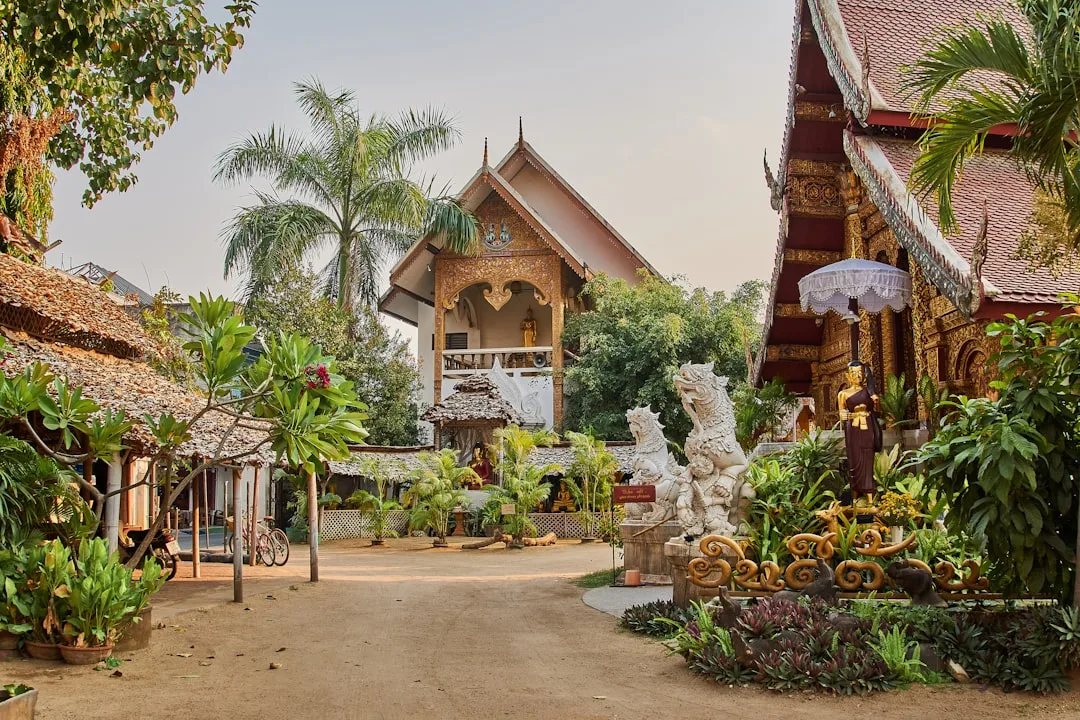
- Khana Phan Tao (Northeast): Today known as Wat Phan Tao ("Monastery of a Thousand Kilns"). Its name originated in 1411 CE (B.E. 1954) when Dowager Queen Tilokachuda erected one thousand bronze smelting kilns across this specific field to cast the colossal 18-cubit Phra Attharas standing Buddha.
- Khana Suk Min (Southeast): Currently occupied by the Metta Sueksa Charity School campus.
- Khana Sop Fang / Pa Fang (West): Currently the site of the Kanchanaphisek Assembly Hall.
- Khana Ho Tham (North): The historic monastic college and repository of classical Lanna palm-leaf manuscripts.
In 1928, Phra Upali Gunupamacariya dismantled internal separation walls, unifying three outer monastic zones with the Buddhavasa into an expansive 32-Rai urban monastery, leaving Wat Phan Tao as an autonomous neighboring shrine.
The Historical Phenomenon of the Seven "Monosyllabic" Abbots
In his analytical essay "Recounting the Tradition," the chronicler Khun Chon highlighted an extraordinary onomastic pattern spanning eight decades (1928–2003): every abbot and acting head of Wat Chedi Luang across seven successive administrations possessed an authentic single-syllable personal name:
- Jan (Phra Upali Gunupamacariya – Ubon Ratchathani / Isan)
- Mun (Phra Acharn Mun Phuritatto – Ubon Ratchathani / Isan)
- Thong (Phra Khru Napheesiphisankhun – Central Plains)
- Waew (Phra Phutthisophon – Phetchaburi / Central Plains)
- Phim (Phra Yanadilok / Somdet Phra Maha Wirawong – Nakhon Ratchasima / Isan)
- Khanti (Phra Thammadilok – Prachinburi / Central Plains)
- Jan (Phra Phuttha Photchanawaraphon / Jan Kusalo – Lamphun / Northern Region)
Even more remarkably, Abbot 1 (Jan) and Abbot 7 (Jan) not only shared the identical monosyllabic name, but both exhibited identical administrative genius in monastic education and were officially invested by the Crown with the exact same supreme patriarchal title: Chao Khana Rong Chan Hiranyabat (Vice-Supreme Patriarch).
Architectural Heritage and Classical Masterpieces
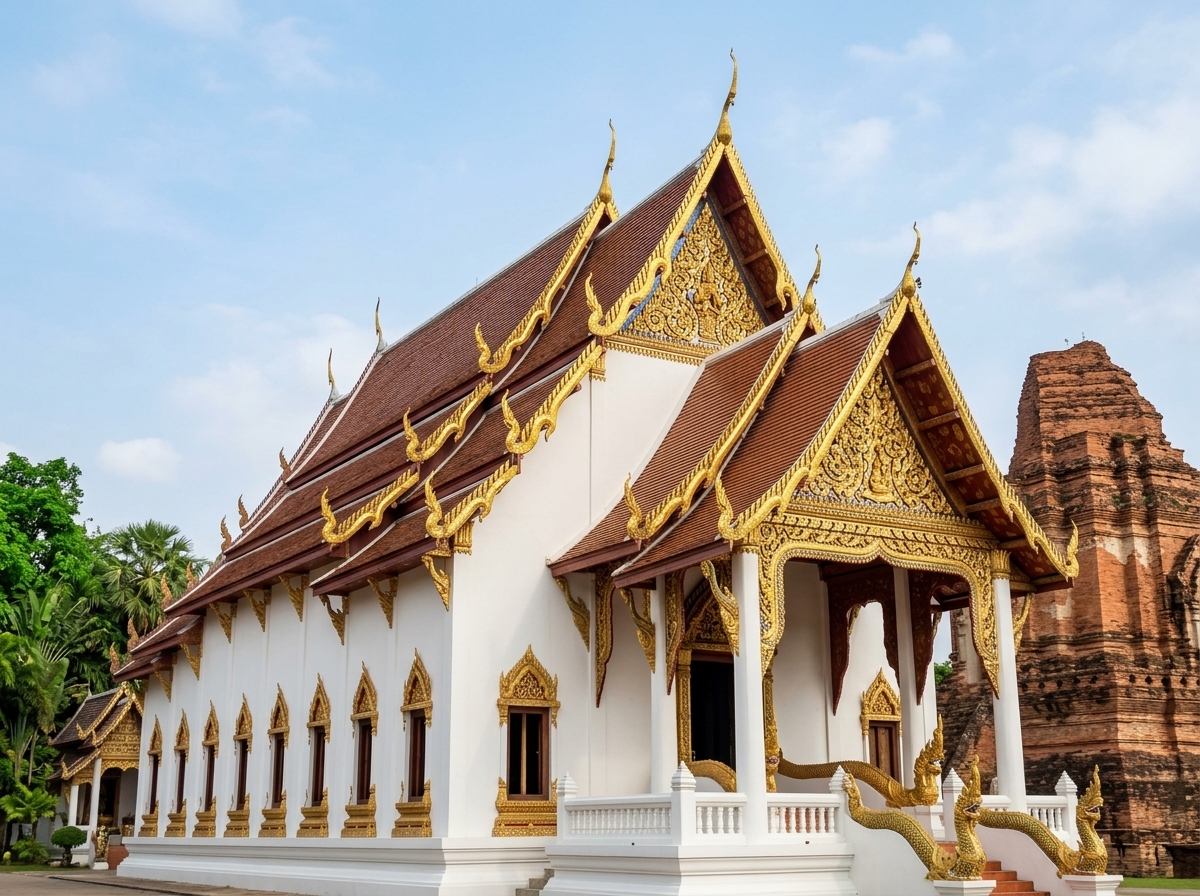
- The Great Vihara and Kruba Panya's Nagas: Reconstructed for the sixth time in 1928–1929, the grand open hall features sweeping staircases guarded by colossal stucco Nagas whose dynamic serpentine scales and undulating bodies were sculpted by Kruba Panya of Wat Saen Fang, universally acclaimed as the pinnacle of Lanna draconic sculpture.
- The Phra Attharas Colossus: An 8.23-meter-tall standing bronze Buddha in the posture of warding off fear (Abhaya Mudra), cast in 1411 CE by Queen Tilokachuda alongside his flanking disciples, Moggallana (4.43 m) and Sariputta (4.19 m).
- Kuti Kaew Nawarat: An exquisite two-story, three-gabled colonial-Lanna teakwood mansion erected in 1928 by Major-General Chao Kaew Nawarat to house Chao Khun Upali, standing as the physical testament to the piety of Chiang Mai's last ruling dynastic prince.