










Chapter 9: Living Legacies of Lanna Masters: The Telepathic Convergence of Srivichai and Upali, Luang Pu Mun's Bodhisatta Prophecy, and the Life of Jan Kusalo
Chapter 9: Legacies of Lanna Masters: Srivichai's telepathic meeting with Upali, Luang Pu Mun's Bodhisatta prophecy, the Ping River vow, and Jan Kusalo's life.
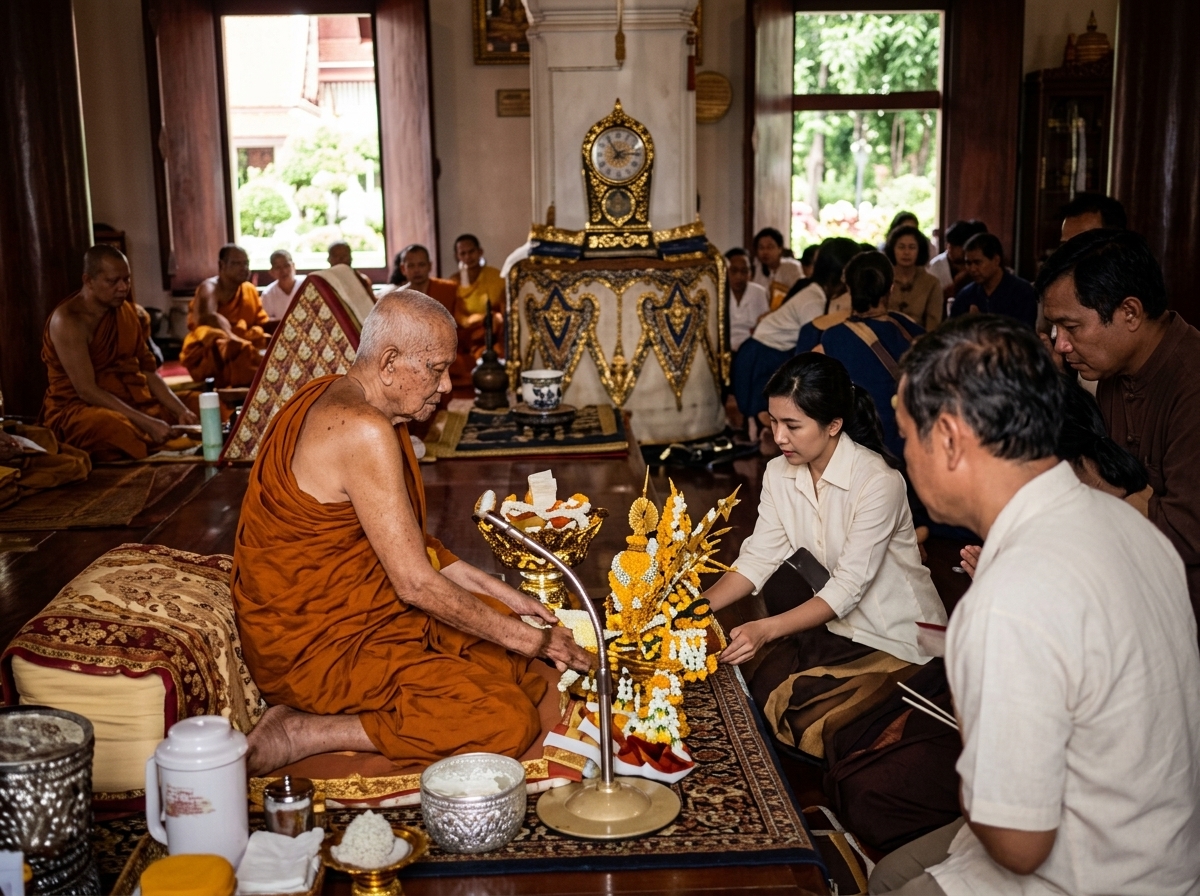
Phra Phuttha Photchanawaraphon: From Rural Orphan to Doctor of Six Universities
The venerable Phra Phuttha Photchanawaraphon (Jan Kusalo / birth name: Jan Saengthong) was born on Monday, 26 November 1917 (B.E. 2460) in Ban Tha Ko Lio, Pa Sang District, Lamphun. Struck by tragedy at eight months of age when his father perished in a plague epidemic, his impoverished widowed mother relocated the family to urban Lamphun.
In May 1932, while cutting bamboo for a rural temple fence, the young Jan followed kin to Chiang Mai, becoming a temple boy (Dek Wat) at Wat Chedi Luang and attending Phutthisophon School. In October 1932 (B.E. 2475), Phra Khru Sangkharak Waew (later Phra Phutthisophon) ordained him as a novice at age fifteen under Preceptor Phra Khru Napheesiphisankhun. Providentially, his ordination coincided exactly with the state visit of Princess Dara Rasmi (consort of the late King Chulalongkorn, Rama V), who presented Royal Kathina robes at Wat Chedi Luang just one year prior to her demise.
Ordained as a monk on 6 July 1937 with Phra Yanadilok (Phim Dhammatharo) as his Kammavacacariya, he possessed only elementary secular schooling, yet through unyielding autodidactic discipline, he mastered the Parian Tham 5 doctoral curriculum. He founded the Metta Sueksa Charity School and Mahamakut Buddhist University (Lanna Campus), achieving international renown and receiving six honorary doctoral degrees from institutions including Chiang Mai University, NIDA, Maejo University, and MBU, before his elevation by King Rama IX to the rank of Chao Khana Rong Chan Hiranyabat (Vice-Supreme Patriarch).
The Telepathic Convergence: Kruba Srivichai Meets Chao Khun Upali
During the 1920s and 1930s, Chiang Mai’s spiritual landscape was dominated by two titanic monastic masters: Phra Upali Gunupamacariya (Jan Siricando), the metropolitan reformer residing at Wat Chedi Luang, and Kruba Srivichai, the ascetic "Saint of Lanna" (Ton Bun) residing at Wat Phra Singh.
Phra Mongkolwuddhachan (Duangjan Kantasilo), then a novice serving as Upali’s personal attendant, recorded an extraordinary phenomenon: Chao Khun Upali formally resolved on two separate occasions to walk across the city to pay personal homage to Kruba Srivichai at Wat Phra Singh. In each instance, Kruba Srivichai perceived Upali’s intention through telepathic clairvoyance (Cheto-pariya-nana) and preemptively arrived at Wat Chedi Luang to bow before Upali first!
On each unheralded visit, Srivichai had his lay followers haul cartloads of rice, dried vegetables, pumpkins, and produce—donated to him by hilltribe pilgrims—directly to the kitchens of Wat Chedi Luang to nourish Upali’s hundreds of studying novices. Srivichai knelt humbly, clasping Upali’s feet in profound veneration (Apacayana-dhamma), declaring: "Venerable Master, you are an ecclesiastical elder of the kingdom; it is improper for you to visit a humble forest mendicant like myself, lest I incur negative karma."
The Prophecy of Luang Pu Mun: "Srivichai is a Bodhisatta"
Chao Khun Upali’s reverence for Srivichai deepened when he consulted Phra Acharn Mun Phuritatto, the father of the Thai Forest Tradition, who was residing at Wat Chedi Luang during that exact juncture.
Endowed with transcendent meditative penetration, Acharn Mun revealed the metaphysical reality of Srivichai to Upali: "This venerable Srivichai is an authentic Bodhisatta aspiring to supreme Buddhahood. At present, he is tirelessly accumulating the spiritual perfections (Parami), and must transmigrate across Samsara for many aeons until his cosmic store of virtue is fulfilled."
This authoritative confirmation explains the supernatural charisma that enabled Srivichai to mobilize tens of thousands of volunteers to carve the 11.5-kilometer Doi Suthep mountain highway in just 5 months and 22 days without a single baht of state funding.
The Vow of the Ping River and Uncompromising Rectitude
Both spiritual masters suffered temporal persecution from worldly political machinery:
- In 1935, Srivichai was subjected to a crushing six-month ecclesiastical trial at Wat Benchamabophit in Bangkok, falsely accused of environmental destruction and sedition along the Doi Suthep road. Exonerated, his friend Luang Sri Prakat (Chiang Mai MP) begged him to return to bless the city. Srivichai delivered his famous, heartbreaking vow: "As long as the waters of the Ping River do not reverse their course and flow north, my feet shall never step upon the soil of Chiang Mai again." True to his vow, Srivichai never re-entered Chiang Mai, expiring peacefully at Wat Ban Pang in Lamphun, refusing even royal ambulances sent to bring him to Chiang Mai hospitals.
- Similarly, in 1916 during World War I, Chao Khun Upali was stripped of his monastic title (Phra Thepmoli) and interned at Wat Bowonniwet by King Rama VI for publishing Dhamma Vichayanusat, which condemned industrialized weapons manufacturing and warfare as antithetical to Buddhist ethics. Upali accepted demotion with absolute equanimity, demonstrating that a true monk’s nobility resides not in courtly ribbons, but in steadfast allegiance to transcendent Truth.