
















Chapter 17: Fawn Dab and Fawn Choeng: Lanna's Warrior Choreography, the Top Ma Phaab Slap-Dance, Sabat Chai Drums, and the Twelve-Blade Mastery
Explore Lanna's martial arts: Fawn Dab and Fawn Choeng, the Top Ma Phaab slap-dance, Sabat Chai war drums, and the 12-sword lethal choreography.
The Crucible of Warriors: "Top Ma Phaab" and Psychological Battlefield Warfare
In the hand-to-hand combat zones of classical Lanna, survival was decided by short-range edged weaponry: the single-edged saber (Dab), the boar spear (Hok), and thrusting lances (Laen). The battle-hardened infantrymen of the northern valleys were venerated under the honorific title of "Khon Haan" (The Fearless Men). Sanguan Chotisukharat documents the ancestral martial arts running through the veins of these warriors: "Fawn Choeng" (Martial Evasion Choreography) and "Top Ma Phaab" (The Slap-Dance of Defiance).
Before swords clashed in mortal melee, warriors engaged in barehanded duels of Top Ma Phaab, executing an integrated ritual of self-hypnosis, adrenaline induction, and psychological warfare:
- Tensing every somatic muscle group, the warrior bounded across the dirt in explosive, zigzagging trajectories, rhythmically and violently slapping his open palms against his biceps, bare chest, flanks, and thighs, producing cracking acoustic concussions (Phaab! Phaab!) that echoed across the field.
- This percussive slap-dance was cadenced to the thunderous, primal polyrhythms of the "Klong Sabat Chai" (The Victory-Unfurling War Drums) and bloodcurdling battle roars. The objective was deliberate provocation: goading the enemy into irrational, boiling rage. Ancient Lanna military treatises taught that an angry fighter loses tactical composure, blinded by adrenaline, guaranteeing swift decapitation by a disciplined, ice-cold adversary.
The Epic of Sword Dancing: The Chiang Saen vs. Saen Wi Schools and the Twelve Flying Blades
Once the Top Ma Phaab elevated the warrior's spirit into battle readiness, fighters drew live steel for "Fawn Dab" (The Sword Dance). Far from theatrical pantomime with blunted wooden props, classical Fawn Dab was performed exclusively with razor-sharp carbon steel blades, producing breathtaking kinetic danger. Lanna cultivated two preeminent historical fencing lineages:
- The Chiang Saen School (Choeng Dab Chiang Saen): The classical royal lineage of the Tai Yuan, characterized by supple fluidity, deep body evasions, and lethal precision counters.
- The Saen Wi School (Choeng Dab Saen Wi): The ferocious martial tradition of the highland Tai Yai (Shan), who designated the curved sword as the "Laew." This school was celebrated for ferocious, relentless forward aggression. (A legendary Shan fencing master, Sala Saen Wi, migrated to Phrao District in Chiang Mai during the early 20th century, establishing a renowned academy that trained generations of northern swordsmen).
The grandmasters of the art achieved legendary status through the simultaneous manipulation of up to twelve live swords:
- Two swords slashed in spinning parabolas in the hands.
- One sword was clamped horizontally between the teeth.
- Two blades were pinned beneath the armpits.
- Additional swords were gripped in the crooks of the elbows, behind the knees, and clutched between the toes, transforming the human body into a whirling whirlwind of whistling steel devoid of any defensive seam.
This martial tradition was anchored in state history: the ancient Chronicle of Singhanawat records that King Sam Fang Kaen commanded the conquered principality of Mueang Yong to dispatch its premier troupe of spear and sword dancers to perform annual tribute before the royal throne in Chiang Mai. In the mid-20th century, master dancers of the Fah Ham Troupe preserved this heritage, demonstrating authentic Chiang Saen swordplay before King Bhumibol Adulyadej and Queen Sirikit during their royal progress through the North.
Feminine Aesthetics: Fingernail Dances, Candlelit Vigils, and Highland Assimilation
While men expressed martial lethality, Lanna women refined these dynamic physical principles into the paramount aesthetic monuments of Northern Thai civilization: "Fawn Leb" (The Fingernail Dance) and "Fawn Thian" (The Candle Dance):
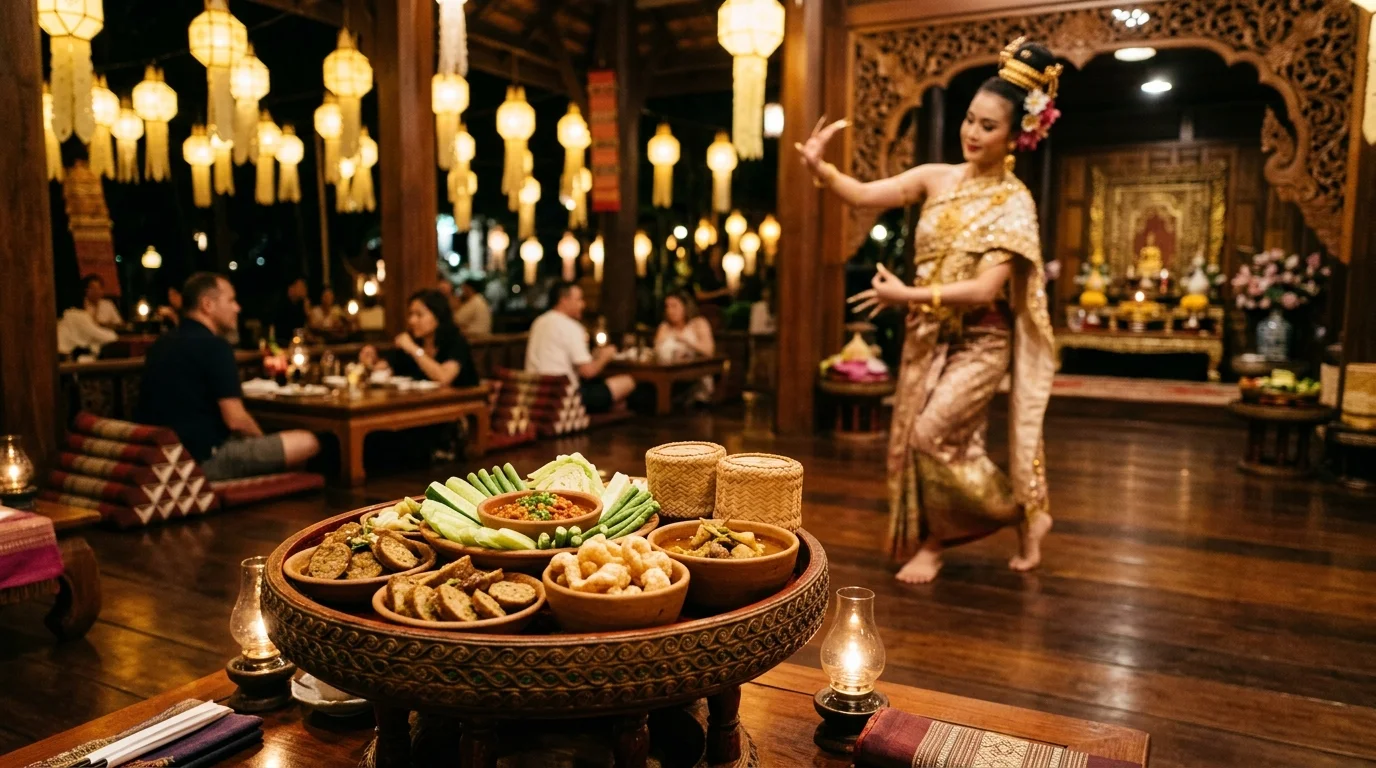
- Female dancers wore elaborate handwoven silk sarongs (Tin Chok), tight-fitting tailored jackets, and sweeping shoulder sashes, their hair swept into towering chignons adorned with fragrant yellow orchids (Dok Eung Phueng). Long, curving, brass or golden sheaths extended their fingers into delicate, celestial arcs.
- The procession advanced to the measured, hypnotic cadence of the "Klong Teng-nong" ensemble (long drum, oboes, and cymbals), executing slow, wave-like body undulations to guide communal offerings (Khrua Tan) during grand temple dedications (Poy Luang).
- At night, this art mutated into the sublime Fawn Thian, wherein dancers balanced glowing beeswax tapers between their fingertips, cutting golden ribbons through the pitch-black jungle night.
In a remarkable historiographical revelation, Sanguan documents that during the reign of Chao Kaeo Nawarat, the last ruling Prince of Chiang Mai, court choreographers actively synthesized royal dance with the animist traditions of the highland Muser (Lahu) people. Court masters studied the ecstatic, circular, tiptoeing dances performed around fires during the Lahu "Ki-wo" New Year feast, integrating these highland tribal mechanics into the palace repertoire. Lanna dance was thus never an ossified aristocratic museum piece; it was a vibrant ethnological melting pot uniting the blood-soaked combat of lowland battlefields, the primordial rhythms of mountain tribes, and the transcendent refinement of the royal courts.