



























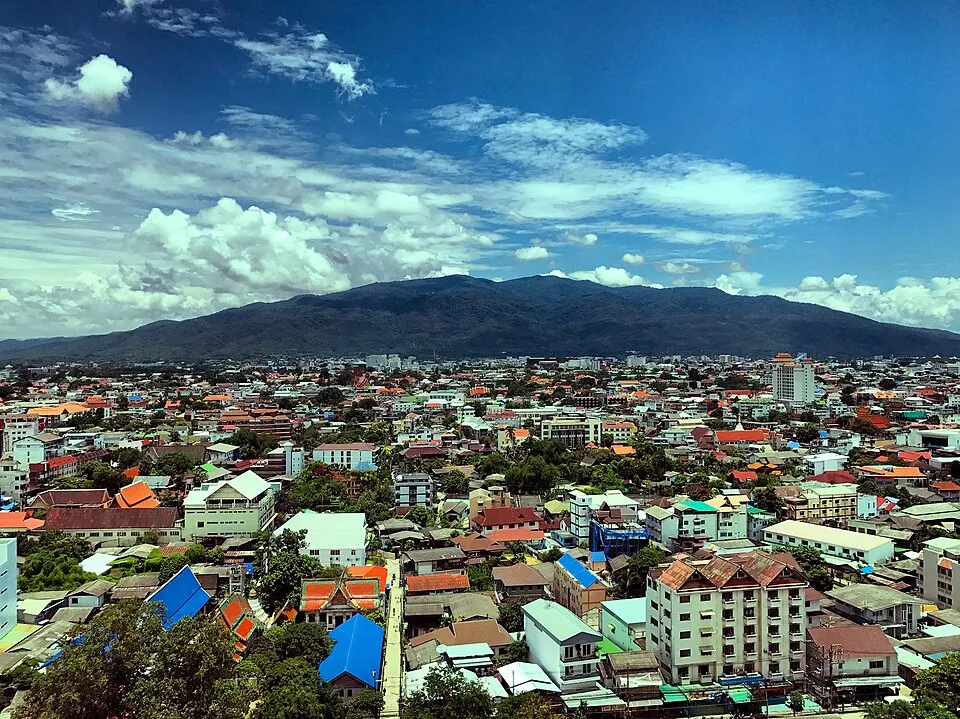
Honest Local Transparency: The Reality of Chiang Mai's Burning Season
Welcome to Chiang Mai, my dear travelers. Today, Uncle Kham wants to speak from the heart about an issue that every prospective visitor must understand before booking their flights: Chiang Mai's seasonal smoke, commonly referred to as the Burning Season. True northern hospitality requires honesty, not sugar-coating. Your health, peace of mind, and respiratory safety are paramount, and armed with accurate local knowledge, you can plan your visit wisely.
Many travelers ask Uncle Kham why this haze occurs. The phenomenon is driven by a unique interplay of topography and meteorology: Chiang Mai sits within a low-lying geological basin surrounded by dramatic mountain ranges. As late winter transitions into hot summer, stagnant air masses settle over the valley, creating a meteorological 'temperature inversion.' Warm air forms a ceiling over cooler surface air, trapping smoke produced by regional agricultural burns, forest clearance, and localized brush fires across Northern Thailand and neighboring frontiers, preventing it from dispersing into the upper atmosphere.
Seasonal Timeline: When Does the Smoke Actually Occur?
To help you structure your travel dates, Uncle Kham breaks down our seasonal atmospheric cycle into distinct phases, which you can cross-reference against our broader overview in the best time to visit Chiang Mai guide:
- November through January (Pristine Bliss): The glorious winter months. Crisp, refreshing breezes, deep blue skies, and zero smoke. This is peak season for hiking and open-air exploration.
- February (The Early Stirrings): Early February remains pleasant, but by the third and fourth weeks, dry conditions accelerate and PM2.5 levels begin creeping upward as regional burning commences.
- March to Early April (The Peak Smoke Period): Atmospheric stagnation reaches its height. US AQI levels frequently cross into unhealthy orange and red categories. Mountain ridges like Doi Suthep fade into dense gray haze, and outdoor physical activities should be minimized.
- Mid-April Onward (Clearing and Rebirth): The arrival of early tropical summer thunderstorms and the joyous water battles of Songkran effectively wash away residual airborne particulates, restoring clean air and lush mountain vistas.
Planning Your Chiang Mai Trip? Book Early for Lower Rates
Check real-time rates and secret deals on Agoda, our official travel partner. Enjoy 100% free cancellation, pay at check-in, and earn Agoda Cash rewards.
Essential Monitoring Tools and Personal Protective Gear
If your travel schedule requires you to visit during the smoky window, adopting modern protective measures will preserve your health and comfort:
- Live AQI Tracking Apps: Download reliable mobile monitoring platforms such as Air4Thai (the official Thai Pollution Control Department network) or IQAir AirVisual. Check readings every morning. Whenever the AQI index exceeds 100–150, limit vigorous outdoor exercise and wear protective masks.
- Certified N95, KN95, or KF94 Particulate Respirators: Standard surgical or cloth masks cannot filter microscopic PM2.5 particles. Pack a box of well-fitted, certified respirator masks to wear while walking down city streets or riding open-air vehicles.
- Saline Nasal Sprays and Lubricating Eye Drops: Airborne ash can irritate delicate mucous membranes and eyes. Rinsing your nasal passages and eyes after outdoor excursions provides instant soothing relief.
Choosing Accommodations: True HEPA Filters and Sealed Spaces
When outdoor air quality dips, your hotel room functions as your primary health sanctuary. Uncle Kham's golden advice to every guest visiting in March is to contact your chosen property in advance and explicitly inquire: "Does my room feature a dedicated True HEPA air purifier, and are indoor public zones fully air-conditioned?"
Many boutique hotels and luxury heritage resorts now equip every suite with medical-grade purifiers capable of capturing 99.97% of airborne micro-particles. Immerse yourself in restorative indoor elegance with Uncle Kham's curated recommendations in the Lanna-style hotels and heritage architecture guide, where you can read, dine, and rest in pristine, filtered environments.
Clean-Air Sanctuaries: Ascending Above the Temperature Inversion
Here is an extraordinary scientific fact that few casual tourists realize: the dense smog layer rarely rises higher than 1,000 to 1,200 meters above sea level. This means that if you ascend beyond this altitude ceiling, you physically break through the inversion layer into crystalline, sapphire-blue skies and pristine mountain air!
The supreme escape is booking a high-altitude expedition following Uncle Kham's Doi Inthanon day trip guide. Reaching Thailand's highest summit at 2,565 meters places you high above the valley smoke, where crisp alpine mosses and cool evergreen canopies offer wonderful, lung-refreshing air.
Alternatively, explore tranquil heritage pockets shaded by historic rain trees along the Mae Ping riverbanks, such as the serene precinct surrounding Wat Ket Karam on the Ping River, where natural humidity provides gentle localized respite. Stay informed, protect your breath, and travel mindfully with Uncle Kham!
Plan Your Chiang Mai Journey · Verified Booking Partners
Compare real-time rates for stays, curated day tours, flight tickets, and transport with best price guarantee and flexible cancellation: